


Ressources
-
STORM Therapeutics: From Lead to Pre-Candidate Nomination in 18 Months

STORM Therapeutics: From Lead to Pre-Candidate Nomination in 18 Months
Case study




juillet 30, 2015

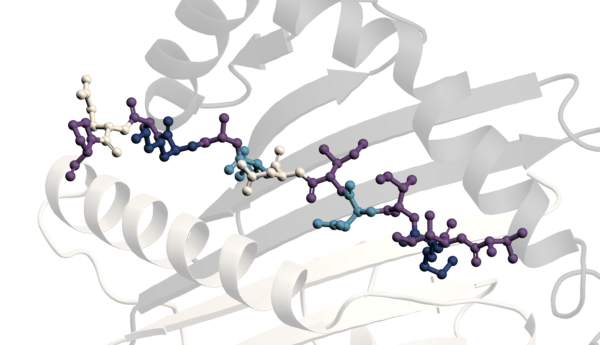
Inobrodib, an exciting, first-in-class oral anti-cancer drug in clinical development by CellCentric, was collaboratively designed, synthesised and supported on its pre-clinical journey by an integrated project team at Sygnature Discovery. Inobrodib is now showing promising results in Phase I and II trials for multiple myeloma and other cancer types.

Tenez‑vous au courant des dernières mises à jour de l’entreprise, des étapes clés et des annonces importantes.
Découvrez les conférences et rencontres scientifiques à venir, où vous pourrez échanger avec notre équipe.

Chez Sygnature Discovery, nous fournissons des solutions de découverte de médicaments de classe mondiale pour accélérer la progression de vos composés, de l’idée jusqu’à la clinique.

Notre équipe de direction rassemble une diversité d’expériences et de ressources, favorisant la collaboration et l’innovation dans l’ensemble du processus de découverte de médicaments.

Explorez les opportunités de carrière chez Sygnature Discovery. Rejoignez une équipe internationale qui obtient des résultats exceptionnels grâce à la collaboration, à l’innovation et à l’intégrité.
Inobrodib, an exciting, first-in-class oral anti-cancer drug in clinical development by CellCentric, was collaboratively designed, synthesised and supported on its pre-clinical journey by an integrated project team at Sygnature Discovery. Inobrodib is now showing promising results in Phase I and II trials for multiple myeloma and other cancer types.
Chez Sygnature Discovery, nous fournissons des solutions de découverte de médicaments de classe mondiale pour accélérer la progression de vos composés, de l’idée jusqu’à la clinique.
Notre équipe de direction rassemble une diversité d’expériences et de ressources, favorisant la collaboration et l’innovation dans l’ensemble du processus de découverte de médicaments.
Explorez les opportunités de carrière chez Sygnature Discovery. Rejoignez une équipe internationale qui obtient des résultats exceptionnels grâce à la collaboration, à l’innovation et à l’intégrité.
scientific solutions
Designing smarter compounds and making faster decisions by combining
AI-powered modeling, deep scientific expertise, and secure, collaborative
data access. We solve complex challenges and accelerate your drug discovery
journey
SUPPORTING YOUR RESEARCH
From structure-based and ligand-based design to predictive modeling and secure data access, we tailor every solution to your program, helping you uncover novel compounds, reduce risk, and accelerate progress toward the clinic.
Sygnature Discovery delivers advanced CADD solutions that help you design better compounds, faster. Our CADD department draws on decades of experience and encompasses scientists with diverse backgrounds in molecular modelling, data mining, chemical informatics and bioinformatics offering computational chemistry support on projects.
We creatively apply a wide range of structure-based drug design (SBDD), ligand-based drug design (LBDD), virtual screening, ADMET prediction, machine learning and Artificial Intelligence tools to address project needs. Our computational scientists work side-by-side with medicinal chemists, bioscientists, and DMPK experts, both at Sygnature and within your team to solve problems collaboratively and reduce timelines.
Our informatics team ensures that all data generated in-house, or externally, is securely accessible to you and your collaborators, enabling timely, informed decisions at every step.

Whether integrated into a full discovery program or delivered as a stand-alone service, our CADD capabilities have broad and extensive in silico capabilities coupled with disease expertise across key therapeutic domains.
Our teams use industry-leading platforms and proprietary tools that are continuously refined to meet evolving scientific needs.

AI-driven generative design, bioinformatics, and machine learning tools accelerate idea generation and decision-making.

Integrated transcriptomics, sequencing, and multi-database analysis support target validation, biomarker discovery, and strategic decision-making. Our bioinformatics solutions are seamlessly connected to broader preclinical and translational capabilities, providing a collaborative, end-to-end solution.

Integrated informatics solutions that streamline workflows, enhance data integrity, and accelerate decision-making. From AI-powered compound design to secure data tracking and cloud-based collaboration, our platforms support every stage of the DMTA cycle. With tools such as SygDesign, Idea Tracker, and ChemELN, we transform data into insight, driving innovation and transparency across global drug discovery.
Evaluate target structure, binding sites, and druggability using AI protein structure prediction, PROTACs modeling, and sequence analysis. Our capabilities include binding site identification, AI protein structure prediction, PROTACs modelling, and sequence analysis, all integrated into structure-based drug design workflows. These insights help optimize hit-finding and lead development strategies, even for challenging or undruggable targets.

Discover new hits and accelerate your screening programs with our Virtual Screening services. Our in silico-based virtual high-throughput screening utilizes advanced techniques such as structure-based and ligand-based screening to identify compounds with high potential for activity.

Combining structural biology with advanced computational chemistry to guide smarter compound design. Using tools such as Molecular Dynamics, Quantum Mechanics (FMO-SP), and RBFE calculations, we provide deep insights into protein-ligand interactions. Our workflows help predict binding affinity, assess stability, and optimize compounds with precision.

Using computational tools and expert knowledge, we design novel scaffolds and optimize compounds based on ligand shape, electrostatics, and pharmacophore features. Our approach includes scaffold hopping, AI-driven generative design, QSAR modelling, and con formational analysis, enabling efficient lead identification and multi-objective optimization.

Our strategically assembled libraries support SAR investigations and accelerate synthesis in our High Throughput Chemistry lab. This accelerates Structure-Activity Relationship (SAR) investigations during multiple discovery phases, paving the way for innovative structures in lead optimization.

Our CS&I group offers ADMET prediction capabilities to predict and address ADMET liabilities during lead optimization using advanced modeling tools.
Tailored scientific methods are selected for each project using a broad suite of commercial, open-source, and proprietary software.
Our diverse software portfolio supports the implement of SBDD, LBDD, Target Analysis, virtual screening and ADMET prediction capabilities.
Multi-Tool Platforms
OpenEye Orion, ICM -Pro, MOE, Spartan
AI-Based
Iktos Makya, MedChemica, AlphaFold Multimer (hosted in-house), Relnvent
Pipeline Tools
KNIME, Squonk, ChemAxon
Data Aggregation
Vortex, SpotFire, Data Warrior
Bioinformatics
Qiagen IPA, OpenTargets (hosted in-house)
Fast, secure deliver of compute-intensive tasks is enabled by a flexible, scalable infrastructure:
Cloud compute: On-demand access to Amazon Web Services for virtual screening and molecular dynamics simulations
High-performance cluster: With GPU acceleration for rapid modelling and analysis
Daily operations: High-end PCs with dedicated graphics cards
Immersive visualization: Augmented reality via Nanome’s VR platform for structure exploration and design
Collaborative Impact
“Impact on medicinal chemistry is vital to demonstrating the value of computational chemistry.”
Colin Sambrook-Smith
Director of Computational Sciences and Informatics
At Sygnature, we achieve this through close collaboration and a shared commitment to scientific excellence.
Excellence: No internal pipeline means full focus on your goals
Scientific Integrity: Transparent, rigorous, and honest data-driven decisions
Scientific Momentum: Technology and curiosity drive faster outcomes
Borderless Resource: Seamless access to global expertise across our European and North American labs

At Sygnature Discovery, our CADD solutions empower drug discovery teams to make smarter, faster decisions. By integrating cutting-edge computational tools with years of scientific expertise, we help design novel compounds, overcome complex challenges, and accelerate progress from target identification to clinical candidate selection.
We offer a broad spectrum of computational chemistry services, spanning structure-based and ligand based drug design, virtual screening, ADMET prediction, bioinformatics, and AI-driven modeling. Our scientists apply techniques such as molecular dynamics, free energy calculations, and machine learning and are supported by a rich suite of tools to deliver tailored solutions for every project, standalone, or integrated.
We integrate advanced AI and machine learning tools across the drug discovery process. From generative compound design to predictive modeling and bioinformatics, our AI powered platforms uncover hidden patterns, generate novel ideas, and guide strategic decisions with speed and precision, enhancing innovation and reducing risk.
Our informatics infrastructure ensures that project data, whether generated in-house or externally is securely accessible to clients and collaborators. With tools like SygDesign, ChemELN, and Idea Tracker, we support transparent, real-time decision-making across the DMTA cycle, turning data into insight and driving innovation.
Meet the experts behind our computer aided drug design solutions. They turn complex data into smarter decisions for your discovery projects.

Colin joined Sygnature Discovery in May 2012 to lead computational science and informatics in a…

Études de cas
Nos clients nous disent que nous agissons comme un prolongement de leur équipe et que nous leur apportons une expertise de haut niveau à chaque étape du processus de découverte de médicaments. Que nous vous accompagnions tout au long du processus ou seulement sur une partie, notre objectif n’est pas simplement de vous faire passer à l’étape suivante, mais de jeter les bases d’un médicament commercialisé avec succès.
En passant de la phase de sélection à la nomination de pré-candidat en moins de la moitié du délai standard du secteur, ce programme démontre comment des équipes scientifiques connectées et des informations en temps réel peuvent accélérer les découvertes complexes.

De nombreux programmes de recherche de médicaments prometteurs voient le jour au sein de jeunes entreprises de biotechnologie. Pourtant, à leurs débuts, ces nouvelles organisations disposent rarement des ressources ou des infrastructures de laboratoire nécessaires pour transformer immédiatement leurs idées novatrices en un nouveau médicament.
Les principaux algorithmes d’intelligence artificielle générative (GenAI) pour la conception de novo sont utilisés de manière routinière dans nos programmes de chimie médicinale pour permettre une génération rapide d’idées afin d’atteindre les objectifs du projet.
Corcept Therapeutics, située à Menlo Park, en Californie, est un chef de file dans la découverte et le développement de médicaments qui régulent les effets du cortisol.

CellCentric développe de nouveaux traitements contre le cancer en s’appuyant sur sa compréhension de l’épigénétique.

La découverte de médicaments basée sur des fragments permet d’explorer un large éventail de l’espace chimique grâce à une bibliothèque relativement restreinte mais diversifiée de petites molécules.

Société britannique de découverte de médicaments à petites molécules
Il convient de se concentrer sur l’identification de nouveaux traitements pour les maladies respiratoires inflammatoires, telles que la BPCO.

Resources


Test
