

Featured Resources
-
STORM Therapeutics: From Lead to Pre-Candidate Nomination in 18 Months

STORM Therapeutics: From Lead to Pre-Candidate Nomination in 18 Months
Case study




Discover precise insights into brain neurochemistry with Sygnature Discovery's in vivo microdialysis and cOFM services. With over 20 years of expertise, we design bespoke studies that reveal how compounds modulate neurotransmitter systems in health and disease. Using UHPLC/HPLC with electrochemical detection or mass spectrometry, we deliver robust PK/PD data to support confident CNS decision making.


July 30, 2015

Inobrodib, an exciting, first-in-class oral anti-cancer drug in clinical development by CellCentric, was collaboratively designed, synthesised and supported on its pre-clinical journey by an integrated project team at Sygnature Discovery. Inobrodib is now showing promising results in Phase I and II trials for multiple myeloma and other cancer types.

In drug discovery, generating targets is no longer the challenge. The real question is how to identify the few worth investing months of research and significant resources to pursue. Hear expert perspectives on how AI, pathway analysis and scientific expertise are shaping modern target identification.
July 7, 2026
Stay up to date with the latest company updates, milestones, and announcements.
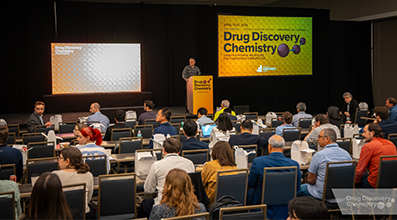
Explore upcoming conferences and scientific meetings where you can connect with our team.

At Sygnature Discovery, we deliver world-leading drug discovery solutions to accelerate your compound from idea to clinic.

Our leadership team brings diverse experience and insight, driving collaboration and innovation across drug discovery.

Explore careers at Sygnature Discovery and join a global team committed to science, collaboration, and integrity.
Inobrodib, an exciting, first-in-class oral anti-cancer drug in clinical development by CellCentric, was collaboratively designed, synthesised and supported on its pre-clinical journey by an integrated project team at Sygnature Discovery. Inobrodib is now showing promising results in Phase I and II trials for multiple myeloma and other cancer types.
At Sygnature Discovery, we deliver world-leading drug discovery solutions to accelerate your compound from idea to clinic.
Our leadership team brings diverse experience and insight, driving collaboration and innovation across drug discovery.
Explore careers at Sygnature Discovery and join a global team committed to science, collaboration, and integrity.
scientific solutions | CAAD
From binding sites to druggability, our computational chemistry and protein science teams help you find the right starting points faster, combining deep structural insight with cutting-edge tools to design compounds that move your project forward with confidence.

SUPPORTING YOUR RESEARCH
Leveraging deep expertise in molecular interactions and structure-based design, we apply advanced computational methods, including big data analytics and high-performance computing, to assess druggability, explore selectivity, and support drug repurposing. These insights accelerate lead optimization and clinical candidate generation.
Our integrated approach provides drug discovery teams with a detailed understanding of target structure and binding site properties. While our primary focus is on protein targets and protein-ligand complexes, we also investigate other biomolecular entities such as RNA and DNA, complementing biological validation and informing strategic decisions across hit identification and lead optimization.

Whether integrated into a full discovery program, or delivered as a stand-alone service, we offer comprehensive services so you can identify novel targets.

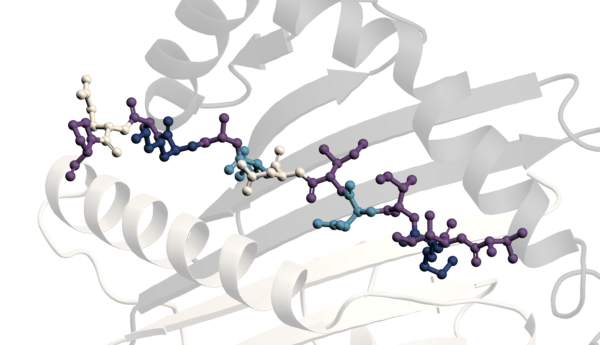
We combine experimental and modeled structural information into our computational workflows to identify and characterize binding sites for key druggability features including volume, shape, polarity, buriedness and flexibility. Through molecular dynamics simulations and probe-based methods, we can uncover cryptic or transient pockets that are not apparent in static structures. These insights enable accurate druggability scoring and prioritization, supporting rational design strategies for novel and challenging targets.
Link to our poster on druggability assessment.

We use structural data to drive collaborative, structure-based drug design across integrated projects. This enables rapid hypothesis generation and the design of compounds with improved potency, selectivity, and tractability. For deeper insights, we apply advanced follow-up techniques such as Molecular Dynamics (MD) to explore conformational flexibility, Fragment Molecular Orbital (FMO) calculations to quantify interaction energies, and Non-Equilibrium Switching (NES) to estimate free energy differences through rapid, irreversible transitions between thermodynamic states.

Helping you design and optimize ternary complexes with precision, combining advanced modeling and collaborative expertise, making previously “undruggable” targets tractable.

Advanced computational modeling to support PROTACs and molecular glue strategies, helping unlock previously undruggable targets. Our integrated workflows, proprietary platforms and AI-enhanced workflows accelerate targeted protein degradation programs.

Our bioinformatics capabilities include protein sequence analysis, multiple sequence alignment, and selectivity profiling. These methods identify conserved regions, functional motifs, and divergence across homologs, critical for understanding target selectivity and minimizing off-target risks. This foundation supports rational design strategies and informs downstream structural and functional studies.

For targets without available experimental structures, we apply AI-driven protein structure prediction tools and build homology models using related proteins. This allows us to generate reliable structural insights that support downstream drug discovery efforts.

Analysis of the role of water in protein-ligand interactions to understand its impact on binding affinity. This includes identifying conserved water molecules that stabilize complexes and evaluating water-mediated bridging interactions that enhance specificity. We also assess solvation and desolvation effects, alongside hydrophobic contributions, to guide decisions on whether to retain, displace, or mimic key waters during ligand design.
Sygnature’s extensive expertise in target analysis is critical in underpinning the quality of the virtual screening hits that we are able to deliver for clients.
We identify good quality, ligand and
lipophilicity-efficient starting points that are stable and amenable to rapid medicinal chemistry optimization is crucial in enabling effective project progression.
Our understanding of molecular interactions and structure-based design, combined with cutting-edge methods for lead optimization, has helped generate clinical compounds for clients worldwide.
We integrate big data, high-performance
computing, and innovative workflows to assess protein druggability, explore selectivity, and support drug repurposing strategies.
Resources



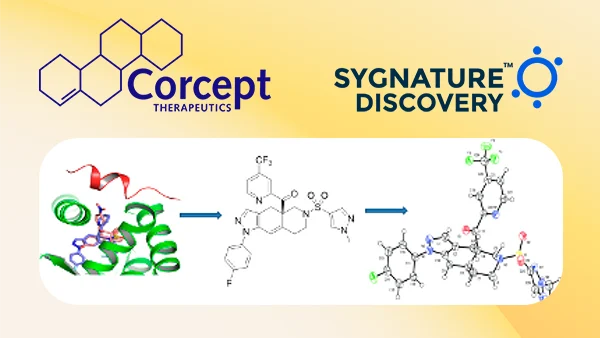
Target analysis helps build a comprehensive understanding of a biological target, enabling scientists to choose the
best approach for drug discovery. It informs hit-finding strategies and supports the design of selective, effective
compounds. It is a foundational capability which underpins many different aspects of drug discovery.
We use advanced computational techniques to assess binding site properties, evaluate druggability, predict protein
structures, and analyze structural data. These capabilities complement biological validation and accelerate discovery
timelines.
By providing insights into binding sites, druggability, and structural data, target analysis reduces uncertainty and
optimizes both hit-finding and lead optimization strategies. This leads to better compound design and maximizes the
impact of experimental data.
Yes. We use both advanced AI-based protein structure prediction tools and homology modeling to model targets where experimental structures are unavailable. However, it’s important to consider:
• Accuracy varies by target type – predictions for highly flexible or disordered regions can be less reliable
• Confidence scores matter – low-confidence regions should be interpreted with caution
• Experimental validation is still essential – predicted models should complement, not replace, experimental data
We bring together a dynamic blend of new talent and experienced pharmaceutical industry experts from a round the world, delivering excellence across every stage of discovery.

Identifying high-quality hits fast through giga-scale virtual screening, curated libraries, and expert triaging to accelerate drug discovery programs.

Helping you design better compounds with greater confidence. Utilizing quantum-level insights and dynamic simulations we predict affinity, guide optimization, and help you prioritize the right candidates faster.

Helping you design and optimize ternary complexes with precision, combining advanced modeling and collaborative expertise, making previously “undruggable” targets tractable.
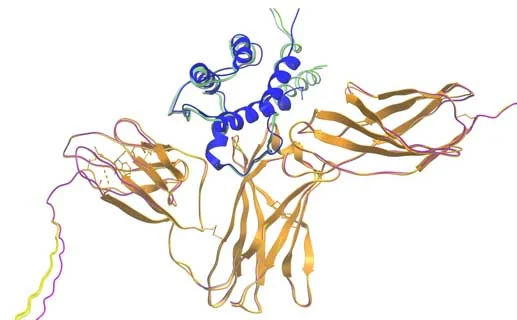
Using advanced AI and proven modelling techniques to predict protein structures with confidence, accelerating structure-based drug design and discovering novel therapeutic
possibilities.
Clinically focused medicinal chemistry combining design excellence, AI-driven insight, and collaborative expertise to deliver molecules aligned with your goals.
Peak Proteins, NuChem Sciences, and SB Drug Discovery have now fully integrated with Sygnature Discovery.