


Ressources
-
STORM Therapeutics: From Lead to Pre-Candidate Nomination in 18 Months

STORM Therapeutics: From Lead to Pre-Candidate Nomination in 18 Months
Case study


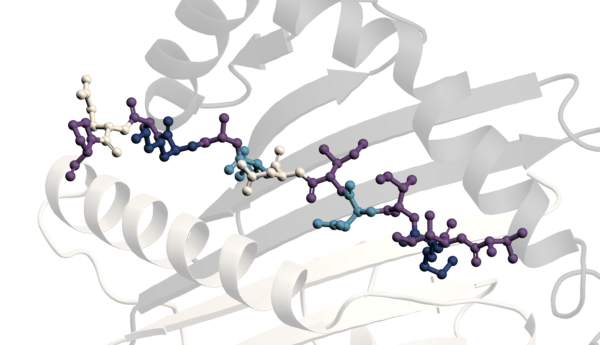


Discover precise insights into brain neurochemistry with Sygnature Discovery's in vivo microdialysis and cOFM services. With over 20 years of expertise, we design bespoke studies that reveal how compounds modulate neurotransmitter systems in health and disease. Using UHPLC/HPLC with electrochemical detection or mass spectrometry, we deliver robust PK/PD data to support confident CNS decision making.


juillet 30, 2015

Inobrodib, an exciting, first-in-class oral anti-cancer drug in clinical development by CellCentric, was collaboratively designed, synthesised and supported on its pre-clinical journey by an integrated project team at Sygnature Discovery. Inobrodib is now showing promising results in Phase I and II trials for multiple myeloma and other cancer types.

In drug discovery, generating targets is no longer the challenge. The real question is how to identify the few worth investing months of research and significant resources to pursue. Hear expert perspectives on how AI, pathway analysis and scientific expertise are shaping modern target identification.
juillet 7, 2026

Tenez‑vous au courant des dernières mises à jour de l’entreprise, des étapes clés et des annonces importantes.
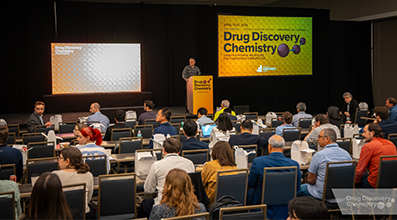
Découvrez les conférences et rencontres scientifiques à venir, où vous pourrez échanger avec notre équipe.

Chez Sygnature Discovery, nous fournissons des solutions de découverte de médicaments de classe mondiale pour accélérer la progression de vos composés, de l’idée jusqu’à la clinique.

Notre équipe de direction rassemble une diversité d’expériences et de ressources, favorisant la collaboration et l’innovation dans l’ensemble du processus de découverte de médicaments.

Explorez les opportunités de carrière chez Sygnature Discovery. Rejoignez une équipe internationale qui obtient des résultats exceptionnels grâce à la collaboration, à l’innovation et à l’intégrité.
Inobrodib, an exciting, first-in-class oral anti-cancer drug in clinical development by CellCentric, was collaboratively designed, synthesised and supported on its pre-clinical journey by an integrated project team at Sygnature Discovery. Inobrodib is now showing promising results in Phase I and II trials for multiple myeloma and other cancer types.
Chez Sygnature Discovery, nous fournissons des solutions de découverte de médicaments de classe mondiale pour accélérer la progression de vos composés, de l’idée jusqu’à la clinique.
Notre équipe de direction rassemble une diversité d’expériences et de ressources, favorisant la collaboration et l’innovation dans l’ensemble du processus de découverte de médicaments.
Explorez les opportunités de carrière chez Sygnature Discovery. Rejoignez une équipe internationale qui obtient des résultats exceptionnels grâce à la collaboration, à l’innovation et à l’intégrité.
Solutions scientifiques | DMPK
Sygnature Discovery propose des tests de perméabilité in vitro qui prédisent l’absorption, la distribution et l’exposition au SNC, vous aidant ainsi à prendre des décisions éclairées dès les premières étapes du développement. Nos modèles, notamment PAMPA, MDCK et Caco-2, fournissent des données pertinentes pour la recherche translationnelle, guidant la sélection et l’optimisation des composés.

SOUTENIR VOS RECHERCHES
La caractérisation des interactions des composés avec ces transporteurs permet de prédire avec précision la pharmacocinétique in vivo et d’évaluer les risques potentiels d’interactions médicamenteuses. Ces connaissances renforcent la modélisation pharmacocinétique, la conception de médicaments pour le SNC et la prise de décisions stratégiques dans les programmes de recherche.

Expertise en perméabilité
Les cellules Caco-2, dérivées d’un adénocarcinome colorectal humain, se différencient en monocouches polarisées ressemblant aux entérocytes de l’intestin grêle, avec des microvillosités apicales et des jonctions serrées. Ce modèle d’origine humaine est largement utilisé pour étudier les mécanismes de transport passif et actif, fournissant des informations précieuses sur l’absorption orale et le potentiel de pénétration dans le système nerveux central de nouvelles entités chimiques.
Les cellules MDCK, dérivées de l’épithélium rénal canin, forment des monocouches polarisées aux jonctions serrées, idéales pour les études de perméabilité. Des variants de MDCK génétiquement modifiés surexpriment des transporteurs d’efflux humains tels que la glycoprotéine P (MDR1) et la BCRP, créant ainsi des plateformes in vitro robustes pour évaluer la perméabilité des médicaments, leur potentiel d’efflux et leur capacité à pénétrer le système nerveux central. Ces modèles permettent également d’évaluer l’absorption orale et d’identifier les risques d’interactions médicamenteuses liées aux transporteurs.
Le test de perméabilité sur membrane artificielle parallèle (PAMPA) est un modèle in vitro à haut débit permettant de prédire la perméabilité transcellulaire passive indépendamment des processus de transport actif. Sygnature Discovery utilise le système PAMPA Corning® BioCoat ™ , composé d’une membrane trilamellaire lipide/huile/lipide qui imite les barrières biologiques. Le test PAMPA présente une forte corrélation avec les tests de perméabilité cellulaire et les profils d’absorption humaine connus pour les composés à perméabilité passive, ce qui en fait un outil précieux au cours des premières phases du développement de médicaments.
Centre de ressources


Nous réunissons un mélange dynamique de nouveaux talents et d’experts chevronnés de l’industrie pharmaceutique du monde entier, garantissant l’excellence à chaque étape de la découverte.

Les stratégies intégrées de formulation et de forme solide réduisent les risques, améliorent la stabilité et la solubilité et accélèrent le passage de la sélection des candidats à la clinique.
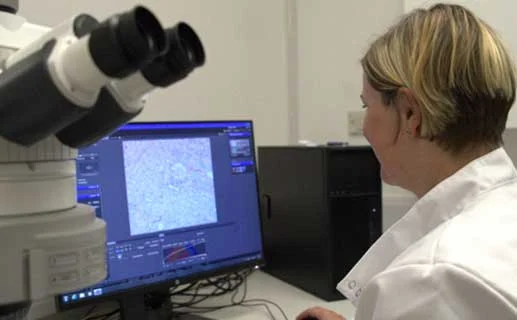
Les modèles in vivo validés fournissent des données cliniquement pertinentes dans tous les domaines thérapeutiques, accélérant la prise de décisions éclairées et réduisant les risques liés au développement de médicaments.

Test