


Ressources
-
STORM Therapeutics: From Lead to Pre-Candidate Nomination in 18 Months

STORM Therapeutics: From Lead to Pre-Candidate Nomination in 18 Months
Case study




Discover precise insights into brain neurochemistry with Sygnature Discovery's in vivo microdialysis and cOFM services. With over 20 years of expertise, we design bespoke studies that reveal how compounds modulate neurotransmitter systems in health and disease. Using UHPLC/HPLC with electrochemical detection or mass spectrometry, we deliver robust PK/PD data to support confident CNS decision making.


juillet 30, 2015

Inobrodib, an exciting, first-in-class oral anti-cancer drug in clinical development by CellCentric, was collaboratively designed, synthesised and supported on its pre-clinical journey by an integrated project team at Sygnature Discovery. Inobrodib is now showing promising results in Phase I and II trials for multiple myeloma and other cancer types.

In drug discovery, generating targets is no longer the challenge. The real question is how to identify the few worth investing months of research and significant resources to pursue. Hear expert perspectives on how AI, pathway analysis and scientific expertise are shaping modern target identification.
juillet 7, 2026

Tenez‑vous au courant des dernières mises à jour de l’entreprise, des étapes clés et des annonces importantes.
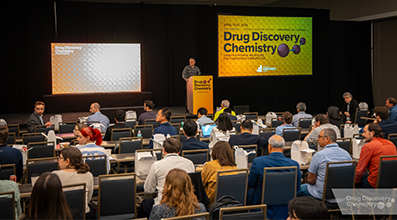
Découvrez les conférences et rencontres scientifiques à venir, où vous pourrez échanger avec notre équipe.

Chez Sygnature Discovery, nous fournissons des solutions de découverte de médicaments de classe mondiale pour accélérer la progression de vos composés, de l’idée jusqu’à la clinique.

Notre équipe de direction rassemble une diversité d’expériences et de ressources, favorisant la collaboration et l’innovation dans l’ensemble du processus de découverte de médicaments.

Explorez les opportunités de carrière chez Sygnature Discovery. Rejoignez une équipe internationale qui obtient des résultats exceptionnels grâce à la collaboration, à l’innovation et à l’intégrité.
Inobrodib, an exciting, first-in-class oral anti-cancer drug in clinical development by CellCentric, was collaboratively designed, synthesised and supported on its pre-clinical journey by an integrated project team at Sygnature Discovery. Inobrodib is now showing promising results in Phase I and II trials for multiple myeloma and other cancer types.
Chez Sygnature Discovery, nous fournissons des solutions de découverte de médicaments de classe mondiale pour accélérer la progression de vos composés, de l’idée jusqu’à la clinique.
Notre équipe de direction rassemble une diversité d’expériences et de ressources, favorisant la collaboration et l’innovation dans l’ensemble du processus de découverte de médicaments.
Explorez les opportunités de carrière chez Sygnature Discovery. Rejoignez une équipe internationale qui obtient des résultats exceptionnels grâce à la collaboration, à l’innovation et à l’intégrité.
Solutions scientifiques | Science des protéines et biologie structurale
La technique Fida permet une mesure rapide et incroyablement précise de la taille des protéines en solution, avec ou sans marquage.

soutenir vos recherches
Nous utilisons Fida pour notre contrôle qualité interne et pour comprendre les protéines que nous produisons. Nous proposons également l’analyse Fida comme service indépendant pour vos échantillons.
Taille des particules : Fournit des informations sur :
Taille maximale : Fournit des informations sur :
Changement de signal : Donne des informations sur :

« Fida allows rapid measurement of protein size in solution and can be done with or without labelling. We can use this information to study both functional and structural properties, evaluating protein stability, activity, and ligand binding all using a single instrument. »

Lead Protein Scientist

Ressources


Nous réunissons un mélange dynamique de nouveaux talents et d’experts chevronnés de l’industrie pharmaceutique du monde entier, garantissant l’excellence à chaque étape de la découverte.
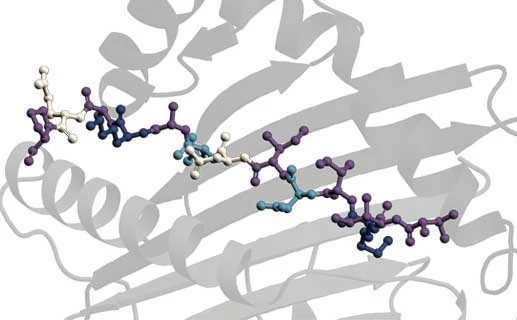
Page d’accueil du département de protéomique et de biologie structurale. Nous prenons le temps de comprendre votre objectif et les finalités de votre projet afin d’adapter notre approche en conséquence.

Nous proposons des techniques biophysiques de pointe pour l’identification, la qualité et la stabilité des protéines, notamment la spectrométrie de masse, la FIDA et la RMN, adaptées à vos besoins de recherche.

Solutions biophysiques à haut débit pour la liaison, la cinétique et l’interaction avec la cible, combinant des technologies de pointe et une expertise approfondie pour guider la découverte de médicaments.

Des solutions sur mesure en biosciences, combinant technologies de pointe et expertise collaborative pour concevoir des tests robustes et accélérer la prise de décisions éclairées en matière de découverte de médicaments.
Peak Proteins, NuChem Sciences et SB Drug Discovery sont désormais pleinement intégrés à Sygnature Discovery.
