


Ressources
-
STORM Therapeutics: From Lead to Pre-Candidate Nomination in 18 Months

STORM Therapeutics: From Lead to Pre-Candidate Nomination in 18 Months
Case study


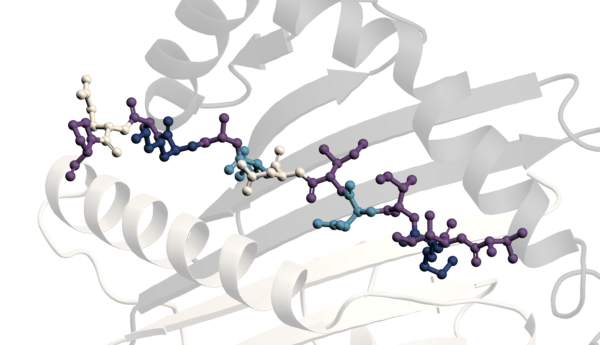


Discover precise insights into brain neurochemistry with Sygnature Discovery's in vivo microdialysis and cOFM services. With over 20 years of expertise, we design bespoke studies that reveal how compounds modulate neurotransmitter systems in health and disease. Using UHPLC/HPLC with electrochemical detection or mass spectrometry, we deliver robust PK/PD data to support confident CNS decision making.


juillet 30, 2015

Inobrodib, an exciting, first-in-class oral anti-cancer drug in clinical development by CellCentric, was collaboratively designed, synthesised and supported on its pre-clinical journey by an integrated project team at Sygnature Discovery. Inobrodib is now showing promising results in Phase I and II trials for multiple myeloma and other cancer types.

In drug discovery, generating targets is no longer the challenge. The real question is how to identify the few worth investing months of research and significant resources to pursue. Hear expert perspectives on how AI, pathway analysis and scientific expertise are shaping modern target identification.
juillet 7, 2026

Tenez‑vous au courant des dernières mises à jour de l’entreprise, des étapes clés et des annonces importantes.
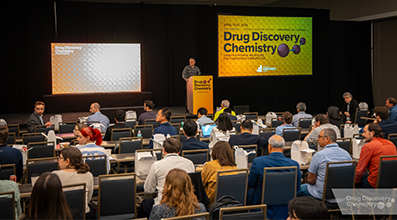
Découvrez les conférences et rencontres scientifiques à venir, où vous pourrez échanger avec notre équipe.

Chez Sygnature Discovery, nous fournissons des solutions de découverte de médicaments de classe mondiale pour accélérer la progression de vos composés, de l’idée jusqu’à la clinique.

Notre équipe de direction rassemble une diversité d’expériences et de ressources, favorisant la collaboration et l’innovation dans l’ensemble du processus de découverte de médicaments.

Explorez les opportunités de carrière chez Sygnature Discovery. Rejoignez une équipe internationale qui obtient des résultats exceptionnels grâce à la collaboration, à l’innovation et à l’intégrité.
Inobrodib, an exciting, first-in-class oral anti-cancer drug in clinical development by CellCentric, was collaboratively designed, synthesised and supported on its pre-clinical journey by an integrated project team at Sygnature Discovery. Inobrodib is now showing promising results in Phase I and II trials for multiple myeloma and other cancer types.
Chez Sygnature Discovery, nous fournissons des solutions de découverte de médicaments de classe mondiale pour accélérer la progression de vos composés, de l’idée jusqu’à la clinique.
Notre équipe de direction rassemble une diversité d’expériences et de ressources, favorisant la collaboration et l’innovation dans l’ensemble du processus de découverte de médicaments.
Explorez les opportunités de carrière chez Sygnature Discovery. Rejoignez une équipe internationale qui obtient des résultats exceptionnels grâce à la collaboration, à l’innovation et à l’intégrité.
Solutions scientifiques | DMPK
Les interactions médicamenteuses peuvent compromettre la sécurité, l’efficacité et l’approbation réglementaire. Chez Sygnature Discovery, nous associons des tests in vitro validés à une interprétation experte afin de réduire les risques et d’accélérer votre accès aux essais cliniques.

SOUTENIR VOS RECHERCHES
Une évaluation in vitro complète est essentielle pour anticiper ces risques. Nous évaluons votre composé à la fois comme agent précipitant (inhibiteur ou inducteur d’enzymes ou de transporteurs) et comme substrat (substrat des voies métaboliques ou de transport). Ces données permettent d’évaluer le risque clinique, d’ajuster la posologie et d’obtenir l’autorisation de mise sur le marché.

Notre expertise en matière d’interactions médicamenteuses
Associés à une conception et une interprétation expertes des études, nos services DDI favorisent une prise de décision éclairée et accélèrent le passage à la clinique.
Identifiez les enzymes du cytochrome P450 (CYP450) responsables du métabolisme de votre composé. Cette identification permet de prédire les risques d’interactions et la variabilité, et favorise un développement clinique rationnel ainsi que des décisions réglementaires éclairées.
Évaluez si votre composé induit une surexpression des enzymes CYP par activation transcriptionnelle. Grâce à la RT-qPCR pour la mesure de l’ARNm, nous fournissons des données quantitatives et sensibles permettant de détecter précocement les risques d’induction et d’étayer les évaluations de la susceptibilité métabolique.
Déterminez si votre composé inhibe de manière compétitive les enzymes CYP à l’aide de substrats sondes spécifiques d’isoformes. Ces études sont essentielles pour anticiper les interactions médicamenteuses et orienter les stratégies de développement.
Quantifiez la cinétique de l’inhibition du CYP par un mécanisme spécifique afin de prédire sa pertinence in vivo . Les valeurs de K<sub> inact</sub> et K<sub> i </sub> permettent d’orienter la modélisation PBPK et les décisions réglementaires, garantissant ainsi la progression de votre programme en toute confiance.
Ressources


Nous réunissons un mélange dynamique de nouveaux talents et d’experts chevronnés de l’industrie pharmaceutique du monde entier, garantissant l’excellence à chaque étape de la découverte.

Les stratégies intégrées de formulation et de forme solide réduisent les risques, améliorent la stabilité et la solubilité et accélèrent le passage de la sélection des candidats à la clinique.
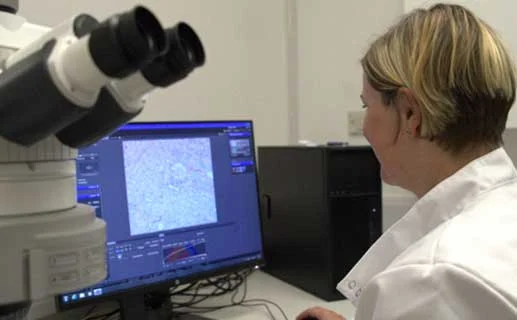
Les modèles in vivo validés fournissent des données cliniquement pertinentes dans tous les domaines thérapeutiques, accélérant la prise de décisions éclairées et réduisant les risques liés au développement de médicaments.

Test