


Ressources
-
STORM Therapeutics: From Lead to Pre-Candidate Nomination in 18 Months

STORM Therapeutics: From Lead to Pre-Candidate Nomination in 18 Months
Case study




Discover precise insights into brain neurochemistry with Sygnature Discovery's in vivo microdialysis and cOFM services. With over 20 years of expertise, we design bespoke studies that reveal how compounds modulate neurotransmitter systems in health and disease. Using UHPLC/HPLC with electrochemical detection or mass spectrometry, we deliver robust PK/PD data to support confident CNS decision making.


juillet 30, 2015
Inobrodib, an exciting, first-in-class oral anti-cancer drug in clinical development by CellCentric, was collaboratively designed, synthesized and supported on its pre-clinical journey by an integrated project team at Sygnature Discovery. Inobrodib is now showing promising results in Phase I and II trials for multiple myeloma and other cancer types.

In drug discovery, generating targets is no longer the challenge. The real question is how to identify the few worth investing months of research and significant resources to pursue. Hear expert perspectives on how AI, pathway analysis and scientific expertise are shaping modern target identification.
juillet 7, 2026

Tenez‑vous au courant des dernières mises à jour de l’entreprise, des étapes clés et des annonces importantes.
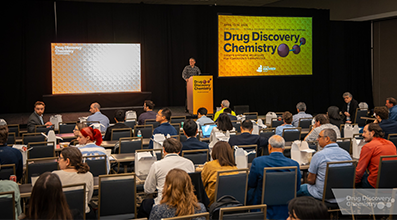
Découvrez les conférences et rencontres scientifiques à venir, où vous pourrez échanger avec notre équipe.

Chez Sygnature Discovery, nous fournissons des solutions de découverte de médicaments de classe mondiale pour accélérer la progression de vos composés, de l’idée jusqu’à la clinique.

Notre équipe de direction rassemble une diversité d’expériences et de ressources, favorisant la collaboration et l’innovation dans l’ensemble du processus de découverte de médicaments.

Explorez les opportunités de carrière chez Sygnature Discovery. Rejoignez une équipe internationale qui obtient des résultats exceptionnels grâce à la collaboration, à l’innovation et à l’intégrité.
Inobrodib, an exciting, first-in-class oral anti-cancer drug in clinical development by CellCentric, was collaboratively designed, synthesized and supported on its pre-clinical journey by an integrated project team at Sygnature Discovery. Inobrodib is now showing promising results in Phase I and II trials for multiple myeloma and other cancer types.
Chez Sygnature Discovery, nous fournissons des solutions de découverte de médicaments de classe mondiale pour accélérer la progression de vos composés, de l’idée jusqu’à la clinique.
Notre équipe de direction rassemble une diversité d’expériences et de ressources, favorisant la collaboration et l’innovation dans l’ensemble du processus de découverte de médicaments.
Explorez les opportunités de carrière chez Sygnature Discovery. Rejoignez une équipe internationale qui obtient des résultats exceptionnels grâce à la collaboration, à l’innovation et à l’intégrité.
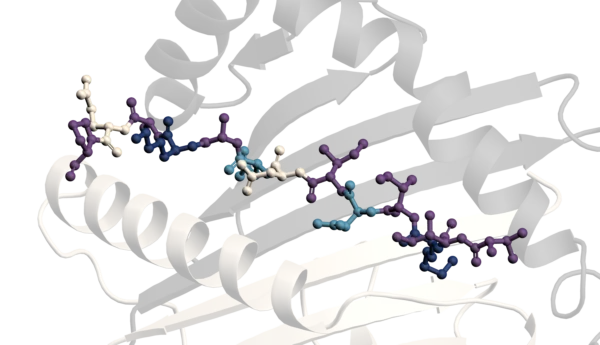
Producing recombinant proteins for structural biology studies can be challenging, particularly when high yields, exceptional purity, and correct post-translational modifications are all required. In this project, our client required 20 mg of a lipid-modified protein for NMR structural studies. The target protein was known to undergo post-translational modification through the addition of palmitic acid to a cysteine residue, a modification that can significantly influence protein structure, stability, and biological function.
Obtaining sufficient quantities of correctly modified protein proved particularly challenging, as the protein exhibited poor solubility during expression and was difficult to purify using conventional methods.
To maximize soluble protein expression while preserving the required post-translational modification, we developed a tailored expression strategy in E. coli. Rather than relying on standard expression protocols, we significantly reduced the expression temperature, carefully controlled expression levels through media optimization, and extended production over several days rather than the typical overnight timeframe.
These adjustments substantially improved protein quality and resulted in a two- to three-fold increase in soluble protein expression. While more than 95% of the protein remained insoluble, the increase in soluble material provided a viable starting point for downstream purification.
We then optimized both Ni-affinity chromatography and size exclusion chromatography conditions to address protein-specific purification challenges. Standard purification workflows proved insufficient; therefore, custom purification conditions were developed to improve recovery, purity, and overall yield.
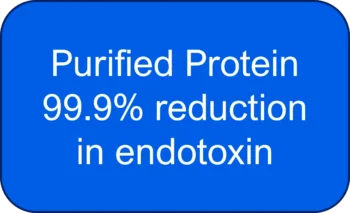
By combining this optimized expression and purification strategy with scale-up to a 20-litre bacterial culture, we successfully produced 20 mg of protein at greater than 90% purity. Importantly, mass spectrometry analysis confirmed the presence of the covalently attached palmitic acid modification, demonstrating that the desired post-translational modification had been retained throughout production and purification.
Despite initial concerns that production of sufficient quantities of correctly modified protein would not be feasible, our integrated protein expression, purification, and analytical approach delivered the required amount of material for structural studies.
The client received 20 mg of highly purified, post-translationally modified protein suitable for NMR analysis, enabling their structural biology programme to progress with confidence. This project highlights the importance of combining customised expression strategies, robust purification workflows, and detailed analytical characterization when tackling complex recombinant protein production challenges.

Peak Proteins, NuChem Sciences et SB Drug Discovery sont désormais pleinement intégrés à Sygnature Discovery.