



Featured Resources
-
STORM Therapeutics: From Lead to Pre-Candidate Nomination in 18 Months

STORM Therapeutics: From Lead to Pre-Candidate Nomination in 18 Months
Case study


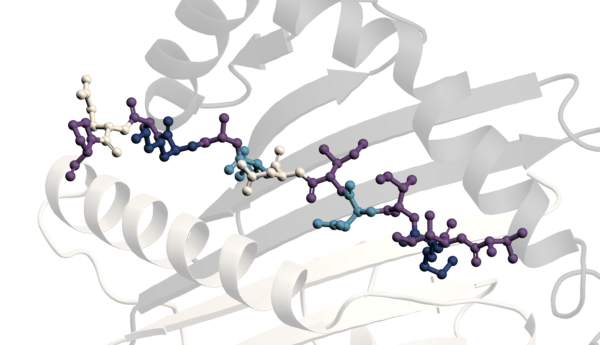


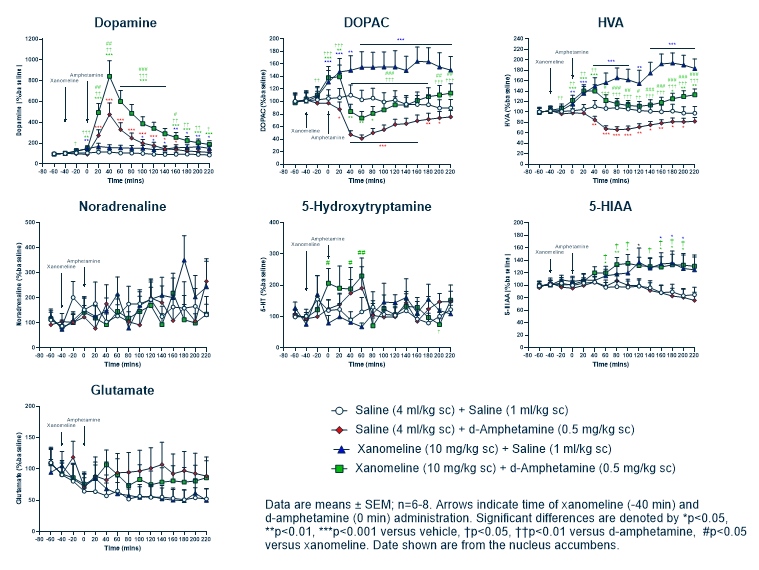
Discover precise insights into brain neurochemistry with Sygnature Discovery's in vivo microdialysis and cOFM services. With over 20 years of expertise, we design bespoke studies that reveal how compounds modulate neurotransmitter systems in health and disease. Using UHPLC/HPLC with electrochemical detection or mass spectrometry, we deliver robust PK/PD data to support confident CNS decision making.


July 30, 2015

Inobrodib, an exciting, first-in-class oral anti-cancer drug in clinical development by CellCentric, was collaboratively designed, synthesised and supported on its pre-clinical journey by an integrated project team at Sygnature Discovery. Inobrodib is now showing promising results in Phase I and II trials for multiple myeloma and other cancer types.

In drug discovery, generating targets is no longer the challenge. The real question is how to identify the few worth investing months of research and significant resources to pursue. Hear expert perspectives on how AI, pathway analysis and scientific expertise are shaping modern target identification.
July 7, 2026

Stay up to date with the latest company updates, milestones, and announcements.
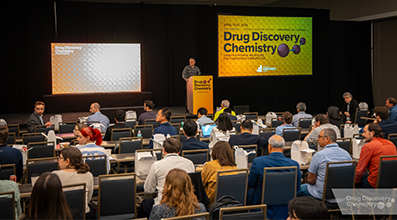
Explore upcoming conferences and scientific meetings where you can connect with our team.

At Sygnature Discovery, we deliver world-leading drug discovery solutions to accelerate your compound from idea to clinic.

Our leadership team brings diverse experience and insight, driving collaboration and innovation across drug discovery.

Explore careers at Sygnature Discovery and join a global team committed to science, collaboration, and integrity.
Inobrodib, an exciting, first-in-class oral anti-cancer drug in clinical development by CellCentric, was collaboratively designed, synthesised and supported on its pre-clinical journey by an integrated project team at Sygnature Discovery. Inobrodib is now showing promising results in Phase I and II trials for multiple myeloma and other cancer types.
At Sygnature Discovery, we deliver world-leading drug discovery solutions to accelerate your compound from idea to clinic.
Our leadership team brings diverse experience and insight, driving collaboration and innovation across drug discovery.
Explore careers at Sygnature Discovery and join a global team committed to science, collaboration, and integrity.
The IC50 Shift assay is designed to identify and characterise time‑dependent inhibition (TDI) of drug‑metabolising CYP450 enzymes using human liver microsomes. TDI represents an important mechanism of drug–drug interactions, arising when an inhibitor becomes more potent following pre‑incubation with NADPH‑activated metabolic systems. This behaviour can indicate quasi‑irreversible or irreversible enzyme modification, resulting in prolonged inhibition and increased risk of clinical exposure changes. The assay covers seven CYP isoforms (CYP1A2, CYP2B6, CYP2C8, CYP2C9, CYP2C19, CYP2D6, and CYP3A4) across eight probe substrates, each selected according to FDA guidance for in vitro inhibition studies. By comparing inhibitor potency with and without a pre‑incubation step, the assay differentiates reversible inhibition from TDI.
Seven test compound concentrations are incubated with human liver microsomes with or without a 30-minute pre-incubation in the presence and absence of NADPH. Following this, an incubation is performed in the presence of the isoform-specific probe substrate at 37 °C shaking at 700 rpm. Selective CYP TDIs are screened alongside the test compounds as positive controls. Reactions are terminated by sampling into cold MeCN before being centrifuged at 3,000 rpm for 30 minutes at 4 °C. Formation of the metabolite is monitored by LC-MS/MS.
Formation of metabolite is measured in each sample and a percent activity calculated, 100% is defined as the metabolite formed in the incubation containing vehicle with no test compound. Non-linear regression is used to fit a four-parameter logistic curve to a plot of percent activity against concentration of test compounds (where test concentration is plotted on a log scale). An IC50 value is obtained, this is the concentration of test compound at which 50% inhibition is achieved. The fold-shift (increase in potency) is calculated by taking the IC50 of the 30-minute pre-incubation without NADPH and dividing by the IC50 of the 30-minute pre-incubation with NADPH. A fold-shift of ≥2 indicates TDI. Positive control compounds with known TDI against each isoform are included
Validation demonstrated that the IC50 Shift assay is a reliable, consistent and well‑controlled platform for identifying TDIs across seven CYP isoforms. The validation strategy assessed intra‑ and inter‑assay variability by repeating studies across three independent occasions with multiple replicates. IC50 determinations were consistent across all isoforms, demonstrating strong reproducibility and confirming that the assay can reliably detect both reversible inhibitors and TDIs.
Table 1 summarises the validated assay conditions for each isoform, including substrates, inhibitors, concentration ranges and protein levels for each isoform. These optimised conditions reflect the outcomes of prior kinetic characterisation and ensure accurate determination of IC50 shifts. Collectively, the results confirm that the IC50 Shift assay provides a sensitive and dependable means of screening for CYP‑mediated TDI, supporting risk assessment in early drug discovery and development.


Peak Proteins, NuChem Sciences, and SB Drug Discovery have now fully integrated with Sygnature Discovery.