


Featured Resources
-
STORM Therapeutics: From Lead to Pre-Candidate Nomination in 18 Months

STORM Therapeutics: From Lead to Pre-Candidate Nomination in 18 Months
Case study


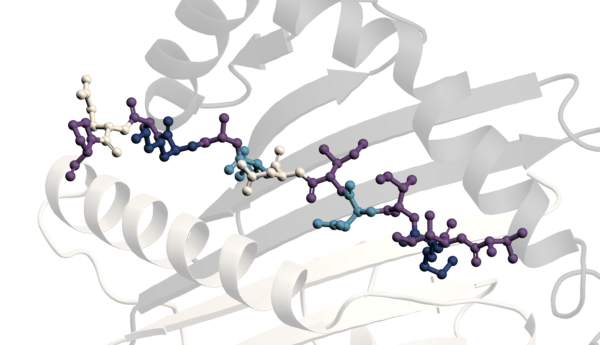


Discover precise insights into brain neurochemistry with Sygnature Discovery's in vivo microdialysis and cOFM services. With over 20 years of expertise, we design bespoke studies that reveal how compounds modulate neurotransmitter systems in health and disease. Using UHPLC/HPLC with electrochemical detection or mass spectrometry, we deliver robust PK/PD data to support confident CNS decision making.


July 30, 2015

Inobrodib, an exciting, first-in-class oral anti-cancer drug in clinical development by CellCentric, was collaboratively designed, synthesised and supported on its pre-clinical journey by an integrated project team at Sygnature Discovery. Inobrodib is now showing promising results in Phase I and II trials for multiple myeloma and other cancer types.

In drug discovery, generating targets is no longer the challenge. The real question is how to identify the few worth investing months of research and significant resources to pursue. Hear expert perspectives on how AI, pathway analysis and scientific expertise are shaping modern target identification.
July 7, 2026

Stay up to date with the latest company updates, milestones, and announcements.
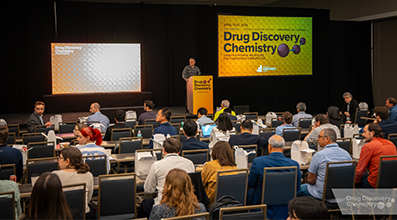
Explore upcoming conferences and scientific meetings where you can connect with our team.

At Sygnature Discovery, we deliver world-leading drug discovery solutions to accelerate your compound from idea to clinic.

Our leadership team brings diverse experience and insight, driving collaboration and innovation across drug discovery.

Explore careers at Sygnature Discovery and join a global team committed to science, collaboration, and integrity.
Inobrodib, an exciting, first-in-class oral anti-cancer drug in clinical development by CellCentric, was collaboratively designed, synthesised and supported on its pre-clinical journey by an integrated project team at Sygnature Discovery. Inobrodib is now showing promising results in Phase I and II trials for multiple myeloma and other cancer types.
At Sygnature Discovery, we deliver world-leading drug discovery solutions to accelerate your compound from idea to clinic.
Our leadership team brings diverse experience and insight, driving collaboration and innovation across drug discovery.
Explore careers at Sygnature Discovery and join a global team committed to science, collaboration, and integrity.
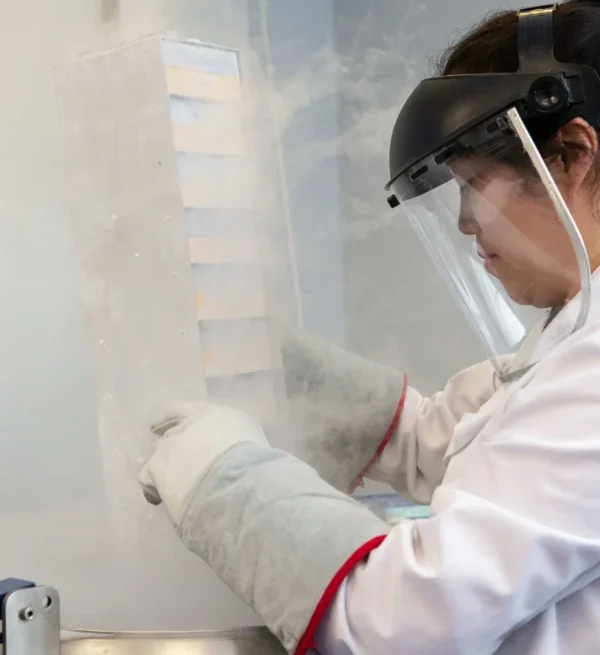
Cell-based assays play a critical role in modern drug discovery, providing researchers with the ability to study targets in a relevant environment. By expressing proteins in living cells, these systems preserve important characteristics such as post-translational modifications, cellular localization and interactions with downstream signaling partners. They also enable the measurement of functional cellular responses, helping researchers understand how compounds influence biological pathways and disease-relevant mechanisms.
As a result, the success of any cell-based drug discovery program relies on access to robust, biologically relevant cellular models capable of delivering reliable and reproducible data
While recombinant cell lines have become indispensable across target validation, hit identification, and lead optimization, generating a stable cell line is only the first step. The real challenge lies in creating relevant cellular systems that can provide robust, reproducible, and actionable data throughout a discovery program.
Too often, cell line generation is treated as a standalone activity, with cellular models transferred between multiple providers. As projects progress from cell line generation to assay development and screening, this fragmented approach can introduce delays, technical transfer challenges, and the risk that a cell line fails to deliver the functional performance required for downstream drug discovery.
Our Cellular Pharmacology team has spent more than two decades developing advanced cell-based models for drug discovery. Our team incorporates functional assessment throughout development, ensuring clone selection is driven not only by target expression, but by biologically relevant performance and suitability for downstream applications.
Many organizations outsource cell line development to alternative providers before transferring the resulting clones to internal teams or external CROs for assay development and screening. This approach can create challenges if cellular models are not developed with downstream applications in mind. In many cell line generation workflows, target expressions are often used as a primary measure of success. However, expression alone rarely determines whether a cellular model will be suitable for screening or lead optimization. A clone may demonstrate strong protein expression while exhibiting poor pharmacology, weak assay windows, low reproducibility, suboptimal signalling characteristics or unstable target expression over time.
At Sygnature Discovery, each programme is supported by comprehensive validation strategies that assess both target expression and functional performance. These may include:
Expression and characterisation
Functional validation
In addition to expression and functional assessment, selected clones are evaluated for characteristics such as stability, reproducibility, growth performance and assay robustness. By assessing hundreds of individual clones and selecting only those that demonstrate the optimal balance of expression, functionality and long-term performance, we help ensure clients receive robust cellular models capable of supporting downstream drug discovery and long-term research goals.
Many drug discovery teams have experienced the challenge of receiving a cell line that appears technically successful but subsequently fails to perform downstream. When cell line generation and assay development are performed by separate organizations, these issues often emerge late in the process, creating delays and additional costs. Especially in situations where performing additional experiments to cross-check the data is required, or worse to repeat a particular study.
By integrating cell line generation with assay development and pharmacological validation, Sygnature Discovery either avoids these issues completely or identifies and resolves them much earlier.
For our clients, this approach can help reduce project risk and accelerate progression into downstream screening and lead optimization.
We deliver validated cellular models designed to perform throughout the entire drug discovery journey.
Drug discovery increasingly focuses on complex target classes that require specialist knowledge, robust assay systems and carefully engineered cellular models. Over the last 20 years, our Cellular Pharmacology team has generated and characterized over 500 stable cell lines across:
Our expertise also extends to complex multi-protein cellular models, where protein stoichiometry can have a profound impact on functionality and pharmacology. In these systems, our scientists routinely evaluate and isolate clones exhibiting the optimal balance of expression and signalling characteristics to support downstream drug discovery. In addition, we develop advanced cellular models for protein-protein interaction studies, targeted protein degradation and advanced reporter technologies. Combined with our functional validation and assay development capabilities, these models support projects from early target validation through to high-throughput screening and lead optimisation, ensuring the cellular tools generated are fit for their intended application.
At Sygnature Discovery, we view cell line generation as the foundation of a successful discovery program, not a standalone deliverable. By integrating functional validation throughout development and aligning cellular models with downstream assay requirements, we help clients generate the robust biological tools needed to move programs forward with confidence.
Looking for a partner to support your next cell line generation project? Contact our team to discuss how Sygnature Discovery can help transform challenging biology into robust drug discovery solutions.
Explore our Cellular Pharmacology e-book to discover how Sygnature supports drug discovery programs through cell line generation, assay development, receptor pharmacology, ion channel biology, transporter assays and advanced cellular technologies.

Peak Proteins, NuChem Sciences, and SB Drug Discovery have now fully integrated with Sygnature Discovery.