


Featured Resources
-
STORM Therapeutics: From Lead to Pre-Candidate Nomination in 18 Months

STORM Therapeutics: From Lead to Pre-Candidate Nomination in 18 Months
Case study


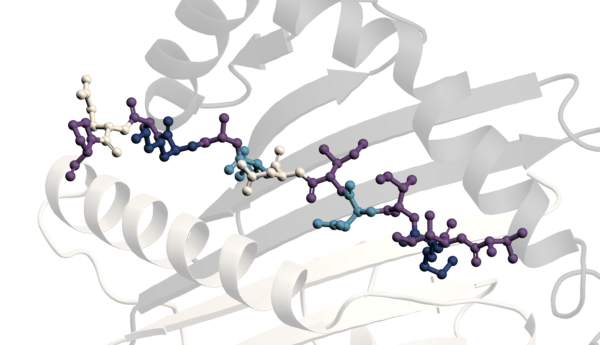


Discover precise insights into brain neurochemistry with Sygnature Discovery's in vivo microdialysis and cOFM services. With over 20 years of expertise, we design bespoke studies that reveal how compounds modulate neurotransmitter systems in health and disease. Using UHPLC/HPLC with electrochemical detection or mass spectrometry, we deliver robust PK/PD data to support confident CNS decision making.


July 30, 2015

Inobrodib, an exciting, first-in-class oral anti-cancer drug in clinical development by CellCentric, was collaboratively designed, synthesised and supported on its pre-clinical journey by an integrated project team at Sygnature Discovery. Inobrodib is now showing promising results in Phase I and II trials for multiple myeloma and other cancer types.

In drug discovery, generating targets is no longer the challenge. The real question is how to identify the few worth investing months of research and significant resources to pursue. Hear expert perspectives on how AI, pathway analysis and scientific expertise are shaping modern target identification.
July 7, 2026

Stay up to date with the latest company updates, milestones, and announcements.
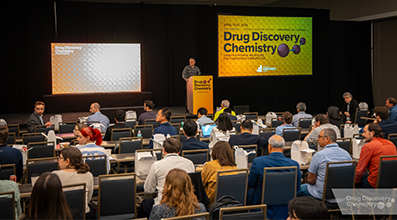
Explore upcoming conferences and scientific meetings where you can connect with our team.

At Sygnature Discovery, we deliver world-leading drug discovery solutions to accelerate your compound from idea to clinic.

Our leadership team brings diverse experience and insight, driving collaboration and innovation across drug discovery.

Explore careers at Sygnature Discovery and join a global team committed to science, collaboration, and integrity.
Inobrodib, an exciting, first-in-class oral anti-cancer drug in clinical development by CellCentric, was collaboratively designed, synthesised and supported on its pre-clinical journey by an integrated project team at Sygnature Discovery. Inobrodib is now showing promising results in Phase I and II trials for multiple myeloma and other cancer types.
At Sygnature Discovery, we deliver world-leading drug discovery solutions to accelerate your compound from idea to clinic.
Our leadership team brings diverse experience and insight, driving collaboration and innovation across drug discovery.
Explore careers at Sygnature Discovery and join a global team committed to science, collaboration, and integrity.

This article is adapted from a webinar featuring Daniel Bakowski, PhD (Sygnature Discovery), Saurav Bhaskar Saha, PhD (Sygnature Discovery), Iman Bhattacharya (QIAGEN Digital Insights), and Olivia Alder (QIAGEN Digital Insights). Learn more about the experts
Access our on-demand webinar here.
Target identification has always been complex. With the rise of AI, it has become significantly faster, but not necessarily easier.
AI can now generate hundreds, even thousands, of potential targets. On the surface, this feels like progress. But in reality, it introduces a new challenge: how do you confidently select the few targets worth investing time, budget, and experimental effort into?
As discussed in this conversation, the bottleneck in modern drug discovery is no longer idea generation. It is decision-making.
AI-driven platforms, particularly those leveraging causal analysis and multi-omics integration, are powerful tools for identifying potential targets. But they are not infallible.
In the webinar, Sygnature Discovery’s Daniel Bakowski shared a practical example from a CNS target discovery project. An AI-generated target appeared highly compelling: it was druggable, supported by strong network analysis, and aligned with the intended biology.
However, deeper expert review revealed a critical issue: while the target was relevant in the disease tissue, it was also highly active elsewhere in the body, introducing significant safety risks.
The AI wasn’t “wrong”, but it lacked context.
This highlights a key limitation: AI struggles to fully capture biological nuance, particularly when it comes to tissue specificity, systemic effects, and clinical feasibility.
One of the most interesting shifts discussed was the move from target prioritisation to target deprioritisation.
Rather than asking “Which targets should we pursue?”, teams increasingly ask: “Which targets can we confidently rule out?”
Sygnature Discovery’s Saurav Saha described this as building a “target universe”, casting a wide net, then systematically filtering candidates using layered analysis, expert input, and iterative validation.
This approach reflects a broader shift in mindset:
Or, as Saurav put it: “Fail early. Exit early.”
What emerges from this discussion is not an AI-driven workflow, but a hybrid model.
In this model:
Crucially, this is not a linear handoff. It is an iterative, multi-disciplinary process involving:
Each discipline contributes a different lens, and importantly, each has the ability to veto a target.
“Explainability” is often discussed in the context of AI, but in drug discovery it takes on a very practical meaning.
For scientists at the bench, explainability is not just about understanding how a target was generated. It is about biological plausibility.
Key questions include:
As Daniel highlighted, confidence comes from building a coherent chain of evidence, not from a single data point.
And importantly, that chain can also be broken, leading to early and informed deprioritization.
Conflicting datasets, particularly across different omics layers, are a common challenge.
For example, RNA and protein data may appear to point in opposite directions. Rather than treating this as a contradiction, QIAGEN’s Olivia Alder highlighted the importance of looking beyond individual data points to pathway-level effects.
Tools like Ingenuity Pathway Analysis (IPA) enable researchers to:
This more holistic view often reveals that what appears to be conflict at the gene level may actually align at the system level.
However, even with advanced tools, human expertise remains essential:
Another key insight is that drug discovery often moves beyond individual targets.
Initial analysis may highlight a specific protein, but practical considerations—such as tractability or safety—can shift focus toward the broader pathway.
This creates new opportunities:
In some cases, the most promising strategy is not targeting the original protein, but modulating the pathway in a different way.
While AI has limitations, its strengths are clear.
Across the discussion, one area stood out: multimodal data integration.
AI enables teams to:
As Saurav described, it acts as a powerful assistant, helping teams move faster from raw data to a defined problem statement.
Looking ahead, there is also growing interest in using AI to extract subtle signals from complex datasets, such as clinical or longitudinal data, to uncover new opportunities for drug repositioning or novel target discovery.
Despite these advances, an important question remains:
What are we overlooking?
AI can generate unexpected and novel targets, but these are often deprioritised due to:
As Daniel noted, there is always a tension between pursuing well-supported targets and exploring more speculative biology.
This raises a broader challenge for the industry:
how to balance risk, novelty, and feasibility without missing future breakthroughs.
The discussion closed with a set of practical recommendations:
The role of AI in drug discovery is no longer in question.
The real challenge is how to use it effectively in practice.
As this conversation makes clear, the most successful approach is not AI replacing human expertise, but AI and experts working together, combining scale with context, and speed with judgment.
In an increasingly complex discovery landscape, this hybrid model is not just advantageous, it is becoming essential for making faster, more confident decisions about which targets truly matter.
Learn more about Sygnature’s AI-enabled drug discovery capabilities here.
The Panelists of the Webinar
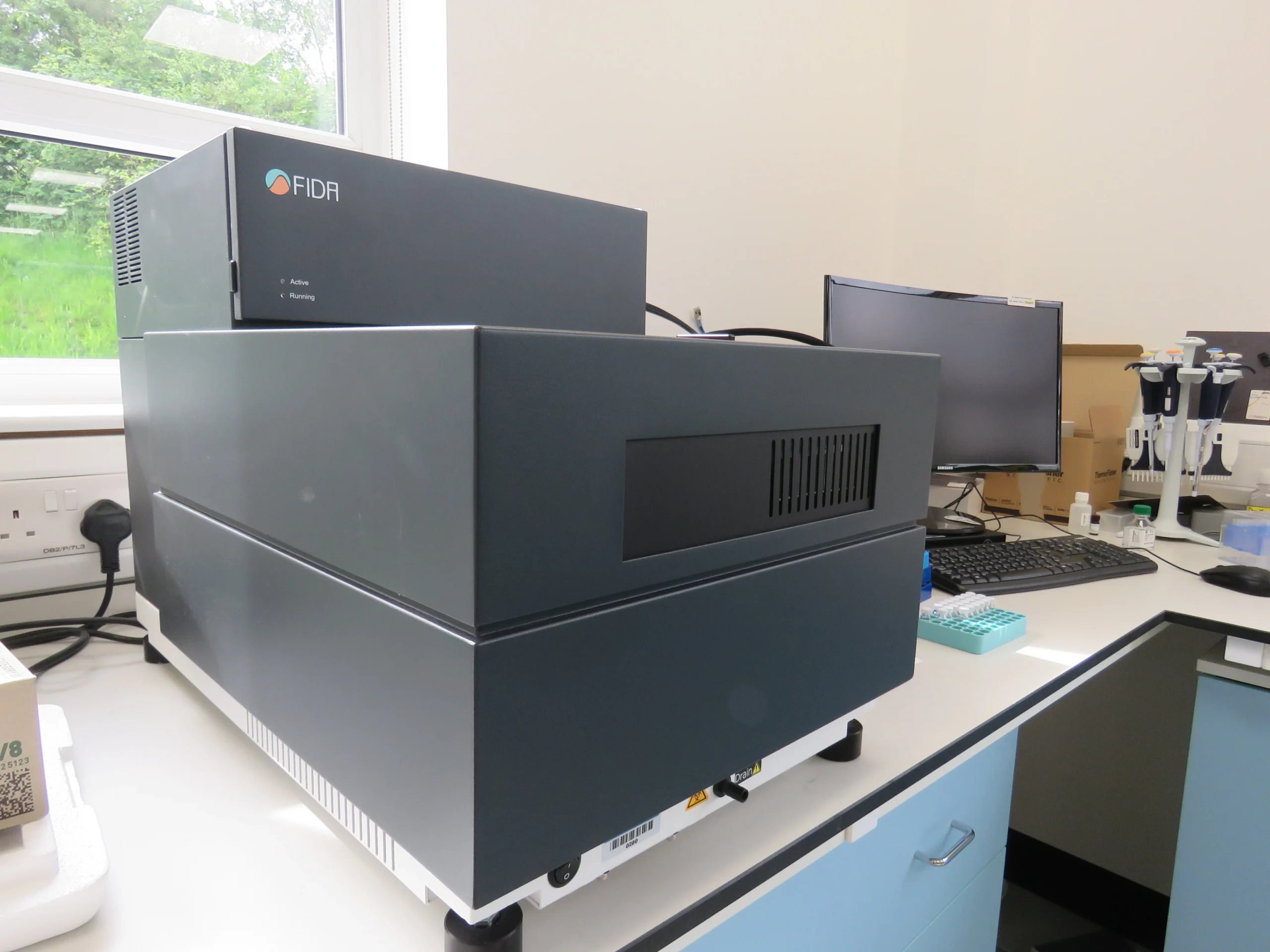

Peak Proteins, NuChem Sciences, and SB Drug Discovery have now fully integrated with Sygnature Discovery.