



Featured Resources
-
STORM Therapeutics: From Lead to Pre-Candidate Nomination in 18 Months

STORM Therapeutics: From Lead to Pre-Candidate Nomination in 18 Months
Case study




Discover precise insights into brain neurochemistry with Sygnature Discovery's in vivo microdialysis and cOFM services. With over 20 years of expertise, we design bespoke studies that reveal how compounds modulate neurotransmitter systems in health and disease. Using UHPLC/HPLC with electrochemical detection or mass spectrometry, we deliver robust PK/PD data to support confident CNS decision making.


July 30, 2015

Inobrodib, an exciting, first-in-class oral anti-cancer drug in clinical development by CellCentric, was collaboratively designed, synthesised and supported on its pre-clinical journey by an integrated project team at Sygnature Discovery. Inobrodib is now showing promising results in Phase I and II trials for multiple myeloma and other cancer types.

In drug discovery, generating targets is no longer the challenge. The real question is how to identify the few worth investing months of research and significant resources to pursue. Hear expert perspectives on how AI, pathway analysis and scientific expertise are shaping modern target identification.
July 7, 2026

Stay up to date with the latest company updates, milestones, and announcements.
Explore upcoming conferences and scientific meetings where you can connect with our team.

At Sygnature Discovery, we deliver world-leading drug discovery solutions to accelerate your compound from idea to clinic.

Our leadership team brings diverse experience and insight, driving collaboration and innovation across drug discovery.

Explore careers at Sygnature Discovery and join a global team committed to science, collaboration, and integrity.
Inobrodib, an exciting, first-in-class oral anti-cancer drug in clinical development by CellCentric, was collaboratively designed, synthesised and supported on its pre-clinical journey by an integrated project team at Sygnature Discovery. Inobrodib is now showing promising results in Phase I and II trials for multiple myeloma and other cancer types.
At Sygnature Discovery, we deliver world-leading drug discovery solutions to accelerate your compound from idea to clinic.
Our leadership team brings diverse experience and insight, driving collaboration and innovation across drug discovery.
Explore careers at Sygnature Discovery and join a global team committed to science, collaboration, and integrity.
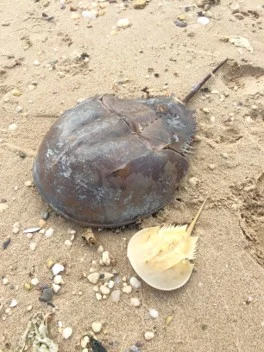
With over 4 billion people to date (March 2022) having received a Covid-19 vaccination, the human race owes a huge debt to countless researchers, healthcare workers and volunteers. Many of us would not be aware, however, that we also owe a debt of gratitude to a 450-million-year-old living fossil!
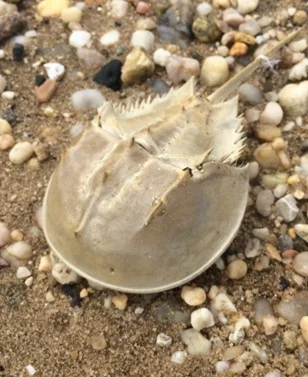
Meet the weird looking Horseshoe crab – a creature that ‘arrived on the scene’ 100 million years before the dinosaurs, isn’t actually a crab and has blue blood! Here’s a great video of them from the BBC.
This creature (Limulus polyphemus), not content with withstanding whatever the planet has thrown at it for multiple millennia, has helped saved lives and continues to do so. How? – the answer, remarkably, is in that blue blood!
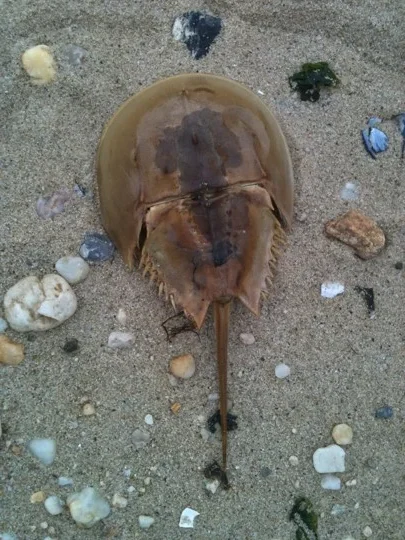
Horseshoes crab’s blood is blue due to the presence of hemocyanin – where copper is used to carry oxygen rather than iron. These crabs have a very open circulatory system and swim in a bacterial rich environment. As such they are very susceptible to bacterial invasion and unlike warm blooded creatures, they cannot raise their temperature to kill of an infection. Instead, they have evolved a very sensitive method of detecting and dealing with infection. Amoebocytes in the blood detect bacterial invasion and trigger rapid clotting of the surrounding area, enmeshing the bacteria and plugging any wound.
This was reported by Fred Bang in 1953 [1], where it was shown that gram-negative bacteria will cause the blood of the horseshoe crab to turn into a semi-solid mass. It was demonstrated that even dead bacteria can trigger the clotting and was later shown to be the caused by lipopolysaccharide (LPS) endotoxins, a type of pyrogen [2].
The mechanism of clotting is now well studied and is known to involve a serine proteinase cascade. The components of the cascade are released from amoebocytes after LPS is detected. The clotting cascade is initiated by LPS binding to Factor C and finishes with coagulin polymerisation- shown below [3].
Endotoxins are lipopolysaccharide components of the outer membrane of Gram-negative bacteria such as E. coli. They are shed by growing bacteria and released when they die, are water soluble and heat resistant. In humans, LPS stimulates inflammation but excessive exposure can cause septic shock and organ failure [4]. For this reason, detecting endotoxin contamination is extremely important for anything that enters the body through surgery, injection or therapy.
During the 1960’s,Frederik Bang and Jack Levin developed a test from Limulus polyphemus blood that detected the presence of endotoxin [5]. This test (LAL – Limulus amoebocyte lysate) used osmotically lysed Limulus amoebocytes, the solution of which would gel upon endotoxin or bacterial addition. This test was cheaper, more sensitive and quicker than the established method of using rabbits for endotoxin assays and was approved for use in 1977 by the FDA. Modern tests still utilise freeze dried horseshoe crab derived lysate. The endotoxin measurement is then using one of three different methodologies: the qualitative gel clot (like the original developed test) and two quantitative tests; one based on a colour change and the other on turbidity.
The LAL test is now the primary method of testing all parenteral drugs, vaccines, intravenous fluids and implanted medical devices that come in contact with blood or cerebrospinal fluid. An estimated 70 million tests are performed per year. Johns Hopkins Bloomberg School of Public Health has placed the LAL test among the “100 Most Important Contributions to Public Health.”
For proteins used as therapeutics, endotoxin levels must be reduced to extremely low levels to avoid unwanted cellular and immune responses. Endotoxin contamination of proteins can be problematic for cell-based assays and animal use, and can even affect in vitro assays. At Sygnature Discovery, we are experienced in minimising endotoxin levels where required by our clients. We can employ a low endotoxin workflow utilising sodium hydroxide washed equipment and low endotoxin water, and use endotoxin removal columns where required. We can provide endotoxin levels of purified proteins in the standard EU/ml or EU/mg. We have now moved away from the traditional LAL test to a more sustainable recombinant C based kit to help save the wonderful horseshoe crabs. This is usually very successful in reducing endotoxin levels to an acceptable level in our HEK cells, CHO cells and insect cell expression systems. Expression in E. coli understandable generates a high source of endotoxin which can be difficult to reduce to the required level. We implement clean low endotoxin workflows and have developed several purification process steps to reduce endotoxin. However these often lead to a significant loss of yield of the target protein. We now have another option available to us with the ClearColiTM cell line.
Written by Martin Jennings, who has been fascinated by these crabs since finding their moults on a beach during a conference.
[1] F. B. Bang, “The effect of a marine bacterium on Limulus and the formation of blood clots.,” Biological Bulletin, vol. 105, pp. 361–362, 1953.
[2] J. LEVIN and F. B. BANG, “THE ROLE OF ENDOTOXIN IN THE EXTRACELLULAR COAGULATION OF LIMULUS BLOOD.,” Bull Johns Hopkins Hosp, vol. 115, pp. 265–274, Sep. 1964, Accessed: Feb. 28, 2022. [Online]. Available here.
[3] T. J. Novitsky, “Limulus amebocyte lysate (LAL) detection of endotoxin in human blood,” Journal of Endotoxin Research, vol. 1, no. 4, pp. 253–263, Sep. 1994, https://journals.sagepub.com/doi/10.1177/096805199400100407
[4] R. Karima, S. Matsumoto, H. Higashi, and K. Matsushima, “The molecular pathogenesis of endotoxic shock and organ failure,” Molecular Medicine Today, vol. 5, no. 3. Elsevier Current Trends, pp. 123–132, Mar. 01, 1999. https://pubmed.ncbi.nlm.nih.gov/10203736/
[5] J. Levin, P. A. Tomasulo, and R. S. Oser, “Detection of endotoxin in human blood and demonstration of an inhibitor,” The Journal of Laboratory and Clinical Medicine, vol. 75, no. 6, pp. 903–911, Jun. 1970, https://www.translationalres.com/article/0022-2143(70)90189-7/fulltext

Peak Proteins, NuChem Sciences, and SB Drug Discovery have now fully integrated with Sygnature Discovery.