Featured Resources
-
STORM Therapeutics: From Lead to Pre-Candidate Nomination in 18 Months

STORM Therapeutics: From Lead to Pre-Candidate Nomination in 18 Months
Case study


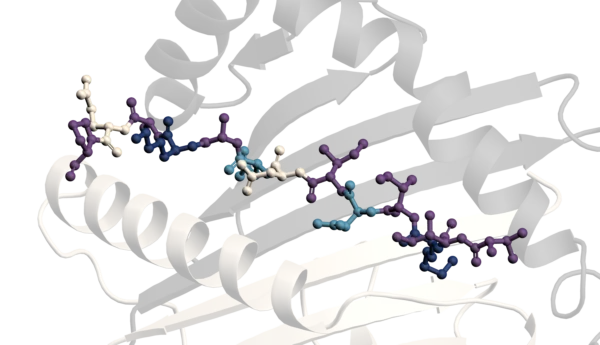


Discover precise insights into brain neurochemistry with Sygnature Discovery's in vivo microdialysis and cOFM services. With over 20 years of expertise, we design bespoke studies that reveal how compounds modulate neurotransmitter systems in health and disease. Using UHPLC/HPLC with electrochemical detection or mass spectrometry, we deliver robust PK/PD data to support confident CNS decision making.


July 30, 2015
Inobrodib, an exciting, first-in-class oral anti-cancer drug in clinical development by CellCentric, was collaboratively designed, synthesized and supported on its pre-clinical journey by an integrated project team at Sygnature Discovery. Inobrodib is now showing promising results in Phase I and II trials for multiple myeloma and other cancer types.

In drug discovery, generating targets is no longer the challenge. The real question is how to identify the few worth investing months of research and significant resources to pursue. Hear expert perspectives on how AI, pathway analysis and scientific expertise are shaping modern target identification.
July 7, 2026

Stay up to date with the latest company updates, milestones, and announcements.
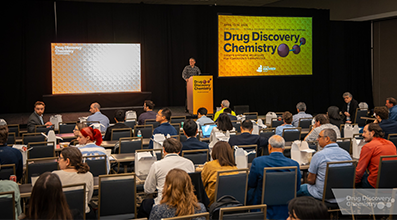
Explore upcoming conferences and scientific meetings where you can connect with our team.

At Sygnature Discovery, we deliver world-leading drug discovery solutions to accelerate your compound from idea to clinic.

Our leadership team brings diverse experience and insight, driving collaboration and innovation across drug discovery.

Explore careers at Sygnature Discovery and join a global team committed to science, collaboration, and integrity.
Inobrodib, an exciting, first-in-class oral anti-cancer drug in clinical development by CellCentric, was collaboratively designed, synthesized and supported on its pre-clinical journey by an integrated project team at Sygnature Discovery. Inobrodib is now showing promising results in Phase I and II trials for multiple myeloma and other cancer types.
At Sygnature Discovery, we deliver world-leading drug discovery solutions to accelerate your compound from idea to clinic.
Our leadership team brings diverse experience and insight, driving collaboration and innovation across drug discovery.
Explore careers at Sygnature Discovery and join a global team committed to science, collaboration, and integrity.
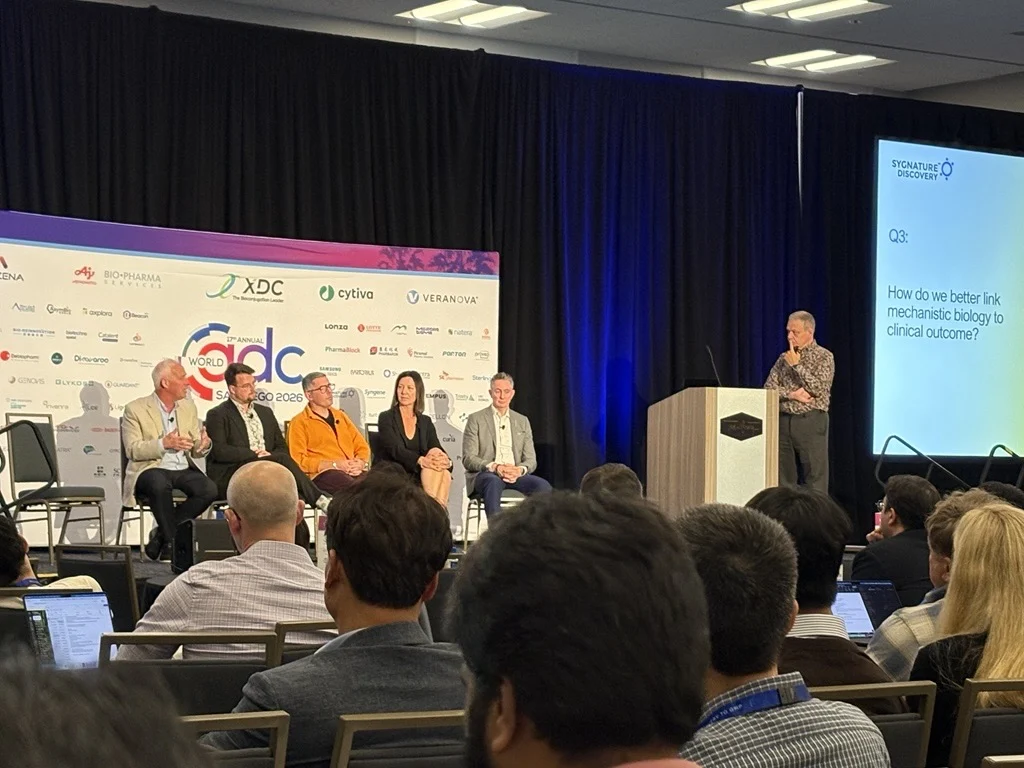
At World ADC San Diego 2026, ADC leaders from Pfizer, AstraZeneca, Callio Therapeutics, Iksuda Therapeutics and Sygnature Discovery explored a question shaping the future of the field: what is the new path to the next generation of ADCs?
Bringing together perspectives across the industry, Sygnature Discovery’s Allan Jordan moderated a panel which featured Joshua Greally (Sygnature Discovery), Sharsti Sandall (Pfizer), Jeremy Sauer (Callio Therapeutics), Jay Harper (AstraZeneca), and Bob Lutz (Iksuda Therapeutics).
While the discussion touched on payload innovation, linker technologies and emerging applications, a broader theme quickly emerged. The next generation of ADCs may depend less on what we can build and more on how well we understand what we build.
A live audience poll reinforced this point. When attendees were asked about the biggest risk facing the ADC field over the next five years, the two leading responses were:
Together, these accounted for 77.59% of responses, significantly outweighing concerns around non-predictive toxicity (18.97%), clinical line-of-sight (1.72%), and other factors (1.72%).
Importantly, these findings are not independent. The discussion repeatedly returned to the idea that payload diversification alone is not enough. The challenge is building the mechanistic understanding needed to translate new payload concepts into differentiated medicines.
The panel opened with a challenge to one of the ADC field’s biggest successes and biggest vulnerabilities: our reliance on a relatively small number of proven payload classes.
Today’s most successful ADCs have largely been built around well-characterized cytotoxic mechanisms, including topoisomerase I inhibitor payloads, which benefit from extensive pharmacological and clinical experience. That accumulated knowledge helps researchers understand dosing, exposure, efficacy, toxicity, and clinical behavior with a degree of confidence that simply doesn’t exist for many first-in-class payloads.
The question, therefore, is not whether the field needs new payloads. It is how developers can confidently evaluate them.
Evaluating a new payload requires more than demonstrating activity in vitro. The panel highlighted the need to understand how the mechanism relates to tumor biology, whether it offers meaningful pharmacological differentiation, how resistance may emerge, and whether preclinical findings are likely to translate into patients.
In other words, novelty alone is not enough. New payloads must be supported by a compelling biological rationale and a clear path to demonstrating therapeutic value.
One of the strongest themes throughout the discussion was the importance of mechanism. Programs often progress without a complete understanding of why they work, why they fail, or what ultimately drives efficacy and toxicity.
This led to a broader discussion around reverse translation. Rather than viewing clinical studies purely as validation exercises, the panel argued that human data should be used retrospectively to improve mechanistic understanding in future ADCs.
Panelists emphasized the importance of generating human data as early as possible. Earlier clinical learning enables more effective reverse translation, helping researchers understand what is really driving efficacy, toxicity, differentiation, and therapeutic index.
Better translation doesn’t come solely from generating more preclinical data. It also comes from using clinical data to understand what we missed, what we misunderstood, and what we need to model differently going forward.
TThe limitations of preclinical models emerged as another major theme. Rather than dismissing existing models, the panel emphasized understanding what they can and cannot tell us.
A useful distinction emerged between two questions:
These are not the same thing.
No single model can fully reproduce human ADC pharmacology, but models remain valuable when used to build mechanistic confidence, characterize pharmacology, and identify risk. The goal is not perfect prediction, but better decision-making.
Several panelists argued that the industry should look for opportunities to test well-founded hypotheses in patients earlier, enabling faster learning and more effective reverse translation.
This was not presented as an argument for lowering scientific standards. Rather, progress often depends on generating meaningful human data and using those insights to refine future programs.
Developing a strong mechanistic hypothesis is important, but ultimately it must be tested. That requires a willingness to be scientifically ambitious.
Not reckless, but brave.
Innovation requires calculated risk-taking grounded in biology, pharmacology, and evidence.
Panelists highlighted the importance of understanding the “99% residual drug” as well as the fraction responsible for efficacy.
A key takeaway was the need to understand the complete pharmacological profile of an ADC, not just delivery to the target cell.
Exposure, distribution, clearance, off-target interactions, tolerability, and safety all influence clinical outcomes.
Success cannot be judged solely by whether an ADC reaches and engages its target. Researchers must also understand how the remaining majority of the molecule behaves across biological systems, and the implications for tolerability and toxicity.
Every step that improves our understanding of ADC behavior in patients represents meaningful progress, even when a program does not deliver the desired outcome.
Another recurring theme was the industry’s limited ability to learn from unsuccessful programs.
In a field where programs can fail for biological, pharmacological, toxicological, or translational reasons, a failed ADC may be just as informative as a successful one, provided we understand why it failed.
When an ADC program fails, numerous factors may be responsible:
Without a mechanistic understanding of why a program failed, it becomes difficult to determine whether the underlying biological hypothesis was incorrect or whether the molecule simply wasn’t the right way to test that hypothesis.
The panel suggested that improved access to mechanistic learnings from failed programs could help reduce duplication and improve future development strategies.
The panel also explored opportunities beyond oncology. While the scientific rationale for targeted delivery remains compelling, non-oncology indications introduce very different biological, safety, and development challenges.
Chronic administration, different risk-benefit expectations, and stricter safety requirements create hurdles that differ substantially from oncology settings.
As ADC technologies expand into new therapeutic areas, developers will need to think carefully about safety margins, pharmacology, and long-term tolerability.
When asked what they would change about the ADC field, the discussion shifted to development efficiency.
Discovery teams can potentially generate multiple promising candidates in weeks, yet GMP manufacturing and clinical readiness may take months.
This creates a significant bottleneck. Again, the panel did not argue for lowering standards. Instead, speakers emphasized the opportunity to improve development workflows and accelerate progression into Phase I studies while maintaining scientific rigor and patient safety.
Perhaps the most important conclusion from the discussion was that the next generation of ADCs will not be defined solely by payload innovation.
The field undoubtedly needs new payloads, new mechanisms, and new therapeutic opportunities. But innovation alone is not enough.
The real differentiator will be the ability to connect biology, pharmacology, mechanism, safety, and clinical outcomes into a coherent understanding of how ADCs work.
The panel emphasized that progress depends on understanding not only what succeeds, but why it succeeds; not only what fails, but why it fails.
The audience poll suggested the ADC community is increasingly concerned about two things: limited payload diversity and incomplete mechanistic understanding. By the end of the discussion, it became clear that these are not separate challenges.
New payloads create opportunities. Mechanistic understanding determines whether those opportunities become medicines.
The future of ADCs may be shaped less by the molecules we build and more by how quickly and effectively we learn from them.
If there was a consensus answer to the panel’s central question, it was this: the new path to the next generation of ADCs runs through better biology, stronger mechanistic understanding, earlier clinical learning, and more effective translation from bench to bedside.



Peak Proteins, NuChem Sciences, and SB Drug Discovery have now fully integrated with Sygnature Discovery.