Featured Resources
-
STORM Therapeutics: From Lead to Pre-Candidate Nomination in 18 Months

STORM Therapeutics: From Lead to Pre-Candidate Nomination in 18 Months
Case study




Discover precise insights into brain neurochemistry with Sygnature Discovery's in vivo microdialysis and cOFM services. With over 20 years of expertise, we design bespoke studies that reveal how compounds modulate neurotransmitter systems in health and disease. Using UHPLC/HPLC with electrochemical detection or mass spectrometry, we deliver robust PK/PD data to support confident CNS decision making.


July 30, 2015

Inobrodib, an exciting, first-in-class oral anti-cancer drug in clinical development by CellCentric, was collaboratively designed, synthesized and supported on its pre-clinical journey by an integrated project team at Sygnature Discovery. Inobrodib is now showing promising results in Phase I and II trials for multiple myeloma and other cancer types.

In drug discovery, generating targets is no longer the challenge. The real question is how to identify the few worth investing months of research and significant resources to pursue. Hear expert perspectives on how AI, pathway analysis and scientific expertise are shaping modern target identification.
July 7, 2026

Stay up to date with the latest company updates, milestones, and announcements.
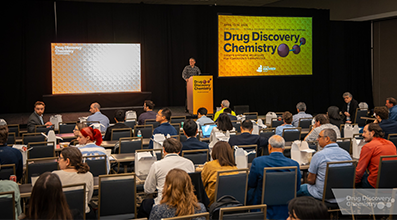
Explore upcoming conferences and scientific meetings where you can connect with our team.

At Sygnature Discovery, we deliver world-leading drug discovery solutions to accelerate your compound from idea to clinic.

Our leadership team brings diverse experience and insight, driving collaboration and innovation across drug discovery.

Explore careers at Sygnature Discovery and join a global team committed to science, collaboration, and integrity.
Inobrodib, an exciting, first-in-class oral anti-cancer drug in clinical development by CellCentric, was collaboratively designed, synthesized and supported on its pre-clinical journey by an integrated project team at Sygnature Discovery. Inobrodib is now showing promising results in Phase I and II trials for multiple myeloma and other cancer types.
At Sygnature Discovery, we deliver world-leading drug discovery solutions to accelerate your compound from idea to clinic.
Our leadership team brings diverse experience and insight, driving collaboration and innovation across drug discovery.
Explore careers at Sygnature Discovery and join a global team committed to science, collaboration, and integrity.
Understanding target biology is critical to making informed decisions throughout drug discovery. By combining pathway analysis, omics data, and target-class expertise, researchers can build a clearer picture of disease mechanisms, identify the most effective intervention strategies, and reduce scientific risk before significant resources are committed.
Drug discovery is often regarded as a challenge of chemistry, screening, and development, but program risk emerges early if we lack an understanding of the biological context of the drug target in health and disease. Unjustified assumptions become embedded in every downstream decision from target nomination, intervention strategy selection, assay cascade and model selection, through to biomarker strategies and translation study design. If we understand target biology more completely, we can make better discovery decisions.
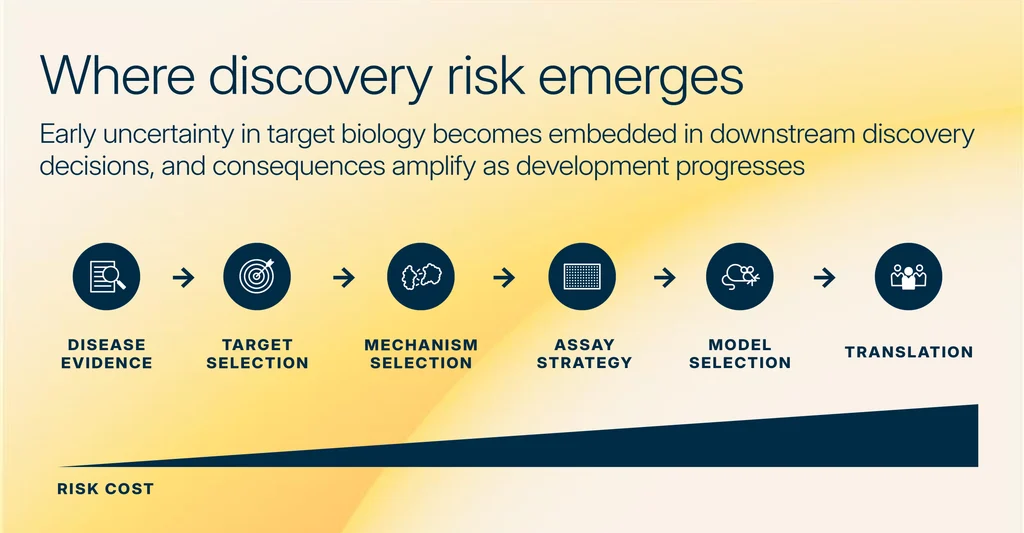
How do scientists establish confidence that a target is actionable and worthy of investment in a specific therapeutic strategy? Drug targets may start with compelling and sophisticated evidence of a disease association (human genetics, patient-derived omics, histopathological data) but association cannot by itself justify an intervention strategy. Association does not establish function, causality, or the nature of the modulation required for a disease-modifying effect, and it offers little illumination around safety. But by evaluating targets in a deeper biological context, we can generate insights to address these gaps and materially improve discovery strategy.
The risk chains that drug discovery scientists encounter when target biology is poorly resolved are of course well recognised, for example pursuing epidemiological associations that are not driver but disease-response effect – targets whose modulation may offer no benefit or may even be harmful.
Let us now consider one specific source of target uncertainty: multifunctionality. Many targets mediated multiple distinct and discrete biological roles (“moonlighting”), precision modulation of which may enable safe and successful disease modification in a landscape otherwise treacherous for on-target toxicity risk. A multifunctional kinase that helps organise a transduction complex, for example, might present a strong causal disease association in omics data. But is this relationship causal, and is it through canonical enzyme activity or its architectural function? By parsing disease and target biology, we hope to distinguish between these scenarios, and in turn recommend an appropriate pharmacological strategy. Do we pursue a small molecule orthosteric inhibitor, a glue degrader, or a PPI inhibitor? Each is a ligand of the target, but each brings a distinct activity profile on catalytic activity versus protein-protein interaction function. Understanding biology, then, can help guide us even at the earliest stages of a drug discovery campaign, selecting how to modulate a target.
At Sygnature Discovery, biological pathways are our preferred framework for understanding target biology. Through pathway analysis we can expand the disease universe beyond individual proteins, generating richer information the informs critical discovery decisions. We might, for example, identify alternative or more opportune clinical target; we might predict unanticipated safety risk; and we might identify the means to mitigate these risks. Pathway analysis strengthens – or challenges – target-disease confidence.
In one program, we were presented with a set of proteomics-derived targets and the brief to identify which might offer clinical opportunity for a specific disease. However, seemingly disparate gene sets may conceal a deeper biological connection, and by mapping the targets to known disease biology and pathways that we had carefully curated through literature and knowledge base (QIAGEN IPA) review, we we succeeded in resolving such a relationship. A cluster of targets that were linked to each other and to specific disease biology, though lacking direct anchorage themselves. This analysis established a biologically coherent framework that both expanded the pathway landscape and provided a robust rationale for target prioritization within it.
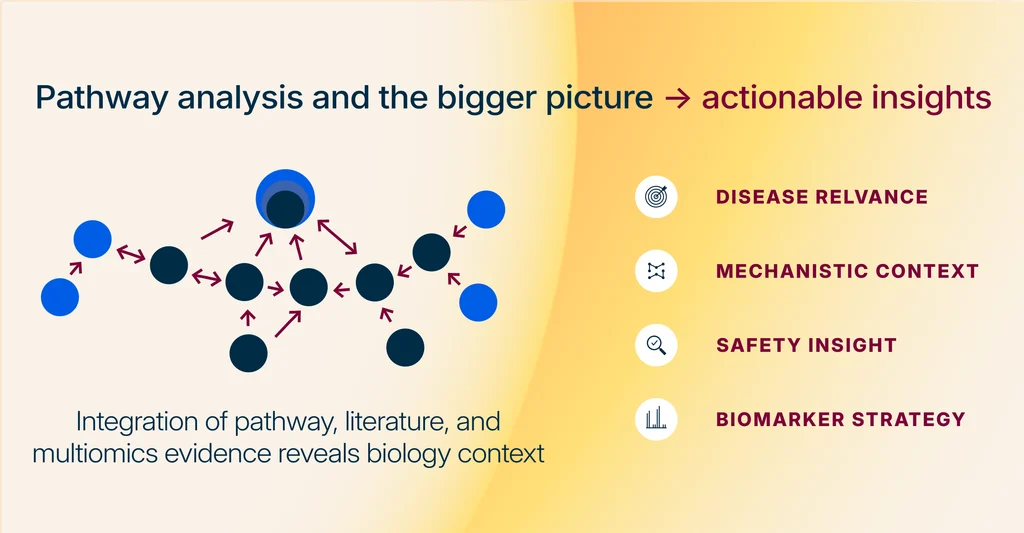
We draw on multiple evidence streams to elaborate pathways from simple linear cascades or interactomes into mechanistic frameworks that help us demonstrate or infer context and disease anchorage where primary evidence might otherwise be limited. They include up-to-the-minute scientific literature, omics (including RNA-seq, GWAS and colocalised QLT evidence, perturbation genomics, and proteomics), clinical data and functional biology.
Biology underpins drug discovery, and putting biology first means better confidence in targets and deeper insight into how that target should be modulated, the assays required to test hypotheses, and the models most likely to predict clinical outcomes. It enables us to make strategic decisions within an evidence framework that is rationally grounded in disease mechanism, and it lets us test our understanding of those disease mechanisms. While we cannot eliminate uncertainty, by integrating pathways with evidence that implicated targets in disease we establish a coherent and evidence-based framework for critical program decisions about intervention, providing a deeper understanding of biological context to reduce downstream program risk.
Different target classes – let us be straightforward taxonomically: GPCRs, ion channels, transporters, enzymes – bring unique opportunities, liabilities, and technical challenges. Experience within a target class means we ask the right questions sooner rather than later (e.g., signaling bias and crosstalk for GPCRs and state dependence for ion channels, compartmentalization of enzymes). A nuanced appreciation of pathways can help us anticipate, rather than explain afterwards, paradoxical observations: a target in isolation is not a drug discovery strategy; this emerges from understanding the biology around it. Deep target class expertise therefore complements pathway analysis, enabling the translation of mechanistic understanding into effective discovery strategies and accelerate the path from target hypothesis to therapeutic opportunity.

Peak Proteins, NuChem Sciences, and SB Drug Discovery have now fully integrated with Sygnature Discovery.