


Ressources
-
STORM Therapeutics: From Lead to Pre-Candidate Nomination in 18 Months

STORM Therapeutics: From Lead to Pre-Candidate Nomination in 18 Months
Case study


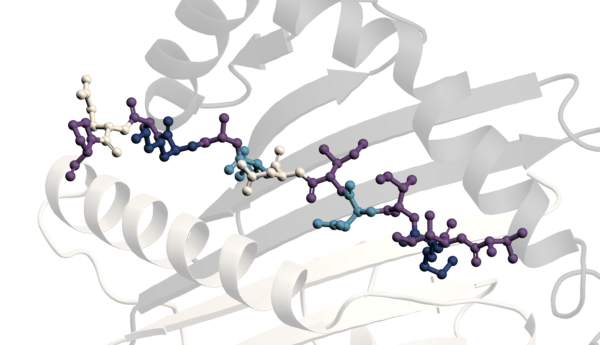


Discover precise insights into brain neurochemistry with Sygnature Discovery's in vivo microdialysis and cOFM services. With over 20 years of expertise, we design bespoke studies that reveal how compounds modulate neurotransmitter systems in health and disease. Using UHPLC/HPLC with electrochemical detection or mass spectrometry, we deliver robust PK/PD data to support confident CNS decision making.


juillet 30, 2015

Inobrodib, an exciting, first-in-class oral anti-cancer drug in clinical development by CellCentric, was collaboratively designed, synthesised and supported on its pre-clinical journey by an integrated project team at Sygnature Discovery. Inobrodib is now showing promising results in Phase I and II trials for multiple myeloma and other cancer types.

In drug discovery, generating targets is no longer the challenge. The real question is how to identify the few worth investing months of research and significant resources to pursue. Hear expert perspectives on how AI, pathway analysis and scientific expertise are shaping modern target identification.
juillet 7, 2026

Tenez‑vous au courant des dernières mises à jour de l’entreprise, des étapes clés et des annonces importantes.
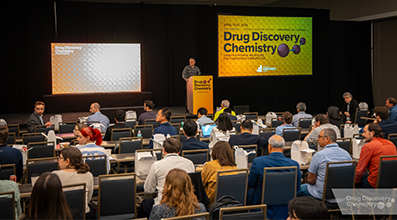
Découvrez les conférences et rencontres scientifiques à venir, où vous pourrez échanger avec notre équipe.

Chez Sygnature Discovery, nous fournissons des solutions de découverte de médicaments de classe mondiale pour accélérer la progression de vos composés, de l’idée jusqu’à la clinique.

Notre équipe de direction rassemble une diversité d’expériences et de ressources, favorisant la collaboration et l’innovation dans l’ensemble du processus de découverte de médicaments.

Explorez les opportunités de carrière chez Sygnature Discovery. Rejoignez une équipe internationale qui obtient des résultats exceptionnels grâce à la collaboration, à l’innovation et à l’intégrité.
Inobrodib, an exciting, first-in-class oral anti-cancer drug in clinical development by CellCentric, was collaboratively designed, synthesised and supported on its pre-clinical journey by an integrated project team at Sygnature Discovery. Inobrodib is now showing promising results in Phase I and II trials for multiple myeloma and other cancer types.
Chez Sygnature Discovery, nous fournissons des solutions de découverte de médicaments de classe mondiale pour accélérer la progression de vos composés, de l’idée jusqu’à la clinique.
Notre équipe de direction rassemble une diversité d’expériences et de ressources, favorisant la collaboration et l’innovation dans l’ensemble du processus de découverte de médicaments.
Explorez les opportunités de carrière chez Sygnature Discovery. Rejoignez une équipe internationale qui obtient des résultats exceptionnels grâce à la collaboration, à l’innovation et à l’intégrité.
Drug addiction remains one of the most persistent and complex public health challenges worldwide. Despite advances in prevention and treatment, drug‑related harm and mortality continue to rise, underscoring the need for deeper biological understanding and more predictive models to support the development of new therapies.
Socially, we use the term “addiction” to describe a range of behaviors that feel difficult to control. Often people will talk about being addicted to relatively harmless behaviors such as checking their phone or eating more chocolate than they intended. Clinically, however, drug addiction, more accurately referred to as a substance use disorder, has a much more precise definition.
Substance use disorders are characterized by compulsive drug-seeking or drug-taking behavior that becomes necessary for normal functioning, is no longer fully under voluntary control, and causes harm to the individual. These harms may be physical (for example, infections caused by needle reuse), psychological (such as deteriorating mental health), or social (such as deteriorating relationships or reduced performance at work). In severe cases, substance use disorders are fatal.
Despite promising data in the UK revealing the proportion of people regular drug use fell by 2.7% between 2004 and 2024, the number of deaths attributed to drug misuse doubled over the same period. Furthermore, 10,473 alcohol-specific deaths (conditions that can only be caused by alcohol exposure) were recorded in 2023 alone. Finally, although it is difficult to identify tobacco smoke as the sole cause of medical conditions, it is estimated that ~74,000 people in the UK died from a smoking related illness in 2019 (Office for National Statistics).
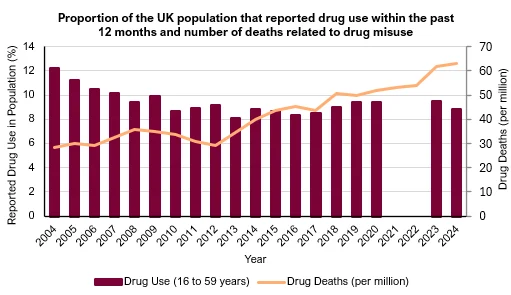
Proportion of the UK population (%) that have reported used drugs within the past 12 months from 2004 to 2024. Data for 2021 and 2022 was not collected during to COVID-19 pandemic. Number of deaths (per million population) that coroner associated with drug misuse from 2004 to 2024.
The situation is by no means isolated to the UK. Many regions of the world experiencing similar or even higher rates of substance use disorder and associated deaths. In the United States, the opioid epidemic continues to drive high mortality, with fentanyl causing more than 48,000 deaths in 2024 (UNODC). Globally, and especially in Europe and North and South America, cocaine use has increased drastically with approximately 25 million regular users (UNODC). Countries in Asia, the Middle East and North Africa are similarly affected by high rates of amphetamine and methamphetamine use.
Even legally available and socially accepted drugs are cause for concern with the World Health Organisation estimating there are 2.6 million deaths associated with alcohol and 7 million deaths associated with tobacco smoke globally every year.
A major obstacle in treating drug addiction is that pharmaceutical treatment options remain remarkably limited. Currently, there are only nine FDA approved treatments for substance use disorders. Notably, none of which are approved for use in addiction to stimulants such as cocaine and methamphetamine.
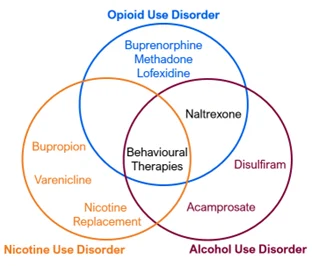
Medicines approved by the Food and Drug Administration for treatment of substance use disorders. Other treatments may be used “off-label”.
Development of novel pharmacotherapies is hindered by the very nature of the disease. Substance use disorders are fundamentally behavioral conditions, shaped by neurobiology, learning, environment and experience. Although biological assays can determine how a drug interacts at the biochemical, cell and tissue level, they can’t accurately predict changes in behavior.
Bridging this gap requires models that can assess the efficacy of novel pharmacotherapies in a species that can demonstrate specific behavioral aspects of addiction. Animals will voluntarily consume drugs with abuse potential for their rewarding and pleasurable effects, making them a useful model for human substance use disorders.
Addiction research most commonly uses rodents and non-human primates, although even simpler organisms, such as the fruit fly Drosophila melanogaster, can form associations between the drug rewards and environmental cues.
There are three main paradigms for assessing novel treatments for addiction guided by the three-part addiction model proposed by Koob and Volkow (Koob & Volkow, 2009).
The framework described addiction as a repeating cycle consisting of three interconnected phases:
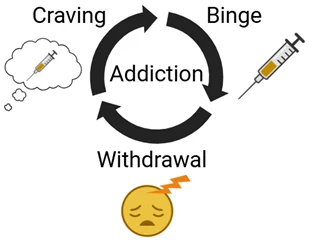
Three-part model of addiction (Koob & Volkow, 2009)
Despite the disturbing statistics on drug use and associated deaths, there are reasons to be optimistic. In the UK, 382,047 people accessed substance use treatments services in 2024 with 85% of those experiencing problems with opioids or alcohol, drugs for which a number of treatment options exist. The USA has seen a remarkable reduction in opioid overdoses, as a result of crackdowns on fentanyl precursors, nationwide naloxone rollouts and increased access to treatment programs. Globally, a third of the world’s population has access to smoking cessation services and smoke-free laws protecting non-smokers from passive smoke.
There is also promise for novel treatments for substance use disorders. Psychedelics which demonstrate promising data for conditions such as Major Depressive Disorder may also be useful for addictions. Ketamine, for example, has undergone considerable research for alcohol use disorder (Mehtani et al., 2025).
However, there are still a huge number of people that are not receiving adequate treatment and further research is required. To properly investigate novel treatments, they must be assessed for efficacy in models that accurately predict addiction in humans. Self-administration, dependence and withdrawal and reinstatement paradigms are a set of complementary assessments that cover a range of addictive behaviors.
In the following article series, we explore how these validated behavioral pharmacology models are used to study intoxication, withdrawal and craving, and how they provide a valuable method for screening urgently needed novel pharmacotherapies.
This article forms part of a four-part series exploring substance use disorders through the three-phase model of addiction and the preclinical behavioral pharmacology models used to support drug discovery.
Together, these articles examine how addiction develops, why it is so persistent, and how validated in vivo models are used to assess new therapeutic approaches.
An introduction to substance use disorders, the three-phase addiction model, and the role of behavioral pharmacology.
How reward-driven drug use and escalation are modelled in vivo.
Assessing dependence, withdrawal symptoms and maintenance therapies.
Understanding cue-induced relapse using reinstatement paradigms.

Focusing on the intoxication phase of addiction, this article examines how behavioral pharmacology models capture reward, reinforcement and binge‑like drug use in preclinical studies.
Addiction research depends on validated in vivo behavioral pharmacology models to assess reward, reinforcement, dependence and relapse-relevant behaviors.
These approaches form part of Sygnature Discovery’s CNS & pain in vivo pharmacology capabilities, supporting translational neuroscience and substance use disorder drug discovery from early research through to clinical decision-making.
Test