


Featured Resources
-
STORM Therapeutics: From Lead to Pre-Candidate Nomination in 18 Months

STORM Therapeutics: From Lead to Pre-Candidate Nomination in 18 Months
Case study


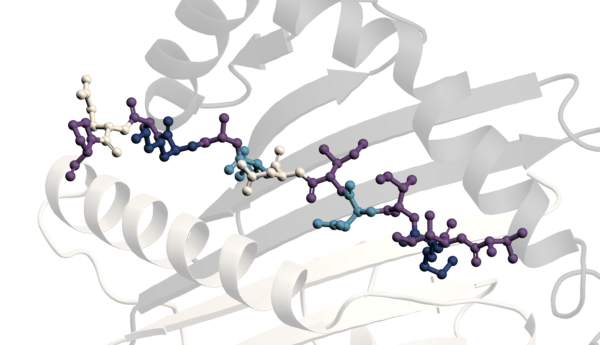


Discover precise insights into brain neurochemistry with Sygnature Discovery's in vivo microdialysis and cOFM services. With over 20 years of expertise, we design bespoke studies that reveal how compounds modulate neurotransmitter systems in health and disease. Using UHPLC/HPLC with electrochemical detection or mass spectrometry, we deliver robust PK/PD data to support confident CNS decision making.


July 30, 2015

Inobrodib, an exciting, first-in-class oral anti-cancer drug in clinical development by CellCentric, was collaboratively designed, synthesised and supported on its pre-clinical journey by an integrated project team at Sygnature Discovery. Inobrodib is now showing promising results in Phase I and II trials for multiple myeloma and other cancer types.

In drug discovery, generating targets is no longer the challenge. The real question is how to identify the few worth investing months of research and significant resources to pursue. Hear expert perspectives on how AI, pathway analysis and scientific expertise are shaping modern target identification.
July 7, 2026

Stay up to date with the latest company updates, milestones, and announcements.
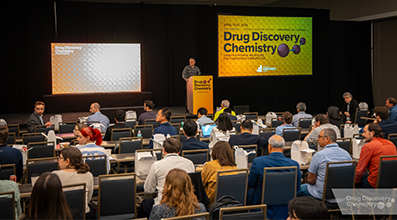
Explore upcoming conferences and scientific meetings where you can connect with our team.

At Sygnature Discovery, we deliver world-leading drug discovery solutions to accelerate your compound from idea to clinic.

Our leadership team brings diverse experience and insight, driving collaboration and innovation across drug discovery.

Explore careers at Sygnature Discovery and join a global team committed to science, collaboration, and integrity.
Inobrodib, an exciting, first-in-class oral anti-cancer drug in clinical development by CellCentric, was collaboratively designed, synthesised and supported on its pre-clinical journey by an integrated project team at Sygnature Discovery. Inobrodib is now showing promising results in Phase I and II trials for multiple myeloma and other cancer types.
At Sygnature Discovery, we deliver world-leading drug discovery solutions to accelerate your compound from idea to clinic.
Our leadership team brings diverse experience and insight, driving collaboration and innovation across drug discovery.
Explore careers at Sygnature Discovery and join a global team committed to science, collaboration, and integrity.
The KV7.2/7.3 (KCNQ2/KCNQ3) channel complex plays a critical role in regulating neuronal excitability through generation of the neuronal M-current. By limiting repetitive neuronal firing and helping to stabilize membrane potential, these channels are important regulators of normal neuronal signaling.
Interest in KV7-targeted therapeutics has grown due to increasing understanding of the role these channels play in disorders associated with neuronal hyperexcitability, including epilepsy, developmental and epileptic encephalopathies (DEEs), KCNQ2-related disorders and neuropathic pain. As a result, robust pharmacological tools are required to support the discovery and characterization of novel KV7 modulators.
At Sygnature Discovery, we have established a KV7.2/7.3 assay designed to support the characterization of compounds targeting this channel complex. The assay captures both channel activation and inhibition, enabling comprehensive assessment of compound activity.
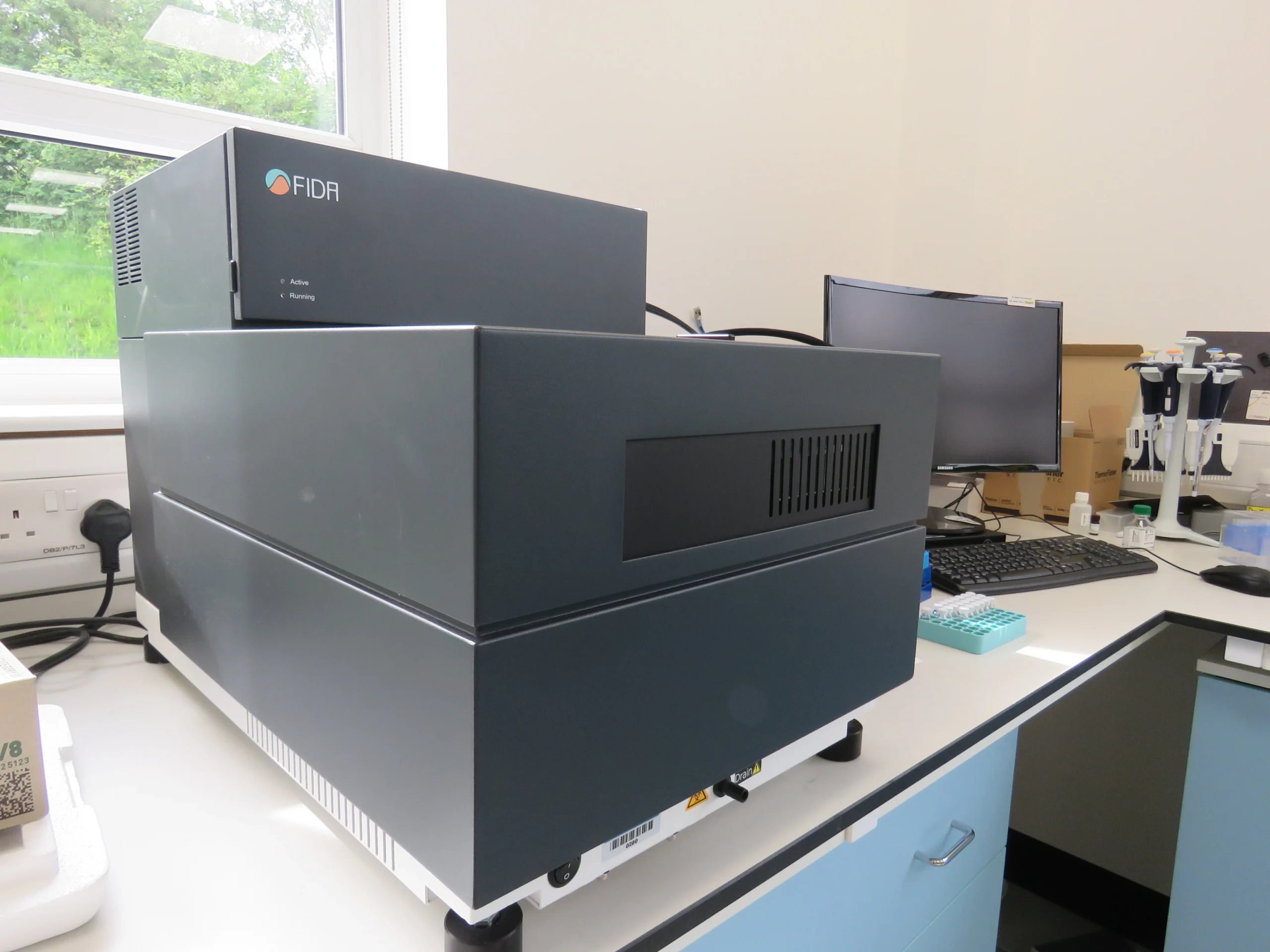
Beyond assay performance, successful ion channel drug discovery often requires complementary technologies that support screening, characterization and translational research. We combine automated electrophysiology, for high-throughput screening and profiling, with manual patch clamp studies that provide gold-standard kinetic and mechanistic insights. These capabilities can be integrated with advanced cellular models and custom assay development to support a broad range of research objectives.
For discovery teams working in ion channel research, the ability to confidently detect multiple modes of pharmacology is essential for compound profiling, mechanism-of-action studies and Structure-Activity Relationship (SAR) investigations. Through the detection of both channel activation and inhibition, our KV7.2/7.3 assay provides a robust platform for the pharmacological characterization of KV7 modulators.
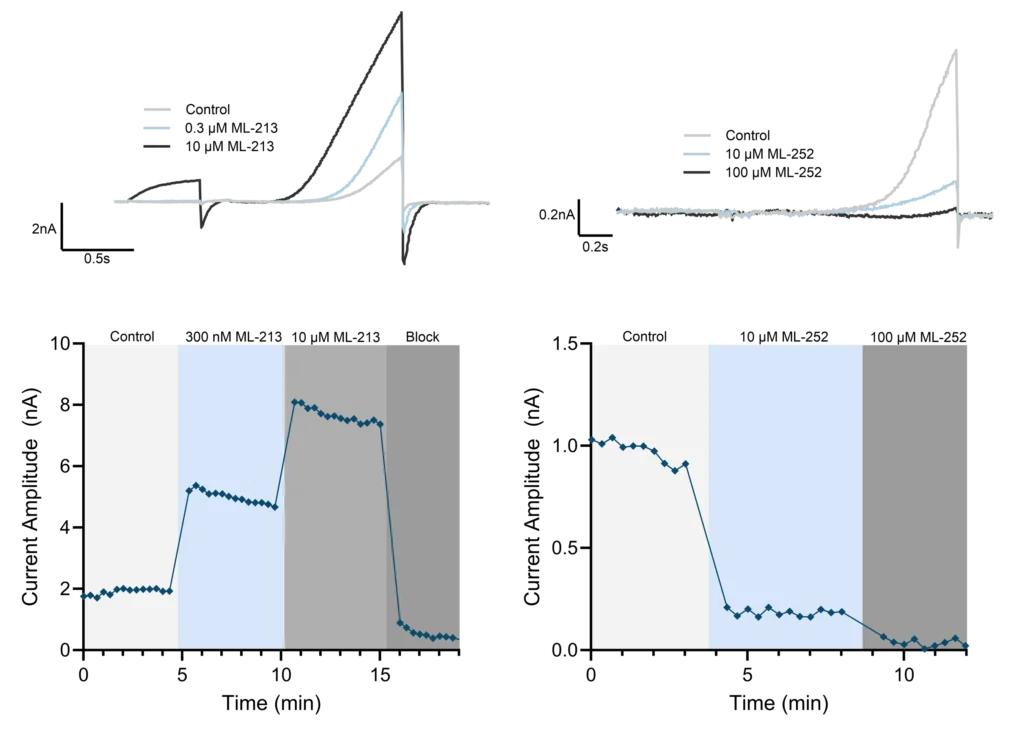
To evaluate assay suitability, reference modulators were assessed in both agonist and antagonist assay formats. Concentration-response studies with the KV7.2/7.3 activator ML-213 and inhibitor ML-252 demonstrated clear, concentration-dependent modulation of channel activity (Figure 1).
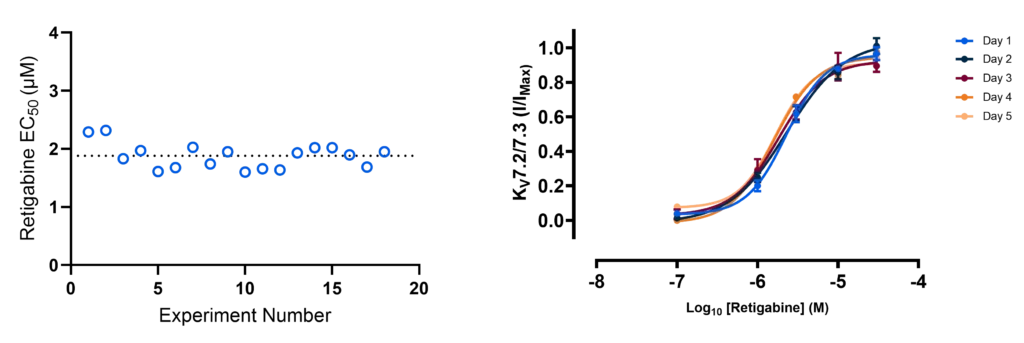
To assess longer-term assay robustness, KV7.2/7.3 performance was evaluated across five separate days (Figure 2). These studies demonstrated consistent assay behavior and reproducible pharmacological responses over time. Long-term stability studies indicate consistent assay performance suitable for SAR-driven optimization.


Peak Proteins, NuChem Sciences, and SB Drug Discovery have now fully integrated with Sygnature Discovery.