


Featured Resources
-
STORM Therapeutics: From Lead to Pre-Candidate Nomination in 18 Months

STORM Therapeutics: From Lead to Pre-Candidate Nomination in 18 Months
Case study


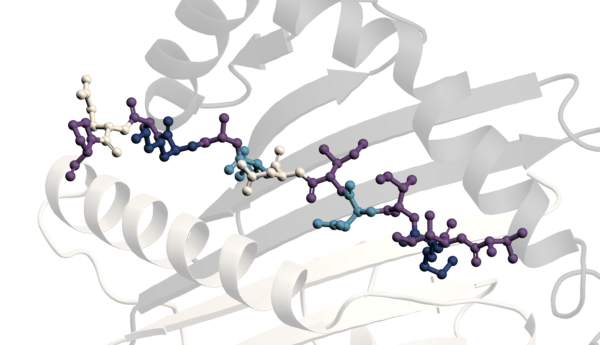


Discover precise insights into brain neurochemistry with Sygnature Discovery's in vivo microdialysis and cOFM services. With over 20 years of expertise, we design bespoke studies that reveal how compounds modulate neurotransmitter systems in health and disease. Using UHPLC/HPLC with electrochemical detection or mass spectrometry, we deliver robust PK/PD data to support confident CNS decision making.


July 30, 2015

Inobrodib, an exciting, first-in-class oral anti-cancer drug in clinical development by CellCentric, was collaboratively designed, synthesised and supported on its pre-clinical journey by an integrated project team at Sygnature Discovery. Inobrodib is now showing promising results in Phase I and II trials for multiple myeloma and other cancer types.

In drug discovery, generating targets is no longer the challenge. The real question is how to identify the few worth investing months of research and significant resources to pursue. Hear expert perspectives on how AI, pathway analysis and scientific expertise are shaping modern target identification.
July 7, 2026

Stay up to date with the latest company updates, milestones, and announcements.
Explore upcoming conferences and scientific meetings where you can connect with our team.

At Sygnature Discovery, we deliver world-leading drug discovery solutions to accelerate your compound from idea to clinic.

Our leadership team brings diverse experience and insight, driving collaboration and innovation across drug discovery.

Explore careers at Sygnature Discovery and join a global team committed to science, collaboration, and integrity.
Inobrodib, an exciting, first-in-class oral anti-cancer drug in clinical development by CellCentric, was collaboratively designed, synthesised and supported on its pre-clinical journey by an integrated project team at Sygnature Discovery. Inobrodib is now showing promising results in Phase I and II trials for multiple myeloma and other cancer types.
At Sygnature Discovery, we deliver world-leading drug discovery solutions to accelerate your compound from idea to clinic.
Our leadership team brings diverse experience and insight, driving collaboration and innovation across drug discovery.
Explore careers at Sygnature Discovery and join a global team committed to science, collaboration, and integrity.
The appearance of an unidentified impurity during pharmaceutical development can trigger a cascade of challenges. As stability studies become more complex, formulation strategies may need to be reconsidered, and regulatory timelines can be impacted.
While modern analytical techniques can readily detect low-level impurities, detection alone is rarely sufficient. Three critical questions remain:
Answering these questions requires more than a single analytical technique. It demands a coordinated approach. At Sygnature Discovery, we bring disciplines together within a single integrated workflow, enabling rapid impurity identification and structural elucidation for both drug substances and drug products.
During early process development, impurities are often linked directly to chemical synthesis. Process-related impurities are usually easier to understand than degradation-related impurities. However, impurities that emerge later in development are frequently more challenging.
Long-term storage of drug substances and drug products can generate new degradation products through:
These degradation pathways are important in formulated products where low API amounts can amplify the impact of trace excipient impurities. For example, consider a formulation containing 1 mg of API and 200 mg of excipient. A seemingly insignificant 0.1% impurity in the excipient would equate to 0.2 mg of impurity. In some cases, that can be enough to react with the API and create unexpected degradation products during storage.
Many organizations possess individual analytical capabilities. Few, however, combine impurity isolation, HR-MS, advanced NMR and scientific interpretation within a single coordinated project team. An integrated approach offers several advantages:
Analytical Liquid Chromatography Mass Spectrometry (LC-MS) methods are highly effective at revealing the presence of unknown peaks. However, this alone rarely provides enough information to support robust decision-making.
While experienced scientists can propose likely impurity structures based on mass measurements and degradation conditions, at Sygnature Discovery, hypotheses are not considered sufficient evidence. Definitive structural confirmation is essential to support regulatory submissions. That data can also then be used to support any deviations and root-cause investigations during manufacture to implement effective mitigation strategies. Achieving that level of confidence requires the integration of multiple analytical techniques making our end-to-end impurity identification workflow a critical asset.
At Sygnature Discovery, impurity identification projects typically follow a structured progression. To serve as an example of our workflow, we present data that we generated on a known drug, ciprofloxacin, where we mirrored observations from a real client project.
To reproduce what was seen in the client project, ciprofloxacin was mixed with methanol, formic acid and ethyl formate and heated for several days to achieve some form of degradation.
The process begins with drug product analysis.
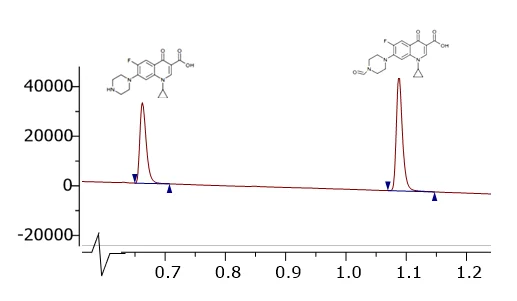
Initial chromatographic analysis of the crude mixture using Ultra Performance Liquid Chromatography coupled with Photodiode Array detection (UPLC-PDA) revealed two distinct peaks (Figure 1a), which indicated the presence of an additional component alongside ciprofloxacin. Subsequent mass spectrometric analysis demonstrated that the second peak differed from the parent compound, confirming the presence of an impurity, warranting further investigation.
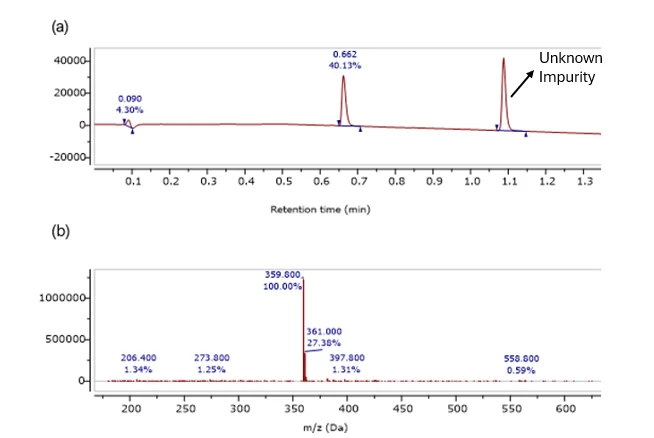
Detecting an impurity is only the first step. While LC-MS can confirm the presence of an unknown component and provide its mass (Figure 1b), this information alone is rarely enough to understand its origin or potential impact. In this example, the UPLC peak area indicated the relative abundance of the impurity compared with the parent compound, ciprofloxacin. Determining the structure of this unknown component was therefore critical to assessing any associated risk and developing appropriate mitigation strategies. Rather than relying on an educated guess, Sygnature Discovery applied its integrated expertise in peak isolation, HR-MS, and NMR to confirm the impurity structure. This provides clients with confidence as their programs progress towards the clinic and ultimately the market.
Once observed, the impurity must be separated from the parent compound and any accompanying components.
The goal is simple: obtain pure material suitable for definitive structural analysis.
This is frequently the most technically demanding phase of the investigation.
Our Separation Science team uses a combination of:
Supported using automated methods and machine learning- assisted data-processing workflows, typically we can establish purification conditions within 24 hours.
In this example, there was sufficient chromatographic resolution between the target compound and the impurity peak, allowing purification by standard reversed-phase HPLC.
Separation was then achieved using a C18 preparative column with a water (0.1% formic acid)/acetonitrile gradient. Purified fractions were collected and lyophilized.
High-resolution MS (HR-MS) and Tandem Mass Spectrometry (MS/MS) provide detailed information on an impurity’s composition and structure. These techniques can rapidly identify molecular changes associated with degradation and are highly valuable when only limited amounts of material are available. Their sensitivity makes them particularly useful for investigating low-level impurities that may be present in trace quantities.
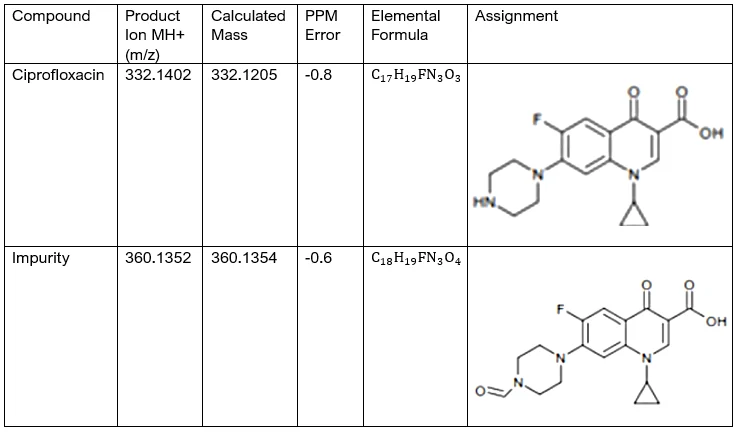
In this study, HR-MS and MS/MS were performed on both isolated components. As expected, the first isolated component was ciprofloxacin, exhibiting the expected protonated molecular ion at m/z 332.1. The second component displayed a protonated molecular ion at m/z 360.1, representing an increase of approximately 28 Da relative to the parent compound. The increase in mass is consistent with the addition of a CO group relative to the parent compound (Table 1). Furthermore, the MS/MS fragmentation pattern suggested that this modification was present as an N-formyl functionality. While this data provided a strong structural hypothesis, definitive confirmation required further investigation by NMR.
Mass spectrometry can suggest a structure, but Nuclear Magnetic Resonance (NMR) is the decisive technique that proves structural assignment. By combining:
Scientists at Sygnature Discovery determine exactly where structural changes have occurred within a molecule. Access to in-house 800 MHz cryoprobe NMR instrumentation and 1.7 mm NMR tubes enhance sensitivity, enabling structural characterization from smaller quantities of isolated material than would historically have been possible.
For this example, full multinuclear NMR was performed on both isolated components from the preparative HPLC. Compared with the literature data for ciprofloxacin, one notable difference was the presence of a signal at approximately 8.2 ppm in the 1H NMR spectrum. This is consistent with the presence of a formyl group. A formyl group contains both a hydrogen atom (C-H) and a carbonyl carbon (C=O), which can be probed using different NMR experiments to determine their position within the molecule. In-house experts analysed ROESY (Rotating-frame Overhauser Effect SpectroscopY) correlations between the formyl hydrogen and the piperazine ring protons, together with HMBC (Heteronuclear Multiple Bond Correlation) correlations between the piperazine protons and the formyl carbonyl carbon (Figure 2).
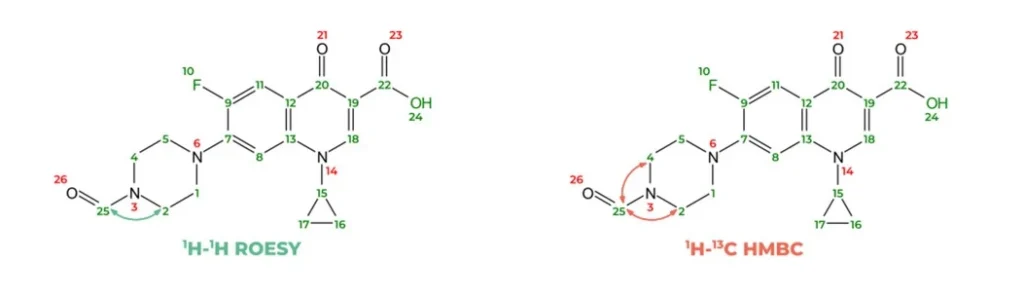
NMR analysis revealed that the sample corresponding to ciprofloxacin was present as a formate salt, rather than a formylated impurity. In contrast, the second isolated component showed clear ROESY and HMBC correlations between the formyl group and the piperazine ring, confirming the HR-MS proposed structure as N-formyl ciprofloxacin.
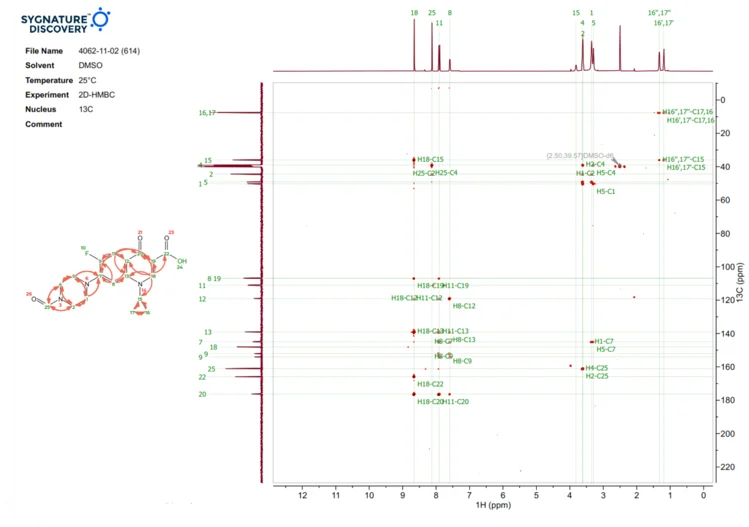
While Figure 2 highlights the key correlations used to confirm the impurity structure, the assignment was supported by a much larger body of NMR data. Figure 3 shows a portion of the ¹H-¹³C HMBC dataset used during the investigation, illustrating the depth of analysis underpinning the final structural assignment.
Additional NMR evidence showed that the piperazine ring had lost its symmetry following formylation, causing previously equivalent proton signals to become distinguishable. This observation provided further support for the proposed structure and increased confidence in the final assignment.
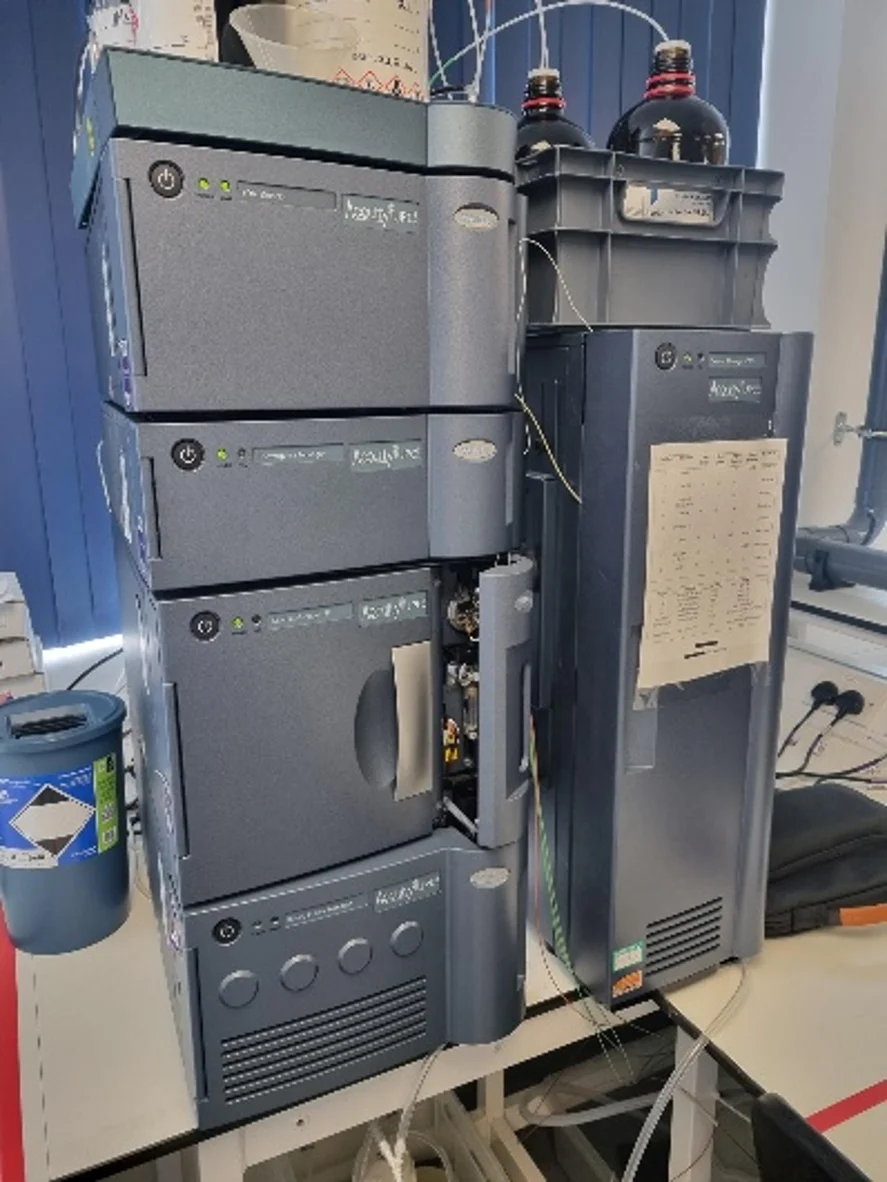
Analytical UPLC used to assess chromatographic separation and identify conditions suitable for impurity isolation.
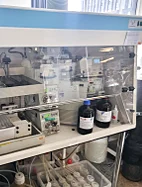
Preparative HPLC system used to separate the impurity from the parent compound and collect purified fractions.
Then Automated fraction collection during preparative HPLC purification, enabling selective recovery of the target impurity
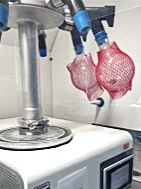
Lyophilization of purified fractions following preparative HPLC, removing solvent to isolate the impurity for structural analysis.
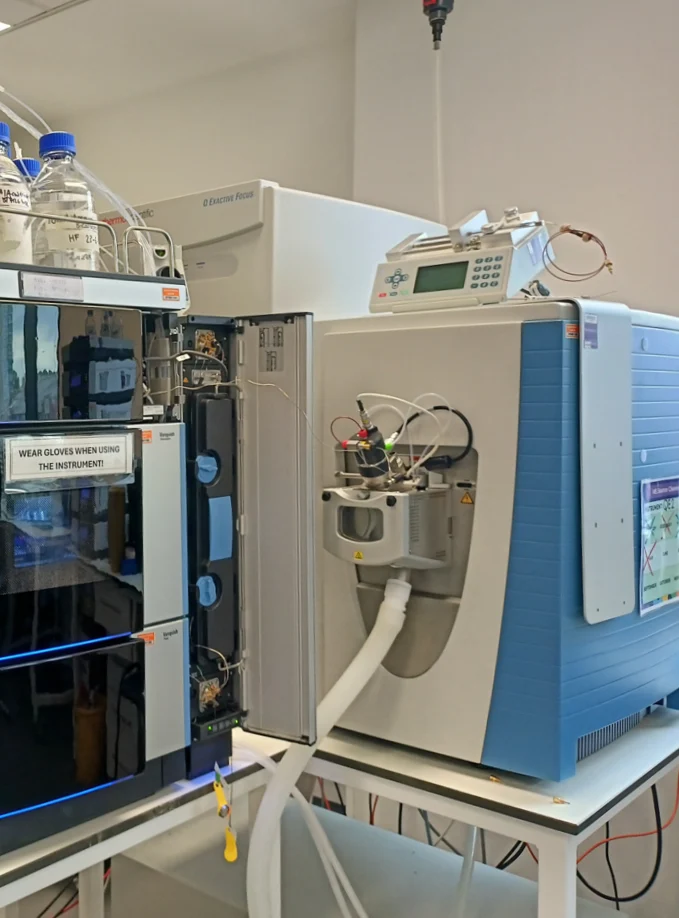
High-resolution mass spectrometry (HR-MS) used to determine the accurate mass and molecular composition of the isolated impurity.
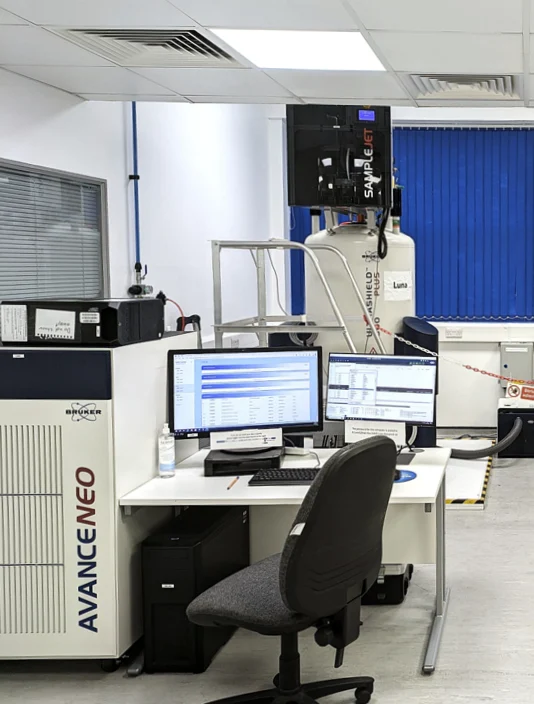
800 MHz NMR spectrometer used to generate the multidimensional NMR data required for definitive structural confirmation of the isolated impurity.
The ultimate goal of impurity identification is:
It is enabling better development decisions.
In many investigations, the impurity of interest may represent only a fraction of a percent of the total sample. Rather than focusing solely on the major component, our teams can selectively isolate and characterize low-level impurities, providing the data needed to understand potential risks and define appropriate control strategies
Once the structure of an impurity is understood, teams can begin to answer critical questions:
These insights are key to developing a robust manufacturing process for both the API and the drug product itself.
The emergence of unidentified impurities can slow development programs and create uncertainty during stability studies. However, when these problems are approached using an integrated strategy that combines purification, high-resolution mass spectrometry and advanced NMR, even low-level degradation products can be successfully characterized.
At Sygnature Discovery, our multidisciplinary teams work together to transform unknown peaks into actionable insights, helping clients de-risk development programs, strengthen regulatory submissions, and accelerate the path towards the clinic and ultimately the patient. In addition, this level of data is essential to develop a manufacturing process that is robust and reproducible.
Whether you are investigating stability issues, formulation interaction or low-level degradation product, our scientists can help design a tailored analytical strategy to achieve definitive structural identification. Please don’t hesitate to “get in touch” using the button below.



Peak Proteins, NuChem Sciences, and SB Drug Discovery have now fully integrated with Sygnature Discovery.