

Featured Resources
-
STORM Therapeutics: From Lead to Pre-Candidate Nomination in 18 Months

STORM Therapeutics: From Lead to Pre-Candidate Nomination in 18 Months
Case study


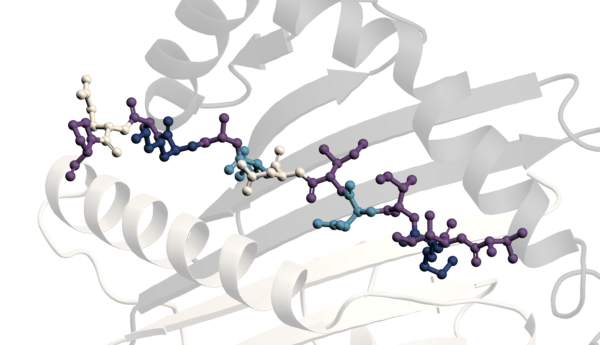


Discover precise insights into brain neurochemistry with Sygnature Discovery's in vivo microdialysis and cOFM services. With over 20 years of expertise, we design bespoke studies that reveal how compounds modulate neurotransmitter systems in health and disease. Using UHPLC/HPLC with electrochemical detection or mass spectrometry, we deliver robust PK/PD data to support confident CNS decision making.


July 30, 2015

Inobrodib, an exciting, first-in-class oral anti-cancer drug in clinical development by CellCentric, was collaboratively designed, synthesised and supported on its pre-clinical journey by an integrated project team at Sygnature Discovery. Inobrodib is now showing promising results in Phase I and II trials for multiple myeloma and other cancer types.

In drug discovery, generating targets is no longer the challenge. The real question is how to identify the few worth investing months of research and significant resources to pursue. Hear expert perspectives on how AI, pathway analysis and scientific expertise are shaping modern target identification.
July 7, 2026

Stay up to date with the latest company updates, milestones, and announcements.
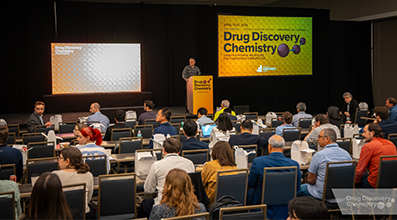
Explore upcoming conferences and scientific meetings where you can connect with our team.

At Sygnature Discovery, we deliver world-leading drug discovery solutions to accelerate your compound from idea to clinic.

Our leadership team brings diverse experience and insight, driving collaboration and innovation across drug discovery.

Explore careers at Sygnature Discovery and join a global team committed to science, collaboration, and integrity.
Inobrodib, an exciting, first-in-class oral anti-cancer drug in clinical development by CellCentric, was collaboratively designed, synthesised and supported on its pre-clinical journey by an integrated project team at Sygnature Discovery. Inobrodib is now showing promising results in Phase I and II trials for multiple myeloma and other cancer types.
At Sygnature Discovery, we deliver world-leading drug discovery solutions to accelerate your compound from idea to clinic.
Our leadership team brings diverse experience and insight, driving collaboration and innovation across drug discovery.
Explore careers at Sygnature Discovery and join a global team committed to science, collaboration, and integrity.

Over the past 12 months, Thomas Burke, an MSci Chemistry student from Imperial College London, completed an Industrial Placement within Sygnature Discovery’s Bioinformatics team. During his placement, Thomas worked on an AI-enabled platform designed to support data-driven target identification and prioritisation. In this Q&A, Thomas reflects on his experience of working with AI, large language models (LLMs) and ontology development, and shares insights into how cross-functional scientific collaboration can help address complex drug discovery challenges.
Over the past 12 months, I have been completing my Industrial Placement with Dr. Saurav Bhaskar Saha within the Bioinformatics team at Sygnature Discovery, as part of the fourth year of my MSci Chemistry degree at Imperial College London.
During my time at Sygnature, I worked on the development of a new AI-enabled platform designed to help researchers systematically assess how drug targets have been studied across scientific literature. Built from the ground up, the platform uses large language models (LLMs) to analyse tens of millions of biomedical publications and organise key experimental information into a structured format to aid target identification and prioritisation. The project aimed to make it easier for scientists to access and interpret relevant evidence, reducing the time spent manually reviewing large volumes of literature.
My project explored how AI could be applied to one of the biggest challenges in modern research: keeping pace with the rapidly growing volume of scientific literature. I worked on training a language model to automatically identify and organise key information from scientific texts, a core challenge in biomedical natural language processing (NLP) given the densely technical and often inconsistently worded nature of the literature. This involved curating hundreds of manually annotated examples to train the model to recognise important experimental details in text.
Alongside model training, I helped build the knowledge framework behind the platform. This included developing a new in-house ontology designed to standardise assay terminology and improve how information is linked across the literature. By connecting this structured knowledge with Sygnature’s own assay capabilities, drawing on close consultation with relevant experts, the platform gives researchers a clearer picture of how targets have been studied and the approaches available to investigate them internally.
By combining AI-driven literature analysis with a structured ontology, the platform was designed to help researchers build a clearer understanding of the available evidence surrounding potential drug targets.
The project brought together AI, data science, software development and drug discovery, giving me the chance to contribute to every stage of building a real-world research tool from the ground up.
Watching the platform grow from an idea in my first few weeks into a fully usable application was hugely rewarding, especially being involved at every stage of development. Gaining practical experience of AI in industry before graduating was also exciting, given how central this technology is set to become in drug discovery over the coming decades.
What went beyond my expectations was how much Sygnature valued human expertise and collaboration. I had been slightly nervous that the project might feel isolating, since on paper it looked like a purely computational task. In reality, human-in-the-loop input was central to the work. I held regular meetings with scientists across Bioscience, Target Identification and Computational Sciences to understand how the platform could be tailored to their needs. This multidisciplinary, cross-department collaboration made the project feel genuinely practical and grounded in real research needs.
Building on this experience applying AI in drug discovery, I will be spending my final degree year at Leiden University in the Netherlands, joining the Janssen group to work on AI-driven prediction approaches in drug discovery.
Working with Thomas over the past year has been a pleasure. He joined the project when many of the core concepts were still taking shape and contributed across a remarkably broad range of activities, from data annotation and model development through to ontology design and engagement with domain experts. His willingness to learn, ask thoughtful questions and take ownership of challenging tasks enabled him to make a meaningful contribution to a project that sits at the intersection of AI and drug discovery.
What impressed me most was how quickly he developed the confidence to work across disciplines and communicate effectively with scientists from different backgrounds. By the end of his placement, he was not only contributing to technical development but also helping to shape how the platform could best support real scientific workflows. I have no doubt that Thomas will continue to make valuable contributions at the intersection of AI and drug discovery, and I look forward to following his future achievements.
Thomas’s placement highlights the value of combining emerging talent with scientific expertise to tackle complex drug discovery challenges. Through projects spanning AI, large language models, ontology development and target identification, placements such as this provide valuable opportunities for aspiring scientists while contributing to the innovative work taking place across Sygnature Discovery.
Peak Proteins, NuChem Sciences, and SB Drug Discovery have now fully integrated with Sygnature Discovery.