


Featured Resources
-
STORM Therapeutics: From Lead to Pre-Candidate Nomination in 18 Months

STORM Therapeutics: From Lead to Pre-Candidate Nomination in 18 Months
Case study


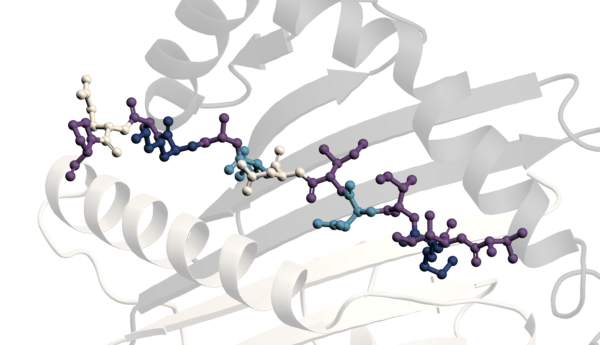


Discover precise insights into brain neurochemistry with Sygnature Discovery's in vivo microdialysis and cOFM services. With over 20 years of expertise, we design bespoke studies that reveal how compounds modulate neurotransmitter systems in health and disease. Using UHPLC/HPLC with electrochemical detection or mass spectrometry, we deliver robust PK/PD data to support confident CNS decision making.


July 30, 2015

Inobrodib, an exciting, first-in-class oral anti-cancer drug in clinical development by CellCentric, was collaboratively designed, synthesised and supported on its pre-clinical journey by an integrated project team at Sygnature Discovery. Inobrodib is now showing promising results in Phase I and II trials for multiple myeloma and other cancer types.

In drug discovery, generating targets is no longer the challenge. The real question is how to identify the few worth investing months of research and significant resources to pursue. Hear expert perspectives on how AI, pathway analysis and scientific expertise are shaping modern target identification.
July 7, 2026

Stay up to date with the latest company updates, milestones, and announcements.
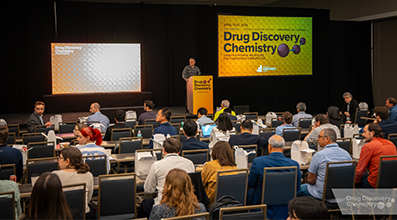
Explore upcoming conferences and scientific meetings where you can connect with our team.

At Sygnature Discovery, we deliver world-leading drug discovery solutions to accelerate your compound from idea to clinic.

Our leadership team brings diverse experience and insight, driving collaboration and innovation across drug discovery.

Explore careers at Sygnature Discovery and join a global team committed to science, collaboration, and integrity.
Inobrodib, an exciting, first-in-class oral anti-cancer drug in clinical development by CellCentric, was collaboratively designed, synthesised and supported on its pre-clinical journey by an integrated project team at Sygnature Discovery. Inobrodib is now showing promising results in Phase I and II trials for multiple myeloma and other cancer types.
At Sygnature Discovery, we deliver world-leading drug discovery solutions to accelerate your compound from idea to clinic.
Our leadership team brings diverse experience and insight, driving collaboration and innovation across drug discovery.
Explore careers at Sygnature Discovery and join a global team committed to science, collaboration, and integrity.
Many of today’s therapeutic targets sit within the cell membrane. Ion channels, transporters and receptor complexes play central roles in disease, but they can also be some of the most challenging proteins to study. Understanding how these targets function, how genetic variants alter activity, and how compounds influence behavior is often critical for target validation and hit progression. Yet obtaining clear functional data can become a bottleneck, particularly when expression levels are low or conventional cellular systems prove difficult to work with.
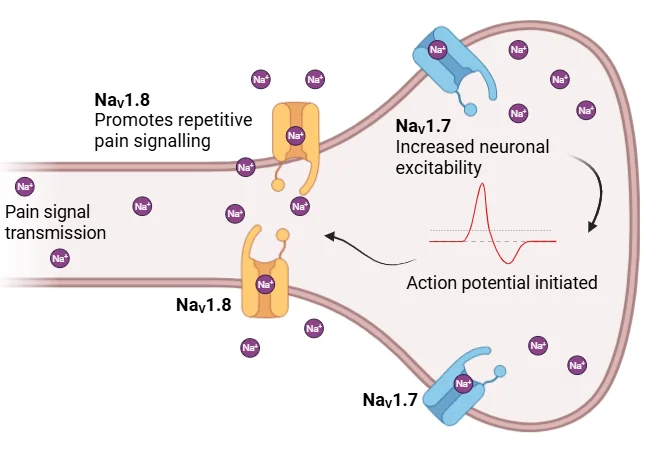
At Sygnature Discovery, our electrophysiology and transporter biology teams help clients navigate these challenges by selecting the right experimental approach for the biology in question. In some cases, that means moving beyond standard mammalian cell systems and leveraging Xenopus oocyte-based Two-Electrode Voltage Clamp (TEVC) studies to generate functional data that can guide target identification, target validation and lead discovery strategies (Figure 1). The approach provides a flexible route to studying membrane proteins, while drawing on the wider expertise needed to interpret findings in the context of drug discovery and development.
A client required functional characterization of multiple protein target variants to better understand the biology underlying their program. The work demanded more than simple activity measurements. The team needed a way to compare variants, assess pharmacological responses and generate reproducible datasets that could support critical decisions around target validation and future drug development strategy.
Like many membrane protein programs, the challenge was not simply generating data. It was generating the right data, from the right experimental system and early enough to influence program direction.
Sygnature Discovery’s electrophysiology team approached the project from a discovery perspective rather than a platform perspective. The objective was to understand the biological question first and then determine the most appropriate method for answering it.
Our scientists work across ion channels, transporters and other membrane proteins, supporting programs from early target assessment through to hit validation. That experience allows us to recommend the most informative route for a given target, whether through TEVC, patch-clamp electrophysiology, uptake assays or complementary functional approaches.
For this program, Xenopus oocyte TEVC offered a particularly effective solution. Oocytes provide a robust expression system for membrane proteins and can accommodate rapid evaluation of variants without the time and resource investment required to generate multiple stable mammalian cell lines.
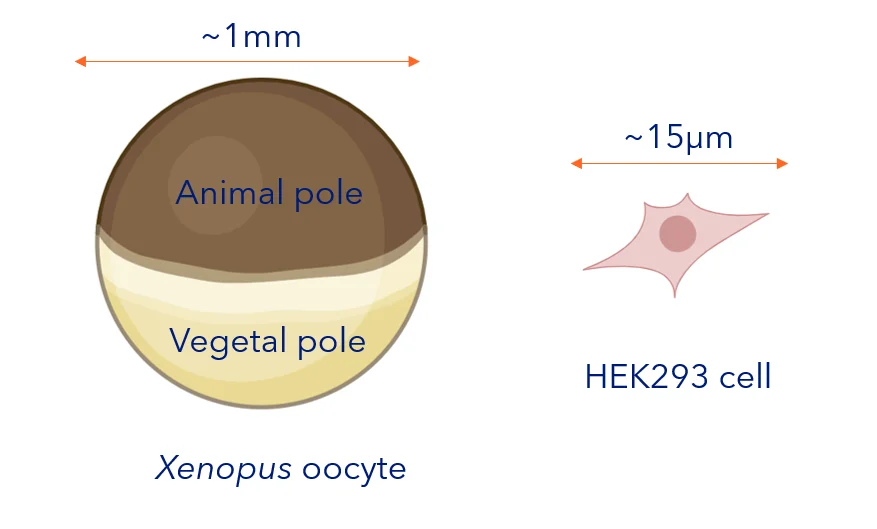
The project relied on Xenopus laevis oocytes, which have long been used for the expression and investigation of membrane proteins. Their large size simplifies electrophysiological recording and often enables measurement of current amplitudes that can be difficult to capture in other systems (Figure 2). At the same time, low endogenous ion channel activity reduces biological background, helping researchers focus on the protein of interest.
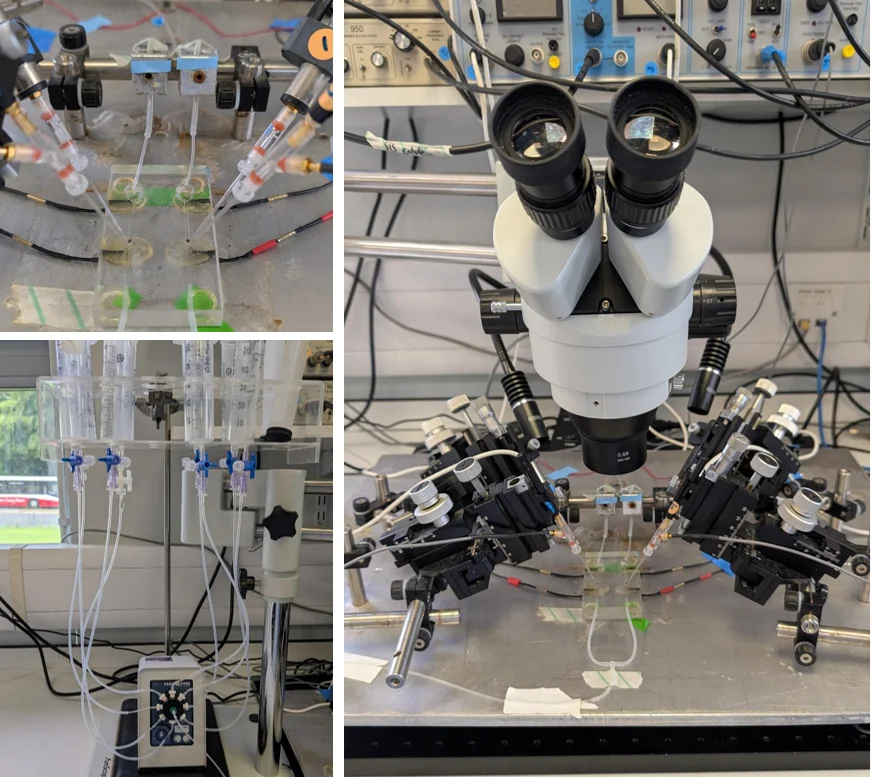
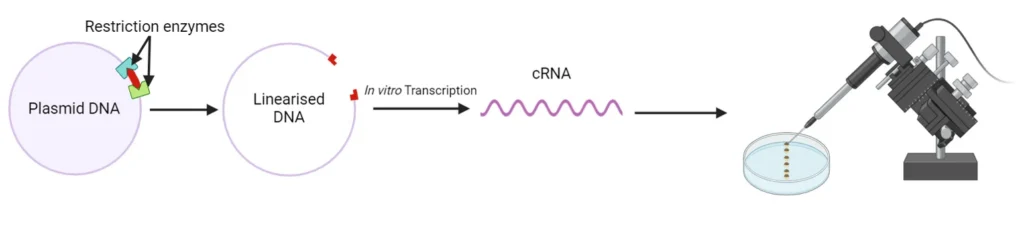
The workflow began with preparation of stage V-VI oocytes, followed by RNA injection and expression of the target proteins (Figure 3). Once expression was established, the team used Two-Electrode Voltage Clamp recordings to evaluate functional responses under a range of experimental conditions (Figure 4).

To increase efficiency, dual recording capability was implemented alongside automated solution handling, allowing multiple pharmacological conditions to be assessed during a single experiment. This enabled concentration-response studies, agonist and antagonist profiling, and assessment of target behavior across multiple variants.
Over the course of the program, Sygnature Discovery generated datasets spanning several functional assays and multiple target variants, creating a detailed picture of target pharmacology and activity.
The work demonstrated how TEVC can be used as more than a screening tool. It became a platform for interrogating target biology.
By expressing and evaluating multiple variants within the same experimental framework, the team was able to explore how specific changes influenced function and pharmacological response. The approach provided a direct route to understanding target behavior while maintaining experimental consistency across studies.
Importantly, the ability to rapidly express genetic variants created opportunities to investigate biological questions that might otherwise require extensive cell line generation and optimization. This helped transform what could have been a lengthy model-development exercise into a focused program of functional characterization.
Functional data is most valuable when they help guide decisions.
The information generated through the TEVC studies gave the client greater confidence in the behavior of their target and its variants. As a result, the program could move forward with a stronger evidence base for prioritizing variants, refining hypotheses and planning subsequent studies. Rather than relying on predicted function alone, the team could make decisions using experimentally derived functional data.
Although Xenopus oocyte TEVC is often associated with ion channel research, its value extends much further. The system is widely used for studying transporters and other membrane proteins where functional readouts are needed to understand target biology.
For drug discovery teams working with emerging or difficult-to-study targets, the ability to select the most appropriate experimental strategy can be as important as the data itself. Sygnature Discovery’s strength lies not only in the execution of electrophysiology studies, but in combining expertise across transporter biology, membrane protein pharmacology and target validation to identify the approach most likely to answer the underlying scientific question.
This enables clients to build confidence in target hypotheses earlier, make more informed go/no-go decisions and focus resources on the opportunities most likely to advance.


Peak Proteins, NuChem Sciences, and SB Drug Discovery have now fully integrated with Sygnature Discovery.