


Featured Resources
-
STORM Therapeutics: From Lead to Pre-Candidate Nomination in 18 Months

STORM Therapeutics: From Lead to Pre-Candidate Nomination in 18 Months
Case study


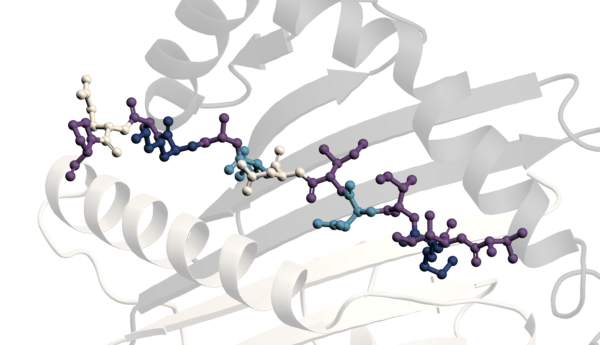


Discover precise insights into brain neurochemistry with Sygnature Discovery's in vivo microdialysis and cOFM services. With over 20 years of expertise, we design bespoke studies that reveal how compounds modulate neurotransmitter systems in health and disease. Using UHPLC/HPLC with electrochemical detection or mass spectrometry, we deliver robust PK/PD data to support confident CNS decision making.


July 30, 2015

Inobrodib, an exciting, first-in-class oral anti-cancer drug in clinical development by CellCentric, was collaboratively designed, synthesised and supported on its pre-clinical journey by an integrated project team at Sygnature Discovery. Inobrodib is now showing promising results in Phase I and II trials for multiple myeloma and other cancer types.

In drug discovery, generating targets is no longer the challenge. The real question is how to identify the few worth investing months of research and significant resources to pursue. Hear expert perspectives on how AI, pathway analysis and scientific expertise are shaping modern target identification.
July 7, 2026

Stay up to date with the latest company updates, milestones, and announcements.
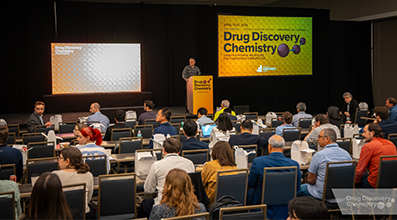
Explore upcoming conferences and scientific meetings where you can connect with our team.

At Sygnature Discovery, we deliver world-leading drug discovery solutions to accelerate your compound from idea to clinic.

Our leadership team brings diverse experience and insight, driving collaboration and innovation across drug discovery.

Explore careers at Sygnature Discovery and join a global team committed to science, collaboration, and integrity.
Inobrodib, an exciting, first-in-class oral anti-cancer drug in clinical development by CellCentric, was collaboratively designed, synthesised and supported on its pre-clinical journey by an integrated project team at Sygnature Discovery. Inobrodib is now showing promising results in Phase I and II trials for multiple myeloma and other cancer types.
At Sygnature Discovery, we deliver world-leading drug discovery solutions to accelerate your compound from idea to clinic.
Our leadership team brings diverse experience and insight, driving collaboration and innovation across drug discovery.
Explore careers at Sygnature Discovery and join a global team committed to science, collaboration, and integrity.
Chronic pain remains one of the most significant unmet needs in drug discovery. While many current therapies can provide symptom relief, concerns around efficacy, tolerability, and dependence continue to drive the search for alternative approaches. Among the most widely studied targets are the voltage-gated sodium channels NaV1.7 and NaV1.8, which play distinct but complementary roles in peripheral pain signaling (Table 1).
|
Table 1. NaV1.7/1.8 activity in pain signaling
|
|
|---|---|
Naᵥ1.7 |
Naᵥ1.8 |
|
Amplifies small depolarizations |
Generates large inward sodium current |
|
Helps the neuron reach action threshold |
Supports the generation of action potential |
|
Initiates pain signaling |
Supports action potential propagation |
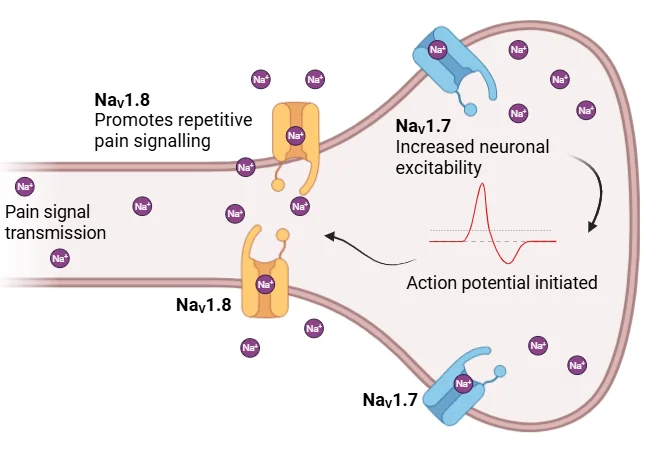
Genetic and physiological studies have established NaV1.7 as a key regulator of pain perception. Loss-of-function mutations in the channel are associated with congenital insensitivity to pain, while gain-of-function mutations can lead to severe pain disorders. NaV1.8, by contrast, is expressed predominantly in nociceptive sensory neurons and contributes to the generation and propagation of action potentials associated with painful stimuli. Together, the two channels are widely investigated as targets for the development of non-opioid analgesics.
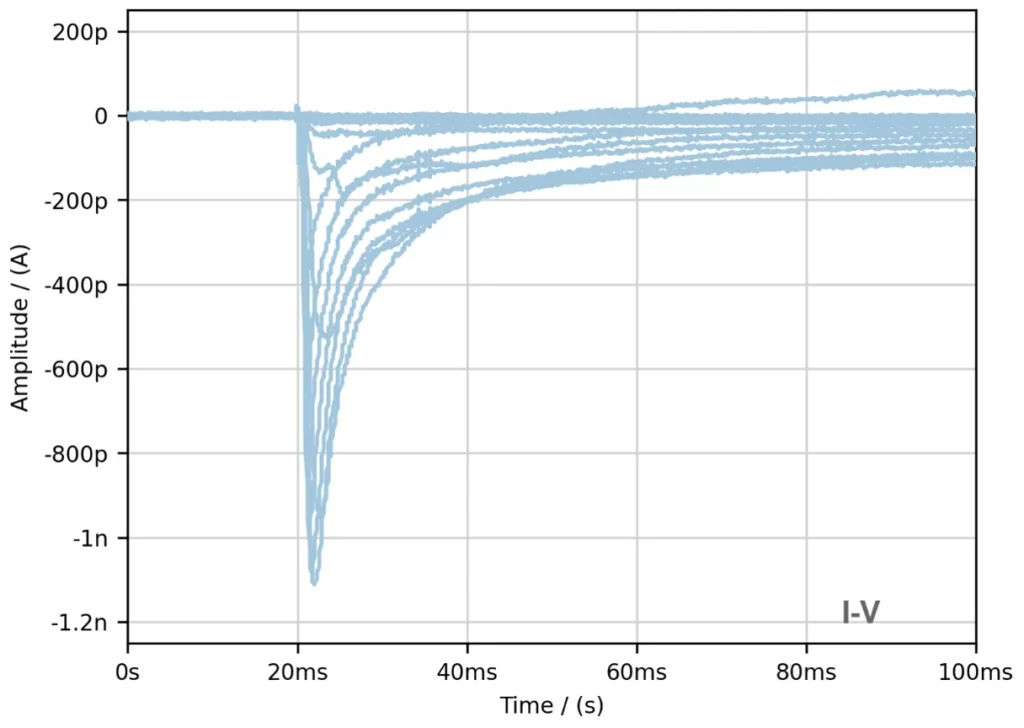
For drug developers pursuing these targets, one of the principal challenges is distinguishing meaningful pharmacology from broad sodium channel inhibition. Small differences in selectivity can have significant implications for efficacy, safety, and the overall progression of a discovery program. This places considerable importance on generating reliable functional data early in the drug discovery process.
Understanding sodium channel pharmacology requires both reliable functional measurements and the ability to compare activity across closely related channel subtypes. Sygnature Discovery has developed a sodium channel electrophysiology platform spanning recombinant NaV1.1-1.8 assays together with human iPSC-derived sensory neuron models, enabling evaluation of both target engagement and subtype selectivity.
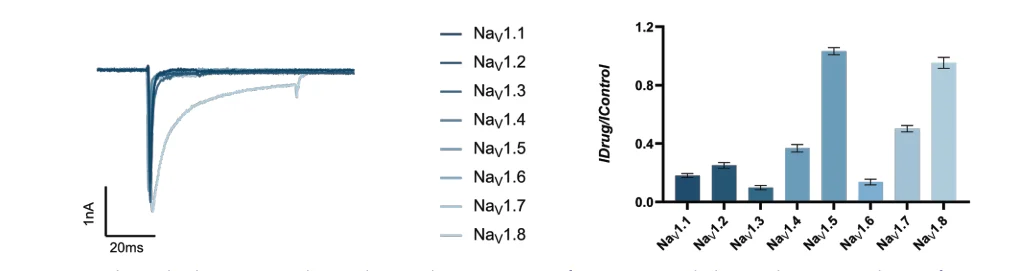
Rather than relying on a single screening approach, researchers can combine automated electrophysiology, manual patch clamp studies and sensory neuron assays to investigate how compounds interact with pain-relevant sodium channels. This enables functional activity to be assessed in both controlled recombinant systems and more physiologically relevant cellular models. For organisations developing sodium channel-targeted pain therapeutics, understanding whether compounds demonstrate meaningful subtype selectivity is critical. Generating reliable functional data that differentiates activity across closely related sodium channel subtypes remains an important challenge during hit identification and lead optimization.
The program focused on generating electrophysiological data to characterise pain-relevant sodium channels, with particular emphasis on NaV1.8 pharmacology and comparative assessment with NaV1.7 activity. Automated patch clamp methods were used to measure sodium currents under defined voltage-clamp conditions and to evaluate the effects of pharmacological modulators on channel function.
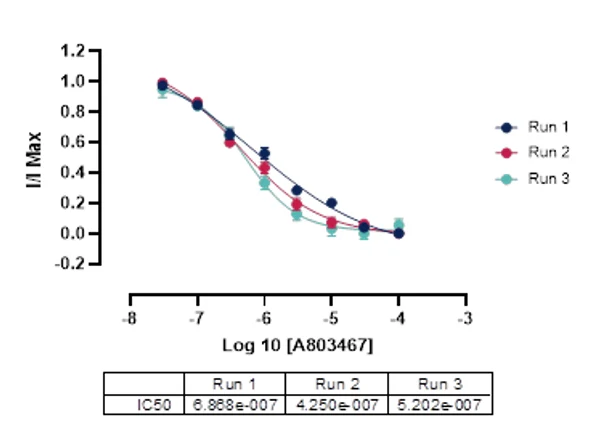
Particular emphasis was placed on NaV1.8, a target of growing interest for peripheral pain indications. Characterization studies examined channel activation and inactivation properties, assay stability, and pharmacological responses using reference compounds. Concentration-response experiments with the selective NaV1.8 inhibitor A803467 demonstrated reproducible inhibition across independent runs, providing an internal benchmark for assay performance (figure 4).
The broader sodium channel platform also enabled comparison between closely related channel subtypes, helping to identify compounds with differentiated activity profiles and supporting selectivity assessment during lead optimization (figure 5).
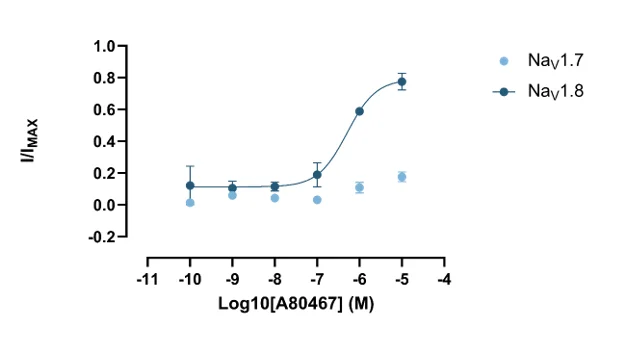
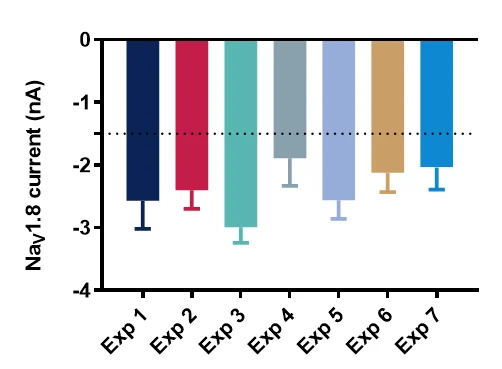
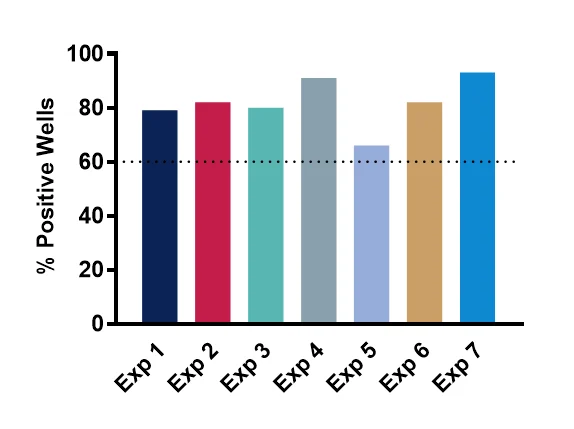
The work demonstrated that NaV1.8 activity can be measured reproducibly using standardised electrophysiology workflows, while the broader platform supports comparative assessment of additional sodium channel subtypes, including NaV1.7. Across the NaV1.8 assay, consistent current amplitudes, high proportions of successful recordings and reproducible responses to reference compounds indicated stable assay performance (figure 6 and 7).
Importantly, the data highlighted the value of functional electrophysiology when studying sodium channels. While binding and indirect screening approaches can provide useful information, direct measurement of channel activity can provide additional insight into how compounds influence ion flow and neuronal excitability. This can be particularly relevant for programs seeking to differentiate molecules based on efficacy, state dependence or subtype selectivity.
Access to functional data across both NaV1.7 and NaV1.8 enabled comparison of compound activity within a pain-relevant sodium channel panel. This provided additional context for evaluating pharmacological profiles and supported progression decisions during optimization activities.
By integrating recombinant channel assays with human sensory neuron capabilities, programs could also begin to explore whether activity observed in reductionist systems translated into more biologically relevant models. This creates a framework for progressing from initial screening data towards a broader understanding of how compounds may behave in pain-related cellular systems.
For organizations developing next-generation pain therapeutics, confidence in sodium channel data is essential. Reliable electrophysiology studies support compound prioritization, provide evidence for progression decisions and help focus resources on molecules with the most promising pharmacological profiles.
As interest in NaV1.7/1.8 continues to grow, access to robust functional assays and translationally relevant models provides a practical foundation for advancing non-opioid pain discovery programs and supporting key development decisions.
Peak Proteins, NuChem Sciences, and SB Drug Discovery have now fully integrated with Sygnature Discovery.