


Ressources
-
STORM Therapeutics: From Lead to Pre-Candidate Nomination in 18 Months

STORM Therapeutics: From Lead to Pre-Candidate Nomination in 18 Months
Case study




juillet 30, 2015

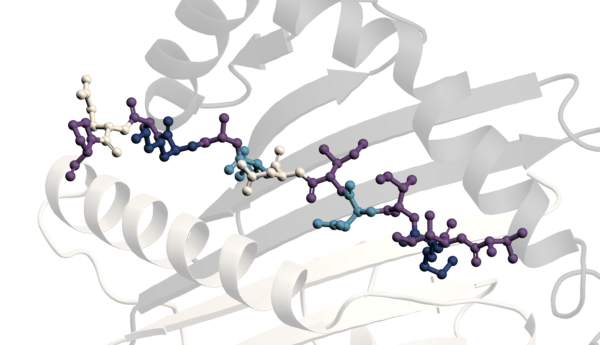
Inobrodib, an exciting, first-in-class oral anti-cancer drug in clinical development by CellCentric, was collaboratively designed, synthesised and supported on its pre-clinical journey by an integrated project team at Sygnature Discovery. Inobrodib is now showing promising results in Phase I and II trials for multiple myeloma and other cancer types.

Tenez‑vous au courant des dernières mises à jour de l’entreprise, des étapes clés et des annonces importantes.
Découvrez les conférences et rencontres scientifiques à venir, où vous pourrez échanger avec notre équipe.

Chez Sygnature Discovery, nous fournissons des solutions de découverte de médicaments de classe mondiale pour accélérer la progression de vos composés, de l’idée jusqu’à la clinique.

Notre équipe de direction rassemble une diversité d’expériences et de ressources, favorisant la collaboration et l’innovation dans l’ensemble du processus de découverte de médicaments.

Explorez les opportunités de carrière chez Sygnature Discovery. Rejoignez une équipe internationale qui obtient des résultats exceptionnels grâce à la collaboration, à l’innovation et à l’intégrité.
Inobrodib, an exciting, first-in-class oral anti-cancer drug in clinical development by CellCentric, was collaboratively designed, synthesised and supported on its pre-clinical journey by an integrated project team at Sygnature Discovery. Inobrodib is now showing promising results in Phase I and II trials for multiple myeloma and other cancer types.
Chez Sygnature Discovery, nous fournissons des solutions de découverte de médicaments de classe mondiale pour accélérer la progression de vos composés, de l’idée jusqu’à la clinique.
Notre équipe de direction rassemble une diversité d’expériences et de ressources, favorisant la collaboration et l’innovation dans l’ensemble du processus de découverte de médicaments.
Explorez les opportunités de carrière chez Sygnature Discovery. Rejoignez une équipe internationale qui obtient des résultats exceptionnels grâce à la collaboration, à l’innovation et à l’intégrité.
Sygnature Discovery’s Turbidimetric Kinetic Solubility validation demonstrates a fast, high‑throughput method for determining aqueous solubility through turbidity measurements in physiological buffer. With consistent performance across controls and a broad set of test compounds, the assay reliably distinguishes high, moderate and low solubility ranges, supporting early decision‑making in in vitro discovery workflows.
Sygnature Discovery’s Turbidimetric Kinetic Solubility Assay provides a high‑throughput, reliable approach for determining the solubility of small molecules in aqueous physiological buffer. Using phosphate‑buffered saline at pH 7.4, the assay monitors the onset of compound precipitation through turbidity measurements, enabling rapid assessment of kinetic solubility across a broad concentration range. This technique is particularly useful during early discovery, where solubility is a key factor in in vitro assays. This assay identifies compounds where low solubility may confound the interpretation of assay results.
The workflow begins by preparing serial dilutions of each compound in DMSO to establish a range of working concentrations. These solutions are transferred into aqueous buffer in microplate format, where they undergo controlled mixing for 90 minutes. As compounds reach their solubility limit, undissolved material forms particulate matter that scatters light.
A plate reader measures this turbidity at a fixed wavelength (620 nm), and raw absorbance values are normalised against buffer‑only blanks. Replicate readings are averaged, and the point at which absorbance crosses a predefined threshold is identified. The solubility range is then defined from the concentrations immediately below and above this threshold.
This approach streamlines solubility assessment by removing the need for sample centrifugation or chromatographic quantification. The standardised workflow ensures reproducible processing, enabling direct comparison between compounds and assay runs. Its simplicity and robustness make it well‑suited for identifying low‑solubility liabilities early in discovery programmes.
Validation results demonstrate strong reproducibility across both inter‑ and intra‑assay experiments. The positive control set—Diclofenac (>100 µM), Nicardipine (20-50 µM) and Pyrene (2-10 µM) —remained consistent in all runs.
The broader compound test set exhibited the expected solubility behaviour: high‑solubility compounds such as Fluoxetine, Phenytoin, Omeprazole and Chlorpromazine demonstrated values >100 µM, while lower‑solubility molecules such as Mebendazole (20–50 µM) and Dinitramine (20–50 µM) displayed well‑defined solubility ranges.
Together, these results confirm that the Turbidimetric Kinetic Solubility Assay is capable of reliably distinguishing between high, moderate and low solubility classes with excellent reproducibility.
This turbidimetric approach to solubility measurement enables rapid identification of compounds with aqueous solubility issues that may be relevant to in vitro assays employed in the drug discovery process. The validation results demonstrate that the assay performs with excellent reproducibility both within and across assay runs, providing high‑quality data to guide in vitro assay data interpretation and compound progression decisions.

Test