


Ressources
-
STORM Therapeutics: From Lead to Pre-Candidate Nomination in 18 Months

STORM Therapeutics: From Lead to Pre-Candidate Nomination in 18 Months
Case study


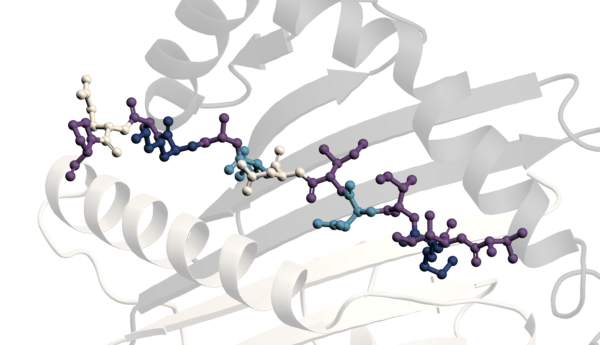


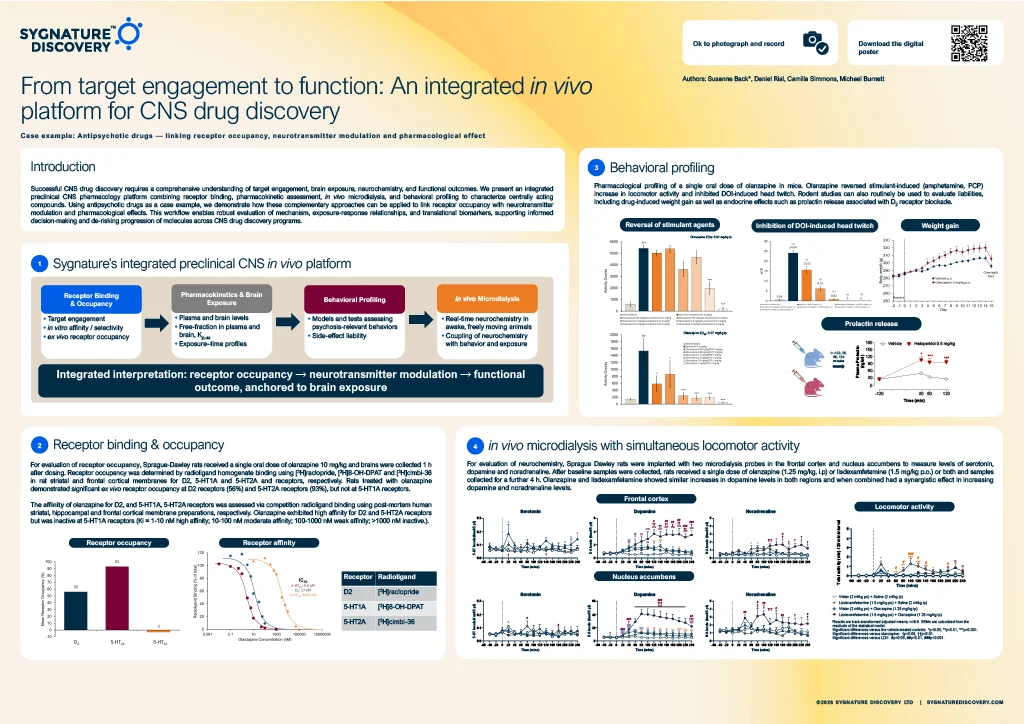
Discover precise insights into brain neurochemistry with Sygnature Discovery's in vivo microdialysis and cOFM services. With over 20 years of expertise, we design bespoke studies that reveal how compounds modulate neurotransmitter systems in health and disease. Using UHPLC/HPLC with electrochemical detection or mass spectrometry, we deliver robust PK/PD data to support confident CNS decision making.


juillet 30, 2015

Inobrodib, an exciting, first-in-class oral anti-cancer drug in clinical development by CellCentric, was collaboratively designed, synthesized and supported on its pre-clinical journey by an integrated project team at Sygnature Discovery. Inobrodib is now showing promising results in Phase I and II trials for multiple myeloma and other cancer types.

In drug discovery, generating targets is no longer the challenge. The real question is how to identify the few worth investing months of research and significant resources to pursue. Hear expert perspectives on how AI, pathway analysis and scientific expertise are shaping modern target identification.
juillet 7, 2026

Tenez‑vous au courant des dernières mises à jour de l’entreprise, des étapes clés et des annonces importantes.
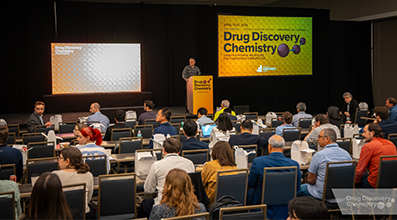
Découvrez les conférences et rencontres scientifiques à venir, où vous pourrez échanger avec notre équipe.

Chez Sygnature Discovery, nous fournissons des solutions de découverte de médicaments de classe mondiale pour accélérer la progression de vos composés, de l’idée jusqu’à la clinique.

Notre équipe de direction rassemble une diversité d’expériences et de ressources, favorisant la collaboration et l’innovation dans l’ensemble du processus de découverte de médicaments.

Explorez les opportunités de carrière chez Sygnature Discovery. Rejoignez une équipe internationale qui obtient des résultats exceptionnels grâce à la collaboration, à l’innovation et à l’intégrité.
Inobrodib, an exciting, first-in-class oral anti-cancer drug in clinical development by CellCentric, was collaboratively designed, synthesized and supported on its pre-clinical journey by an integrated project team at Sygnature Discovery. Inobrodib is now showing promising results in Phase I and II trials for multiple myeloma and other cancer types.
Chez Sygnature Discovery, nous fournissons des solutions de découverte de médicaments de classe mondiale pour accélérer la progression de vos composés, de l’idée jusqu’à la clinique.
Notre équipe de direction rassemble une diversité d’expériences et de ressources, favorisant la collaboration et l’innovation dans l’ensemble du processus de découverte de médicaments.
Explorez les opportunités de carrière chez Sygnature Discovery. Rejoignez une équipe internationale qui obtient des résultats exceptionnels grâce à la collaboration, à l’innovation et à l’intégrité.
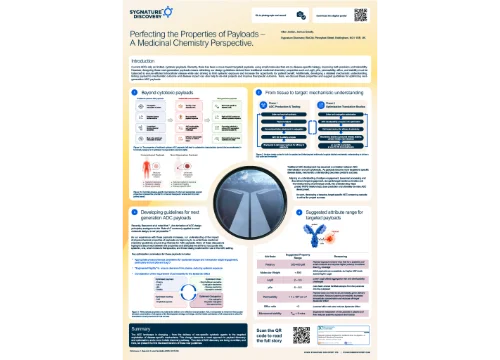
Advances in antibody-drug conjugate (ADC) development are expanding the possibilities of targeted therapeutics beyond traditional cytotoxic approaches. As the field evolves, scientists are increasingly exploring payloads designed to modulate disease-specific biology, creating opportunities to improve precision, tolerability, and therapeutic outcomes.
In this poster, Sygnature Discovery scientists discuss emerging principles for developing next-generation ADC payloads. Drawing on medicinal chemistry and mechanistic pharmacology expertise, the poster explores how properties such as potency, LogD, pKa, permeability, and stability can be optimized to improve efficacy while reducing systemic toxicity.
Download the poster to explore the latest thinking around ADC payload discovery and the evolving guidelines shaping the future of targeted drug conjugates.
Historically, ADC development has relied on a relatively small number of highly potent cytotoxic payloads. As the industry moves towards targeted payloads that act on disease-specific biology, new design considerations are emerging.
Traditional medicinal chemistry principles developed for oral small molecules do not always translate directly to ADC payload optimization. This poster explores key attributes that may help guide the design of next-generation ADC payloads, including:
As payloads become increasingly targeted and mechanism-driven, understanding the relationship between payload design, target engagement, and biological response becomes critical.
The poster explores key factors that influence ADC success, including:
Download the full conference poster to explore:
This work highlights how a deeper understanding of payload properties, linker design, and target biology is helping redefine ADC discovery and establish new guidelines for the development of next-generation therapeutics.
Loading form…
Thank you! Your download will begin shortly.
Peak Proteins, NuChem Sciences et SB Drug Discovery sont désormais pleinement intégrés à Sygnature Discovery.