



Ressources
-
STORM Therapeutics: From Lead to Pre-Candidate Nomination in 18 Months

STORM Therapeutics: From Lead to Pre-Candidate Nomination in 18 Months
Case study




Discover precise insights into brain neurochemistry with Sygnature Discovery's in vivo microdialysis and cOFM services. With over 20 years of expertise, we design bespoke studies that reveal how compounds modulate neurotransmitter systems in health and disease. Using UHPLC/HPLC with electrochemical detection or mass spectrometry, we deliver robust PK/PD data to support confident CNS decision making.


juillet 30, 2015

Inobrodib, an exciting, first-in-class oral anti-cancer drug in clinical development by CellCentric, was collaboratively designed, synthesised and supported on its pre-clinical journey by an integrated project team at Sygnature Discovery. Inobrodib is now showing promising results in Phase I and II trials for multiple myeloma and other cancer types.

In drug discovery, generating targets is no longer the challenge. The real question is how to identify the few worth investing months of research and significant resources to pursue. Hear expert perspectives on how AI, pathway analysis and scientific expertise are shaping modern target identification.
juillet 7, 2026

Tenez‑vous au courant des dernières mises à jour de l’entreprise, des étapes clés et des annonces importantes.
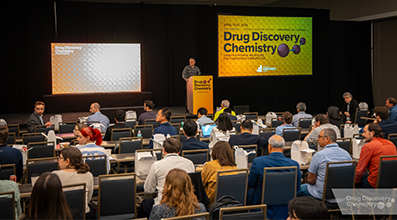
Découvrez les conférences et rencontres scientifiques à venir, où vous pourrez échanger avec notre équipe.

Chez Sygnature Discovery, nous fournissons des solutions de découverte de médicaments de classe mondiale pour accélérer la progression de vos composés, de l’idée jusqu’à la clinique.

Notre équipe de direction rassemble une diversité d’expériences et de ressources, favorisant la collaboration et l’innovation dans l’ensemble du processus de découverte de médicaments.

Explorez les opportunités de carrière chez Sygnature Discovery. Rejoignez une équipe internationale qui obtient des résultats exceptionnels grâce à la collaboration, à l’innovation et à l’intégrité.
Inobrodib, an exciting, first-in-class oral anti-cancer drug in clinical development by CellCentric, was collaboratively designed, synthesised and supported on its pre-clinical journey by an integrated project team at Sygnature Discovery. Inobrodib is now showing promising results in Phase I and II trials for multiple myeloma and other cancer types.
Chez Sygnature Discovery, nous fournissons des solutions de découverte de médicaments de classe mondiale pour accélérer la progression de vos composés, de l’idée jusqu’à la clinique.
Notre équipe de direction rassemble une diversité d’expériences et de ressources, favorisant la collaboration et l’innovation dans l’ensemble du processus de découverte de médicaments.
Explorez les opportunités de carrière chez Sygnature Discovery. Rejoignez une équipe internationale qui obtient des résultats exceptionnels grâce à la collaboration, à l’innovation et à l’intégrité.
For several decades, E. coli has been one of the workhorses of recombinant protein expression. It is fast-growing, cost-effective, and genetically well understood. However, there is a catch. Like all Gram-negative bacteria, E. coli naturally produces lipopolysaccharide (LPS), commonly known as endotoxin.
While endotoxins are essential for bacterial survival, they can pose significant problems in research and therapeutic development. Even trace amounts can trigger inflammatory responses in mammalian cells, complicating experimental results and requiring extensive downstream purification efforts.
At Sygnature Discovery, we are pleased to announce the availability of ClearColi™ Expression Technology (licensed from Research Corporation Technologies, Tuscon, Arizona, USA), providing our clients with a low-endotoxin solution for recombinant protein expression in E. coli.
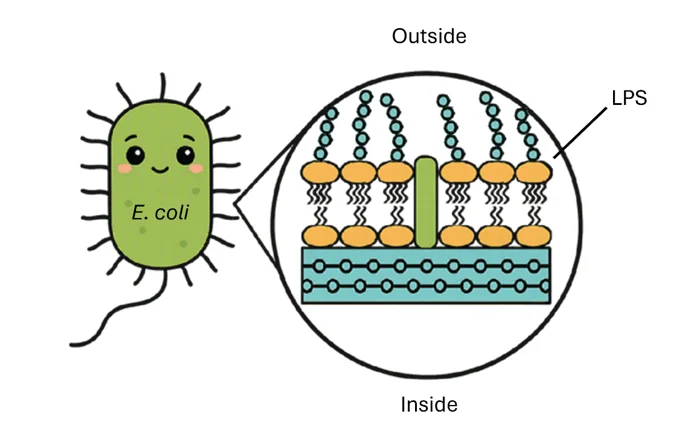
Endotoxins are structural components found in the outer membrane of Gram-negative bacteria. Their primary role is to protect bacterial cells from environmental stress and maintain membrane integrity.
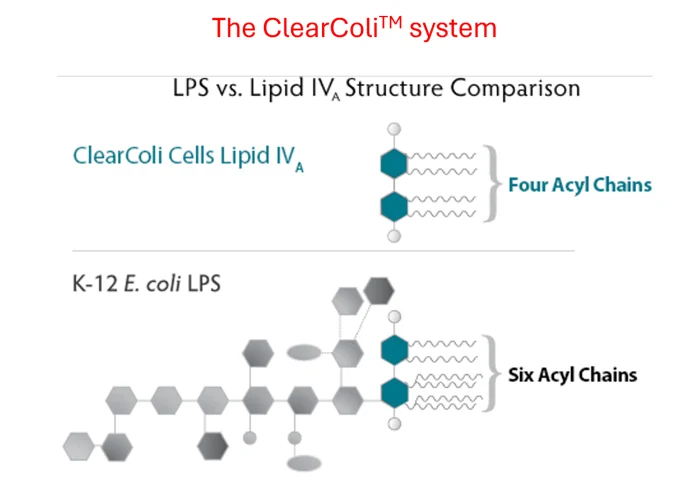
Unlike many biological membranes, the outer membrane of E. coli is not composed solely of phospholipids. Instead, its outer surface is rich in LPS molecules, which form a protective barrier between the bacterium and its environment (Figure 1).
Although beneficial for bacteria, LPS is highly recognizable to the mammalian immune system. When introduced into animal or human cells, endotoxins can activate powerful inflammatory pathways, potentially leading to immune activation, endotoxic shock, or sepsis at high concentrations.
For scientists working with purified proteins, controlling endotoxin contamination is therefore critical. Many downstream applications, particularly cell-based studies, require extremely low endotoxin levels to ensure reliable data.
Protein scientists are familiar with the ongoing battle against endotoxin contamination.
Common strategies to combat this include:
While these approaches can be effective, success is very much protein dependent. Endotoxins can bind tightly to certain proteins, making complete removal difficult without sacrificing protein yield or activity.
Rather than removing endotoxin after expression, wouldn’t it be better to prevent its production in the first place? That is precisely where ClearColi™ offers a unique advantage.
ClearColi™ has been genetically engineered to produce a dramatically altered form of LPS that does not trigger the normal endotoxic response in human cells. This was achieved through seven targeted genetic deletions, ΔgutQ, ΔkdsD, ΔlpxL, ΔlpxM, ΔpagP, ΔlpxP and ΔeptA, alongside a compensating mutation, msbA148, which maintains cell viability.
The result is an E. coli bacterium that no longer produces conventional LPS. Instead, it accumulates Lipid IVA, a simplified precursor molecule lacking the structural features responsible for strong immune activation.
In normal E. coli, LPS contains six acyl chains that interact with the human TLR4/MD-2 receptor complex, triggering NF-κB activation and the release of pro-inflammatory cytokines. ClearColi™ removes two of these critical acyl chains, preventing activation of this pathway. The ClearColiTM engineered strain also lacks the extended oligosaccharide chain present in conventional LPS, making residual Lipid IVA easier to remove during purification (Figure 2).
The outcome is simple but powerful: proteins produced in ClearColi™ can often be used in sensitive applications without provoking the endotoxin responses associated with more traditional E. coli expression systems.
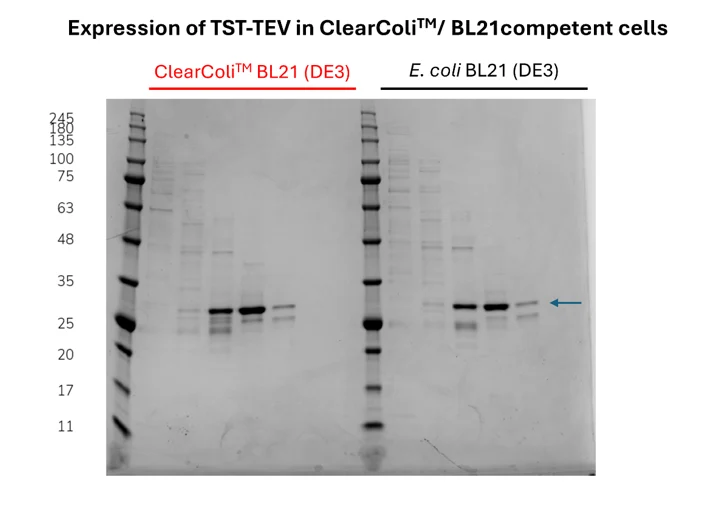
To evaluate the performance of the ClearColi™ system, Sygnature Discovery UK’s specialist cell team (based in Tytherington, Macclesfield) expressed and purified proteins, amongst them was one of our in-house tool proteins Twin Strep Tag (TST)-TEV, using both standard E. coli BL21(DE3) and ClearColi™ BL21(DE3).
Protein Expression
Despite its extensive genetic modifications, ClearColi™ demonstrated good protein expression levels. SDS-PAGE analysis showed similar production of TST-TEV across both expression hosts (Figure 3).
Endotoxin Assessment
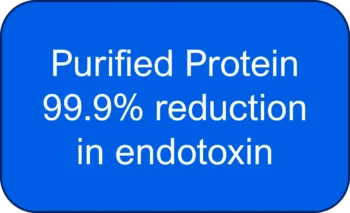
The purified proteins were then analysed using the Biomérieux assay (a Limulus Amebocyte Lysate – LAL assay equivalent, see our comparison here. Importantly, no dedicated endotoxin-removal step was performed following standard purification (Figure 4).
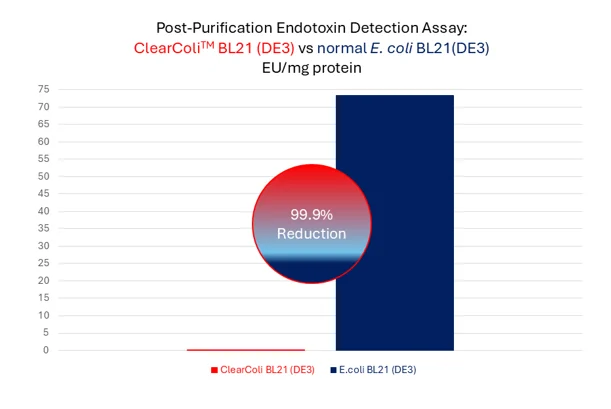
The TST-TEV protein produced in ClearColi™ showed a greater than 99% reduction in endotoxin levels compared with TST-TEV protein expressed in standard E. coli BL21(DE3). This demonstrates the value of addressing endotoxin contamination at the source rather than relying solely on downstream removal.
ClearColiTM eliminates potentially toxic LPS contamination at the source during recombinant protein expression therefore offering several compelling advantages:
Like any technology, ClearColi™ is not without limitation, caveats to be aware of are:
Despite these considerations, we have found the significant reduction in endotoxin burden makes ClearColi™ an attractive option for many protein production programmes.
For organisations developing proteins for cell-based assays, immunological studies, structural biology, or therapeutic research, endotoxin contamination remains a critical challenge. ClearColi™ offers a smarter approach by preventing toxic LPS production at the source rather than attempting to remove it later.
With ClearColi™ Expression Technology now available through Sygnature Discovery’s UK and Canadian Protein & Structure teams, clients from all over the world have access to a proven expression platform capable of delivering high-quality recombinant proteins with dramatically reduced endotoxin levels.
Interested in exploring whether ClearColi™ could benefit your protein expression/purification/structural biology programme? Then please don’t hesitate to contact the Sygnature Discovery Protein & Structure teams (using the Get in Touch form at the bottom) to discuss your project and discover how low-endotoxin expression can streamline your downstream workflows.

Peak Proteins, NuChem Sciences et SB Drug Discovery sont désormais pleinement intégrés à Sygnature Discovery.