

Featured Resources
-
STORM Therapeutics: From Lead to Pre-Candidate Nomination in 18 Months

STORM Therapeutics: From Lead to Pre-Candidate Nomination in 18 Months
Case study




Discover precise insights into brain neurochemistry with Sygnature Discovery's in vivo microdialysis and cOFM services. With over 20 years of expertise, we design bespoke studies that reveal how compounds modulate neurotransmitter systems in health and disease. Using UHPLC/HPLC with electrochemical detection or mass spectrometry, we deliver robust PK/PD data to support confident CNS decision making.


July 30, 2015

Inobrodib, an exciting, first-in-class oral anti-cancer drug in clinical development by CellCentric, was collaboratively designed, synthesized and supported on its pre-clinical journey by an integrated project team at Sygnature Discovery. Inobrodib is now showing promising results in Phase I and II trials for multiple myeloma and other cancer types.

In drug discovery, generating targets is no longer the challenge. The real question is how to identify the few worth investing months of research and significant resources to pursue. Hear expert perspectives on how AI, pathway analysis and scientific expertise are shaping modern target identification.
July 7, 2026
Stay up to date with the latest company updates, milestones, and announcements.
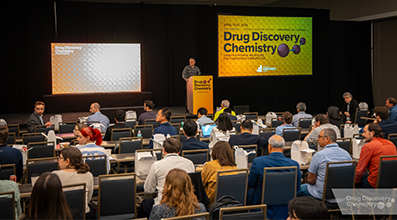
Explore upcoming conferences and scientific meetings where you can connect with our team.

At Sygnature Discovery, we deliver world-leading drug discovery solutions to accelerate your compound from idea to clinic.

Our leadership team brings diverse experience and insight, driving collaboration and innovation across drug discovery.

Explore careers at Sygnature Discovery and join a global team committed to science, collaboration, and integrity.
Inobrodib, an exciting, first-in-class oral anti-cancer drug in clinical development by CellCentric, was collaboratively designed, synthesized and supported on its pre-clinical journey by an integrated project team at Sygnature Discovery. Inobrodib is now showing promising results in Phase I and II trials for multiple myeloma and other cancer types.
At Sygnature Discovery, we deliver world-leading drug discovery solutions to accelerate your compound from idea to clinic.
Our leadership team brings diverse experience and insight, driving collaboration and innovation across drug discovery.
Explore careers at Sygnature Discovery and join a global team committed to science, collaboration, and integrity.
scientific solutions
Designing smarter compounds and making faster decisions by combining
AI-powered modeling, deep scientific expertise, and secure, collaborative
data access. We solve complex challenges and accelerate your drug discovery
journey.
Computer-aided drug design (CADD) uses computational models of proteins and small molecules to predict how compounds will interact with biological targets and their likely properties before synthesis, enabling chemists to make fewer, better compounds.
SUPPORTING YOUR RESEARCH
From structure-based and ligand-based design to predictive modeling and secure data access, we tailor every solution to your program, helping you uncover novel compounds, reduce risk, and accelerate progress toward the clinic.
Sygnature Discovery delivers advanced CADD solutions that help you design better compounds, faster. Our CADD department draws on decades of experience and encompasses scientists with diverse backgrounds in molecular modeling, data mining, chemical informatics and bioinformatics offering computational chemistry support on projects.
We creatively apply a wide range of structure-based drug design (SBDD), ligand-based drug design (LBDD), virtual screening, ADMET prediction, machine learning and Artificial Intelligence tools to address project needs. Our computational scientists work side-by-side with medicinal chemists, bioscientists, and DMPK experts, both at Sygnature and within your team to solve problems collaboratively and reduce timelines.
Our informatics team ensures that all data generated in-house, or externally, is securely accessible to you and your collaborators, enabling timely, informed decisions at every step.

Whether integrated into a full discovery program or delivered as a stand-alone service, our CADD capabilities have broad and extensive in silico capabilities coupled with disease expertise across key therapeutic domains.
Our teams use industry-leading platforms and proprietary tools that are continuously refined to meet evolving scientific needs.

AI-driven generative design, bioinformatics, and machine learning tools accelerate idea generation and decision-making.

Integrated transcriptomics, sequencing, and multi-database analysis support target validation, biomarker discovery, and strategic decision-making. Our bioinformatics solutions are seamlessly connected to broader preclinical and translational capabilities, providing a collaborative, end-to-end solution.

Integrated informatics solutions that streamline workflows, enhance data integrity, and accelerate decision-making. From AI-powered compound design to secure data tracking and cloud-based collaboration, our platforms support every stage of the DMTA cycle. With tools such as SygDesign, Idea Tracker, and ChemELN, we transform data into insight, driving innovation and transparency across global drug discovery.
Evaluate target structure, binding sites, and druggability using AI protein structure prediction, PROTACs modeling, and sequence analysis. Our capabilities include binding site identification, AI protein structure prediction, PROTACs modeling, and sequence analysis, all integrated into structure-based drug design workflows. These insights help optimize hit-finding and lead development strategies, even for challenging or undruggable targets.

Discover new hits and accelerate your screening programs with our Virtual Screening services. Our in silico-based virtual high-throughput screening utilizes advanced techniques such as structure-based and ligand-based screening to identify compounds with high potential for activity.

Combining structural biology with advanced computational chemistry to guide smarter compound design. Using tools such as Molecular Dynamics, Quantum Mechanics (FMO-SP), and RBFE calculations, we provide deep insights into protein-ligand interactions. Our workflows help predict binding affinity, assess stability, and optimize compounds with precision.

Using computational tools and expert knowledge, we design novel scaffolds and optimize compounds based on ligand shape, electrostatics, and pharmacophore features. Our approach includes scaffold hopping, AI-driven generative design, QSAR modeling, and conformational analysis, enabling efficient lead identification and multi-objective optimization.

Our strategically assembled libraries support SAR investigations and accelerate synthesis in our High Throughput Chemistry lab. This accelerates investigations during multiple discovery phases, paving the way for innovative structures in lead optimization.

Our Computational Sciences & Informatics (CS&I) group offers ADMET prediction capabilities to predict and address ADMET liabilities during lead optimization using advanced modeling tools.

Classical force fields often miss critical interactions. Our FMO platform applies quantum mechanics to quantify ligand-protein interactions, enabling precise interpretation of electrostatics, charge transfer, and dispersion effects in complex systems.
Tailored scientific methods are selected for each project using a broad suite of commercial, open-source, and proprietary software.
Our diverse software portfolio supports the implementation of SBDD, LBDD, Target Analysis, virtual screening and ADMET prediction capabilities.
Multi-Tool Platforms
OpenEye Orion, ICM -Pro, MOE, Spartan
AI-Based
Iktos Makya, MedChemica, AlphaFold Multimer (hosted in-house), Relnvent
Pipeline Tools
KNIME, Squonk, ChemAxon
Data Aggregation
Vortex, SpotFire, Data Warrior
Bioinformatics
Qiagen IPA, OpenTargets (hosted in-house)
Fast, secure delivery of compute-intensive tasks is enabled by a flexible, scalable infrastructure:
Cloud compute: On-demand access to Amazon Web Services for virtual screening and molecular dynamics simulations
High-performance cluster: With GPU acceleration for rapid modeling and analysis
Daily operations: High-end PCs with dedicated graphics cards
Immersive visualization: Augmented reality via Nanome’s VR platform for structure exploration and design
Collaborative Impact
“Impact on medicinal chemistry is vital to demonstrating the value of computational chemistry.”
Colin Sambrook-Smith
Director of Computational Sciences and Informatics
At Sygnature, we achieve this through close collaboration and a shared commitment to scientific excellence.
Excellence: No internal pipeline means full focus on your goals
Scientific Integrity: Transparent, rigorous, and honest data-driven decisions
Scientific Momentum: Technology and curiosity drive faster outcomes
Borderless Resource: Seamless access to global expertise across our UK and Canadian labs, for partners across the US, Canada, the UK and Europe

At Sygnature Discovery, our CADD solutions empower drug discovery teams to make smarter, faster decisions. By integrating cutting-edge computational tools with years of scientific expertise, we help design novel compounds, overcome complex challenges, and accelerate progress from target identification to clinical candidate selection.
We offer a broad spectrum of computational chemistry services, spanning structure-based and ligand based drug design, virtual screening, ADMET prediction, bioinformatics, and AI-driven modeling. Our scientists apply techniques such as molecular dynamics, free energy calculations, and machine learning and are supported by a rich suite of tools to deliver tailored solutions for every project, standalone, or integrated.
We integrate advanced AI and machine learning tools across the drug discovery process. From generative compound design to predictive modeling and bioinformatics, our AI powered platforms uncover hidden patterns, generate novel ideas, and guide strategic decisions with speed and precision, enhancing innovation and reducing risk.
Our informatics infrastructure ensures that project data, whether generated in-house or externally is securely accessible to clients and collaborators. With tools like SygDesign, ChemELN, and Idea Tracker, we support transparent, real-time decision-making across the DMTA cycle, turning data into insight and driving innovation.
Meet the experts behind our computer aided drug design solutions. They turn complex data into smarter decisions for your discovery projects.
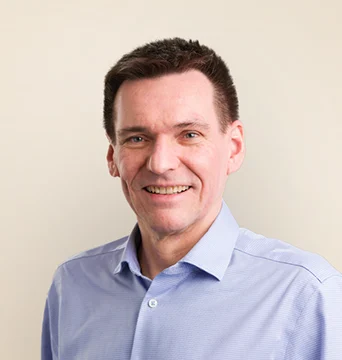
Colin joined Sygnature Discovery in May 2012 to lead computational science and informatics in…

Case Studies
Our customers tell us that we act as an extension of their team and provide high quality expertise at every stage of the drug discovery process. Whether we’re supporting you through the entire process, or just a part of it, our goal isn’t simply to move you to the next stage it’s to lay the foundations for a successfully marketed drug.
Progressing from lead to pre candidate nomination in less than half the industry standard timeline, this program shows how connected scientific teams and real time insight can accelerate complex discovery.
Many intriguing drug discovery programs begin life at start-up biotech companies. Yet at the outset, these new organizations rarely have the resources or laboratory set-up immediately available to turn their ground-breaking ideas into a new medicine.
Leading generative artificial intelligence (GenAI) algorithms for de novo design are being used routinely within our medicinal chemistry programs to enable rapid idea generation to address project objectives.
Corcept Therapeutics, located in Menlo Park, CA, is a leader in the discovery and development of drugs that regulate the effects of cortisol.
CellCentric are developing new treatments for cancer based on their understanding of epigenetics.
Fragment-based drug discovery allows a wide section of chemical space to be interrogated with a relatively small but diverse library of small molecules.
UK-based small molecule drug discovery company
Focus on identifying novel treatments of inflammatory respiratory diseases, such as COPD
Computer-aided drug design uses computational models of proteins and small molecules to predict how compounds will bind, behave and be metabolized before they are synthesized. It spans structure-based and ligand-based design, virtual screening, ADMET prediction and, increasingly, AI-driven generative design, and its purpose is to make fewer, better compounds.
Structure-based drug design (SBDD) starts from a 3D structure of the target protein and designs compounds to fit its binding site. Ligand-based drug design (LBDD) relies on the properties of known active molecules, such as their shape, electrostatics and pharmacophore features, to identify or optimize new compounds, and is especially useful when no protein structure is available. Most drug discovery programs use a combination of both approaches.
Virtual screening uses computational methods to search very large compound libraries for molecules likely to bind a target, before anything is synthesized or purchased. Hits are then confirmed experimentally. It can be structure-based (docking into the target) or ligand-based (similarity to known actives), and can screen millions of molecules in a single campaign.
Yes. CADD support is available as a standalone service – for example a virtual screen, a free energy study or an ADMET modeling as well as embedded in integrated programs. These services can also be integrated into broader discovery programs, with access to the same scientists, methods and computational tools in both cases.
A typical virtual screening campaign takes around a month, although timelines can vary depending on the target, library size, and the complexity of hit triage. Our approach is flexible, allowing us to tailor the workflow to the specific needs and timelines of each project. With a large team of experienced computational scientists, we can usually start new projects straight away and respond quickly to urgent requests.
We use a combination of industry-leading and in-house tools, selecting the most appropriate methods for each project. Our toolkit includes OpenEye Orion, ICM-Pro, MOE, Spartan, Iktos Makya, AlphaFold Multimer, REINVENT, KNIME, Squonk, ChemAxon, Qiagen IPA, and OpenTargets, alongside proprietary platforms developed internally like SygMD and SygDesign. This flexibility allows us to tailor our approach to the scientific challenges and goals of each project.
Our CADD scientists are part of the project team from day one, working closely with medicinal chemists, bioscientists and DMPK experts to guide compound design. As new data are generated, computational and experimental insights are combined to help shape the next round of ideas and decisions. Shared platforms such as Idea Tracker, SygDesign and ChemELN keep everyone aligned around the same live project data.
Our computational chemistry approaches are validated through their ability to drive real experimental outcomes. We have prospectively identified novel hit matter through virtual screening, successfully applied project-specific machine learning and physics-based methods to prioritise compounds for synthesis, and contributed directly to patented inventions across multiple drug discovery programmes. Our focus is not on retrospective model performance, but on delivering actionable insights that improve experimental decision-making and accelerate project progression.
Project data is managed in secure, access-controlled systems and file-sharing platforms, supported by ISO 27001-certified information security processes, continuous monitoring, and robust backup and recovery measures. All project IP is owned by our customers.
Whether applied within an integrated discovery program or as a stand-alone capability, CADD supports a wide range of drug discovery activities. Our teams combine advanced computational methods with deep scientific expertise to generate actionable insights at every stage of a project.

Delivering co-located, multidisciplinary drug discovery programs that combine speed, precision, and scientific rigor to advance candidates with confidence.

Combining AI-driven insights, expert guidance, and rigorous lab validation to select and confirm targets for successful drug discovery.
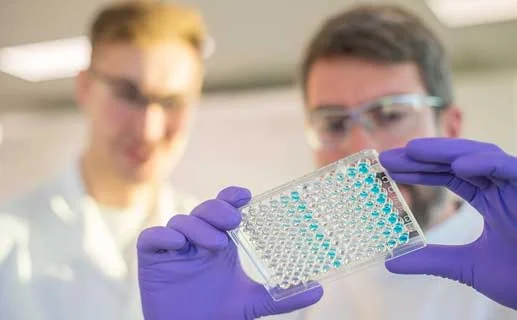
Delivering validated, high-quality hits through integrated technologies, strategic insight, and expert collaboration to advance your program with confidence.
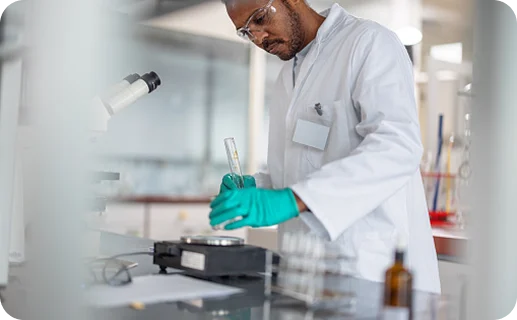
Clinically focused medicinal chemistry combining design excellence, AI-driven insight, and collaborative expertise to deliver molecules aligned with your goals.
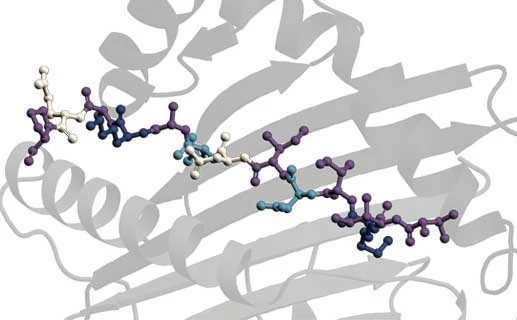
Main home page for the Protein Science and Structural Biology Department. We take time to understand your target and the ultimate aims of the project and tailor our approach accordingly.

Embedding Direct‑to‑Biology methodologies into customer programs enables rapid, systematic expansion of SAR. This approach shortens the path to lead optimization and accelerates the delivery of candidate‑quality compounds.
Resources




Peak Proteins, NuChem Sciences, and SB Drug Discovery have now fully integrated with Sygnature Discovery.