


Featured Resources
-
STORM Therapeutics: From Lead to Pre-Candidate Nomination in 18 Months

STORM Therapeutics: From Lead to Pre-Candidate Nomination in 18 Months
Case study




Discover precise insights into brain neurochemistry with Sygnature Discovery's in vivo microdialysis and cOFM services. With over 20 years of expertise, we design bespoke studies that reveal how compounds modulate neurotransmitter systems in health and disease. Using UHPLC/HPLC with electrochemical detection or mass spectrometry, we deliver robust PK/PD data to support confident CNS decision making.


July 30, 2015

Inobrodib, an exciting, first-in-class oral anti-cancer drug in clinical development by CellCentric, was collaboratively designed, synthesized and supported on its pre-clinical journey by an integrated project team at Sygnature Discovery. Inobrodib is now showing promising results in Phase I and II trials for multiple myeloma and other cancer types.

In drug discovery, generating targets is no longer the challenge. The real question is how to identify the few worth investing months of research and significant resources to pursue. Hear expert perspectives on how AI, pathway analysis and scientific expertise are shaping modern target identification.
July 7, 2026

Stay up to date with the latest company updates, milestones, and announcements.
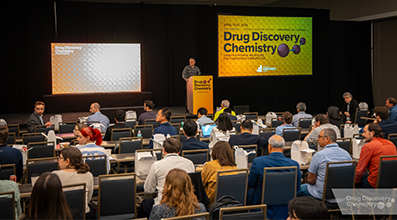
Explore upcoming conferences and scientific meetings where you can connect with our team.

At Sygnature Discovery, we deliver world-leading drug discovery solutions to accelerate your compound from idea to clinic.

Our leadership team brings diverse experience and insight, driving collaboration and innovation across drug discovery.

Explore careers at Sygnature Discovery and join a global team committed to science, collaboration, and integrity.
Inobrodib, an exciting, first-in-class oral anti-cancer drug in clinical development by CellCentric, was collaboratively designed, synthesized and supported on its pre-clinical journey by an integrated project team at Sygnature Discovery. Inobrodib is now showing promising results in Phase I and II trials for multiple myeloma and other cancer types.
At Sygnature Discovery, we deliver world-leading drug discovery solutions to accelerate your compound from idea to clinic.
Our leadership team brings diverse experience and insight, driving collaboration and innovation across drug discovery.
Explore careers at Sygnature Discovery and join a global team committed to science, collaboration, and integrity.
scientific solutions | CADD
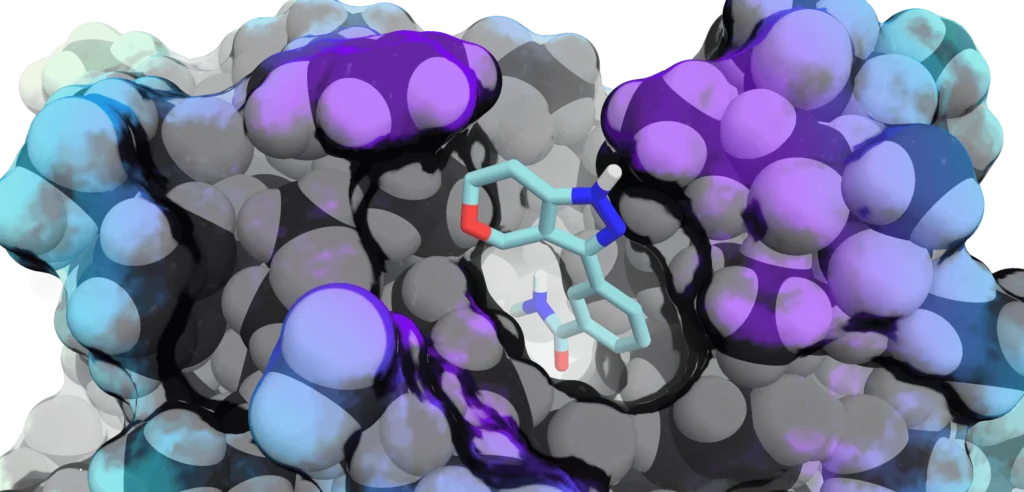
FMO-SP is Sygnature’s integrated drug discovery platform, translating Fragment Molecular Orbital (FMO) theory into practical computational tools, workflows, and decision support for medicinal chemistry. It reveals residue-specific interactions often missed by classical methods, enabling more confident design, earlier pattern recognition, and clearer progression of complex targets. Delivered via an in-house platform with dedicated high-performance computing, FMO-SP provides rapid access to insights when needed. By uncovering the forces driving binding, selectivity, and SAR, it turns quantum-level data into clear, actionable guidance for medicinal chemistry programs.
supporting your research
These include electrostatics, charge transfer, and dispersion interactions. They become especially important in complex systems such as PPIs, ADCs, PROTACs, and RNA binders. The Fragment Molecular Orbital (FMO) method provides residue‑level insight into these effects. It explains why compounds behave a certain way and how small changes at the atomic level influence the overall binding profile.
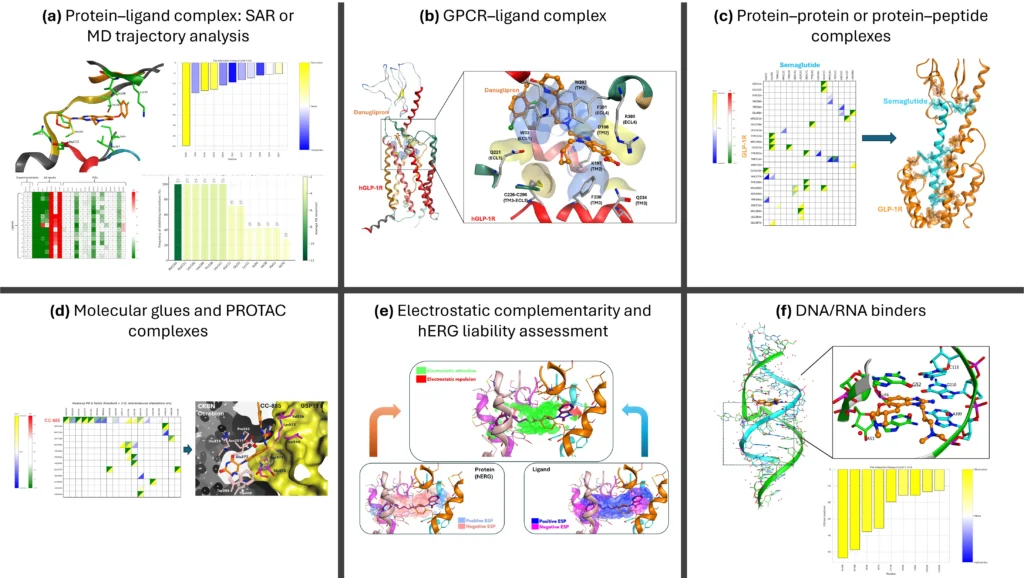
Sygnature’s FMO‑SP builds on this capability. It combines high throughput FMO calculations with automated structure setup, streamlined fragmentation, and optimization tools. This allows project teams to explore binding energetics quickly and consistently across hit series or design hypotheses. Complex quantum information is converted into intuitive visual outputs, including heatmaps, 3D interaction maps, and electrostatic complementarity surfaces. These give medicinal chemists and computational scientists a clearer picture of the forces shaping activity.
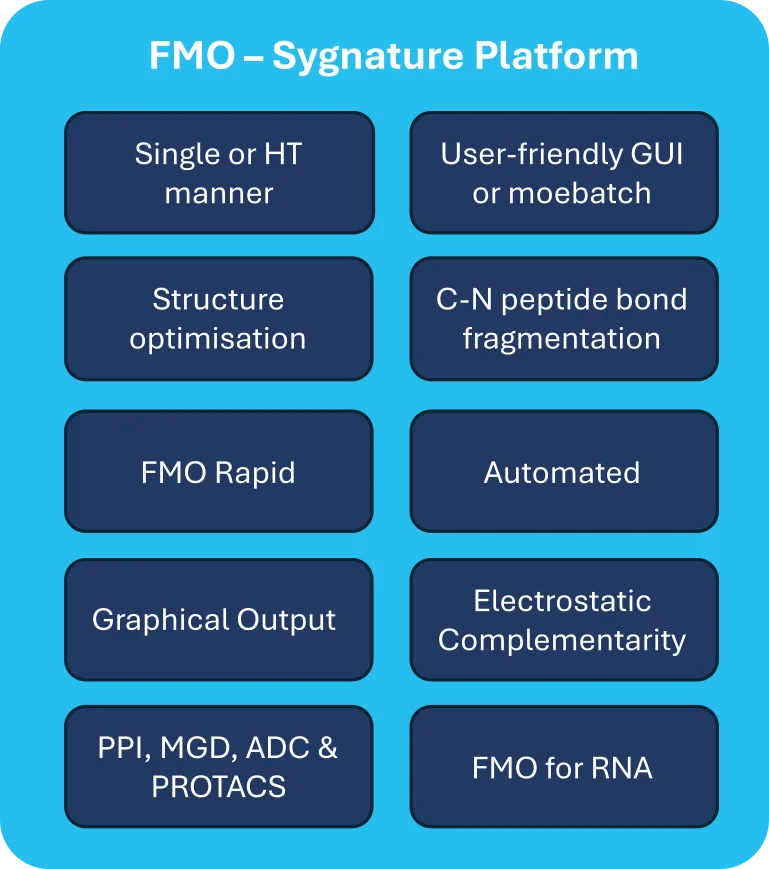
FMO‑SP quantifies residue‑specific interaction energies in kcal per mol. This helps teams see exactly which residues stabilize binding and where small structural changes can shift activity.
Interactions are broken down into electrostatic, hydrophobic, and mixed components. This gives medicinal chemists a deeper understanding of what drives potency, selectivity, or unexpected SAR trends.
Heatmaps, 3D interaction maps, and column plots turn complex quantum information into visuals that are easy to understand. These help teams spot hotspots, liabilities, and design opportunities faster.
When paired with NES or molecular dynamics, FMO‑SP shows which interactions remain stable and which fade as the ligand moves. This provides a more realistic view of binding behavior inside the protein environment.
Electrostatic complementarity calculations help identify where polarity mismatches may correlate with hERG liability. This supports safer design choices earlier in hit‑to‑lead and lead optimization.
FMO‑SP uses GAMESS, DFTB‑PA, MP2 methods, MOE, PyMOL, KNIME, and Python pipelines to automate setup and analysis. This allows high throughput quantum mechanics to be used routinely, supporting PROTACs, molecular glues, RNA binders, and other emerging modalities.
The FMO‑Sygnature Platform has been applied prospectively across a broad range of target classes. It has been used to explain SAR and potency trends in GLP‑1R agonists such as Danuglipron. It has helped identify binding drivers in GPCR–peptide systems including GLP‑1R and Semaglutide. It has provided clarity on the electrostatic contributions to hERG liability in compounds like Pimozide. It has mapped cooperativity within PROTAC systems such as MZ1 and quantified ternary stabilization in molecular glue complexes including CRBN, CC‑885, and GSPT1.
These results reflect the strength of our multidisciplinary teams. Our computational chemists, medicinal chemists, and structural biologists work together to translate quantum findings into practical design recommendations. Their combined expertise accelerates DMTA cycles, reduces synthesis burden, and improves the success rate of hit‑to‑lead and lead optimization work. The mechanistic clarity generated through FMO‑SP supports regulatory documentation and IP strategies. We also remain closely aligned with the FMODD consortium, which helps ensure our methodologies reflect current best practice.
Resource hub


We support protein–ligand systems, protein–protein interactions, GPCRs, nucleic acids, and ternary complexes such as PROTACs and molecular glue degraders.
Small molecules, peptides, biologics, PPIs, ADCs, PROTACs, molecular glues, and RNA or DNA modulators.
We run end‑to‑end workflows from input to analysis, including NES/MD integration, ESC analysis, and AI‑ready outputs. Visualizations and data files are fully automated for efficiency and clarity.
Structured CSV files containing PIE and PIEDA data, visual outputs such as heatmaps and interaction plots, 3D interaction maps, and design recommendations tailored to your program.
We bring together a dynamic blend of new talent and experienced pharmaceutical industry experts from a round the world, delivering excellence across every stage of discovery.

Our Computer Aided Drug Design (CADD) capabilities combine deep scientific expertise with advanced AI, machine learning, and informatics infrastructure to support smarter, faster decision-making across the drug discovery pipeline.

Identifying key interactions isn’t always straightforward. Static models can miss critical dynamics that influence binding and stability. MD simulations allow us to observe targets in motion, uncover hidden interactions, and improve molecular design strategies.

Leveraging the properties of known active molecules to rapidly generate and optimize new compounds through ligand-driven insights, AI-powered tools, and collaborative expertise to uncover new chemical space and accelerate discovery.
Peak Proteins, NuChem Sciences, and SB Drug Discovery have now fully integrated with Sygnature Discovery.