


Featured Resources
-
STORM Therapeutics: From Lead to Pre-Candidate Nomination in 18 Months

STORM Therapeutics: From Lead to Pre-Candidate Nomination in 18 Months
Case study
📣From lead to pre-candidate nomination in 18 months. Explore the STORM Therapeutics case study


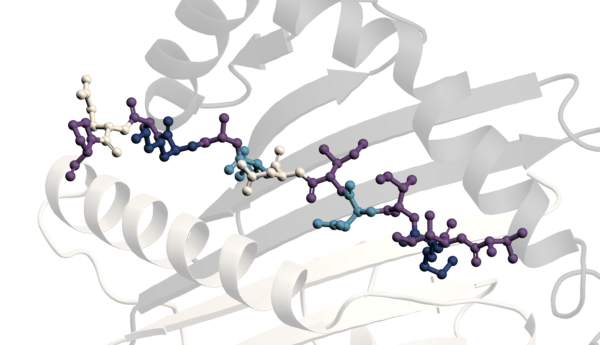


Discover precise insights into brain neurochemistry with Sygnature Discovery's in vivo microdialysis and cOFM services. With over 20 years of expertise, we design bespoke studies that reveal how compounds modulate neurotransmitter systems in health and disease. Using UHPLC/HPLC with electrochemical detection or mass spectrometry, we deliver robust PK/PD data to support confident CNS decision making.


July 30, 2015

Inobrodib, an exciting, first-in-class oral anti-cancer drug in clinical development by CellCentric, was collaboratively designed, synthesised and supported on its pre-clinical journey by an integrated project team at Sygnature Discovery. Inobrodib is now showing promising results in Phase I and II trials for multiple myeloma and other cancer types.

In drug discovery, generating targets is no longer the challenge. The real question is how to identify the few worth investing months of research and significant resources to pursue. Hear expert perspectives on how AI, pathway analysis and scientific expertise are shaping modern target identification.
July 7, 2026

Stay up to date with the latest company updates, milestones, and announcements.
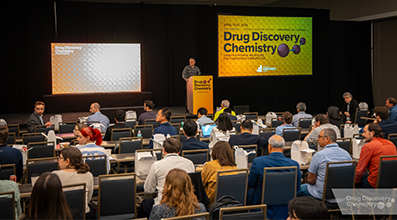
Explore upcoming conferences and scientific meetings where you can connect with our team.

At Sygnature Discovery, we deliver world-leading drug discovery solutions to accelerate your compound from idea to clinic.

Our leadership team brings diverse experience and insight, driving collaboration and innovation across drug discovery.

Explore careers at Sygnature Discovery and join a global team committed to science, collaboration, and integrity.
Inobrodib, an exciting, first-in-class oral anti-cancer drug in clinical development by CellCentric, was collaboratively designed, synthesised and supported on its pre-clinical journey by an integrated project team at Sygnature Discovery. Inobrodib is now showing promising results in Phase I and II trials for multiple myeloma and other cancer types.
At Sygnature Discovery, we deliver world-leading drug discovery solutions to accelerate your compound from idea to clinic.
Our leadership team brings diverse experience and insight, driving collaboration and innovation across drug discovery.
Explore careers at Sygnature Discovery and join a global team committed to science, collaboration, and integrity.
A client had an advanced Active Pharmaceutical Ingredient (API) which was moving towards preclinical toxicology studies in Non-Human Primates (NHPs). These studies would require:
The form of the API at that time would not have been able to deliver on these criteria. Whilst a highly stable polymorphic form was being sued, the current formulation did not deliver the required exposure due to the Biopharmaceutics Classification System (BCS) Class II nature of the compound. Low solubility and slow dissolution rates hindering the development of the promising molecule.
Physiologically Based Pharmacokinetic (PBPK) modelling had shown that a particle size reduction might reach sufficient exposure. However, for this project time was the critical factor and the client did not want to risk delays in potentially having to going back to an alternative formulation if the Particle Size Distribution (PSD) reduction was unsuccessful.
With this in mind, our Form & Formulation team proposed to look at 2 different routes to achieve PSD reduction, a liquid formulation in parallel with a nano-suspension option, and the client agreed to this more thorough investigation.
After a truly team effort, we developed a high dose lipidic formulation as well as a nano-suspension which both performed well in vitro. Testing in vivo by the client led to some interesting data. The lipidic formulation massively increased exposure compared to historical data, but the maximum blood concentration Cmax and time to maximum concentration Tmax didn’t fit the desired profile for human dosing. As such, whilst the lipidic formulation was a massive help and fit for purpose for the NHP toxicology study, it wasn’t going to help the molecule move forwards to clinical trials in humans.
The nano-suspension however, did have the desired Cmax and Tmax profile. Whilst the Sygnature team regularly prepares nano suspensions and hand them over to our in vivo pharmacology colleagues for testing, a suspension isn’t the most desirable, patient friendly formulation for Phase I clinical trials.
To that end, we looked at spray drying the nano-suspension with a carrier as a bulking agent. To achieve this, we set up a series of experiments that aimed to:
What we delivered was a beautiful powder which will be much easier to transfer to GMP for clinical use, and more importantly had reconstitution properties where the nano-suspension was easily redispersed upon hitting aqueous media, without agglomeration being observed.
There is still more work to be done. Such as – long term stability studies to ICH guidelines in our Memmert chambers along with further optimization of the spray drying parameters for transfer to a GMP drug product manufacturer.
This piece of work shows the benefit of working on 2 options in parallel, where time is a key factor. The speed and flexibility that the Sygnature team leveraged allowed us to deliver different options to boost the performance of the API. Ultimately the approach we took shortened the project timeline, by not having to go back and revisit alternative formulation routes when the more obvious route failed.
We met the clients’ timelines and moved the project rapidly towards clinical trials and hopefully will lead to helping patients in need.
If you wish to learn more about how we can advance your molecule to the clinic please don’t hesitate to get in touch. Just use the “Get in Touch” button at the bottom of the page.

Peak Proteins, NuChem Sciences, and SB Drug Discovery have now fully integrated with Sygnature Discovery.