



Featured Resources
-
STORM Therapeutics: From Lead to Pre-Candidate Nomination in 18 Months

STORM Therapeutics: From Lead to Pre-Candidate Nomination in 18 Months
Case study


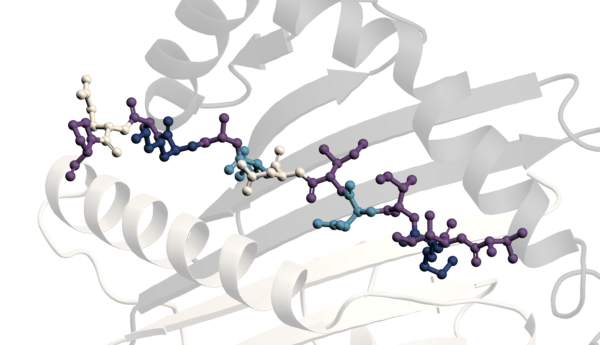


Discover precise insights into brain neurochemistry with Sygnature Discovery's in vivo microdialysis and cOFM services. With over 20 years of expertise, we design bespoke studies that reveal how compounds modulate neurotransmitter systems in health and disease. Using UHPLC/HPLC with electrochemical detection or mass spectrometry, we deliver robust PK/PD data to support confident CNS decision making.


July 30, 2015

Inobrodib, an exciting, first-in-class oral anti-cancer drug in clinical development by CellCentric, was collaboratively designed, synthesized and supported on its pre-clinical journey by an integrated project team at Sygnature Discovery. Inobrodib is now showing promising results in Phase I and II trials for multiple myeloma and other cancer types.

In drug discovery, generating targets is no longer the challenge. The real question is how to identify the few worth investing months of research and significant resources to pursue. Hear expert perspectives on how AI, pathway analysis and scientific expertise are shaping modern target identification.
July 7, 2026

Stay up to date with the latest company updates, milestones, and announcements.
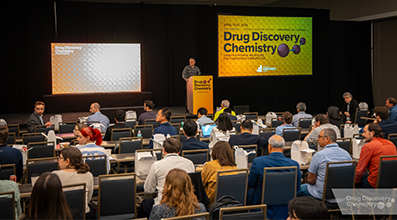
Explore upcoming conferences and scientific meetings where you can connect with our team.

At Sygnature Discovery, we deliver world-leading drug discovery solutions to accelerate your compound from idea to clinic.

Our leadership team brings diverse experience and insight, driving collaboration and innovation across drug discovery.

Explore careers at Sygnature Discovery and join a global team committed to science, collaboration, and integrity.
Inobrodib, an exciting, first-in-class oral anti-cancer drug in clinical development by CellCentric, was collaboratively designed, synthesized and supported on its pre-clinical journey by an integrated project team at Sygnature Discovery. Inobrodib is now showing promising results in Phase I and II trials for multiple myeloma and other cancer types.
At Sygnature Discovery, we deliver world-leading drug discovery solutions to accelerate your compound from idea to clinic.
Our leadership team brings diverse experience and insight, driving collaboration and innovation across drug discovery.
Explore careers at Sygnature Discovery and join a global team committed to science, collaboration, and integrity.
Producing sufficient quantities of active, high-quality protein remains one of the most common challenges in drug discovery and protein science. While E. coli remains a widely used expression system due to its speed, scalability, and cost effectiveness, recombinant proteins do not always behave as expected. In many cases, proteins are produced as insoluble aggregates known as inclusion bodies, creating a critical decision point: should you pursue protein refolding or explore an alternative expression strategy?
At Sygnature Discovery, selecting the most appropriate route to functional protein is often as important as the downstream purification and characterization process itself. While protein refolding can be highly effective for certain targets, success is far from guaranteed, making informed decision-making essential.
The concept of protein refolding stems from the pioneering work of Christian Anfinsen, who demonstrated that a protein’s three-dimensional structure is determined by its amino acid sequence. In principle, this means that proteins produced in an unfolded state can be returned to their native, biologically active conformation under the right conditions.
If protein refolding were universally successful, many recombinant proteins would simply be expressed as inclusion bodies, isolated, solubilized using denaturants, and refolded in vitro. In practice, however, protein folding is often more complex. Many proteins rely on precise disulfide bond formation, post-translational modifications, or cellular folding machinery to achieve their native structure.
As a result, protein refolding remains a specialized but valuable approach within protein production workflows.
Inclusion body formation is often viewed as an undesirable outcome of recombinant protein expression. However, proteins accumulating in inclusion bodies can frequently reach higher expression levels than their soluble counterparts and are often more resistant to proteolytic degradation. For some difficult or toxic proteins, expression as inclusion bodies can provide an effective route to obtaining sufficient material for downstream solubilization and refolding.
Although predicting refolding success is difficult, some proteins are generally better candidates than others.
As a rule of thumb, proteins may have a higher likelihood of successful refolding when they are:
Under the right circumstances, refolding can provide an efficient route to producing substantial quantities of protein from inclusion bodies, avoiding the need for more complex expression systems.
Inclusion bodies are often viewed as an obstacle to successful protein production. However, in some cases they can form an important part of the expression strategy.
Sygnature Discovery successfully applied this approach when producing a broad-specificity nuclease for internal use. Because expression of an active nuclease was expected to be toxic to E. coli, the expression process was designed to drive production into insoluble inclusion bodies. The inclusion body material was subsequently solubilized, refolded, and purified. Intact mass spectrometry confirmed the expected protein mass with correct disulfide bond formation, and the final protein was shown to be enzymatically active.
This example demonstrates that inclusion bodies are not always a sign of expression failure. For some challenging proteins, inclusion body expression followed by refolding can provide a practical route to obtaining functional protein.
One of the most common misconceptions in protein refolding is equating solubility with successful folding.
A soluble protein is not necessarily a correctly folded protein. Misfolded proteins can remain soluble while exhibiting little or no biological activity. For this reason, establishing a reliable assay to assess protein function or structure is critical before embarking on a refolding campaign.
Depending on the target, success may be measured through:
Without a meaningful method to assess native structure or function, determining whether refolding has truly succeeded becomes difficult.
Protein refolding is often best approached as a systematic screening exercise rather than a single experiment.
Researchers such as Rainer Rudolph have extensively described strategies for optimizing protein refolding, emphasizing the importance of evaluating multiple parameters simultaneously. Statistical experimental designs can be particularly valuable for identifying productive conditions while minimizing experimental effort.
Common variables explored during refolding screens include:
Even small changes in these parameters can have a significant impact on refolding efficiency and protein recovery.
One of the most important aspects of protein refolding is recognizing when to stop.
Refolding campaigns can consume significant time and resources, particularly when no evidence of properly folded protein emerges during initial screening. When multiple conditions fail to generate active protein, continuing optimization may not be the most productive use of resources.
This is where scientific experience becomes especially valuable.
Rather than investing months in increasingly complex refolding experiments, it may be more effective to evaluate alternative solutions such as:
The most successful protein production programs are not necessarily those that persist with a single strategy, but those that rapidly identify the most promising route forward.
Protein refolding occupies an important place within the protein scientist’s toolkit. For the right target, it can provide a straightforward and scalable route to active protein production. For others, alternative expression systems may offer a more reliable path to success.
The challenge lies in understanding which approach is most likely to deliver high-quality protein within the constraints of a project timeline.
At Sygnature Discovery, our Protein Science teams routinely evaluate multiple expression and production strategies to overcome challenging protein targets. By combining expertise in bacterial, insect, and mammalian expression systems with extensive protein characterization capabilities, we help clients identify the most efficient route to functional protein while minimizing development risk.
Protein refolding can be a powerful solution for proteins expressed as inclusion bodies, but it is rarely a one-size-fits-all answer. Success depends on the properties of the target protein, the availability of suitable analytical assays, and a structured approach to process optimization.
Ultimately, the key question is not simply whether a protein can be refolded, but whether refolding represents the most efficient path to obtaining the active protein needed to advance a discovery program. Knowing when to pursue refolding and when to pivot to an alternative strategy can make the difference between a prolonged optimization effort and a successful protein production campaign.

Peak Proteins, NuChem Sciences, and SB Drug Discovery have now fully integrated with Sygnature Discovery.