


Featured Resources
-
STORM Therapeutics: From Lead to Pre-Candidate Nomination in 18 Months

STORM Therapeutics: From Lead to Pre-Candidate Nomination in 18 Months
Case study
📣From lead to pre-candidate nomination in 18 months. Explore the STORM Therapeutics case study


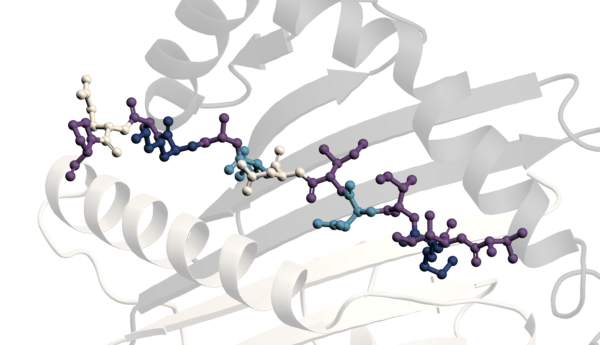


Discover precise insights into brain neurochemistry with Sygnature Discovery's in vivo microdialysis and cOFM services. With over 20 years of expertise, we design bespoke studies that reveal how compounds modulate neurotransmitter systems in health and disease. Using UHPLC/HPLC with electrochemical detection or mass spectrometry, we deliver robust PK/PD data to support confident CNS decision making.


July 30, 2015

Inobrodib, an exciting, first-in-class oral anti-cancer drug in clinical development by CellCentric, was collaboratively designed, synthesised and supported on its pre-clinical journey by an integrated project team at Sygnature Discovery. Inobrodib is now showing promising results in Phase I and II trials for multiple myeloma and other cancer types.

In drug discovery, generating targets is no longer the challenge. The real question is how to identify the few worth investing months of research and significant resources to pursue. Hear expert perspectives on how AI, pathway analysis and scientific expertise are shaping modern target identification.
July 7, 2026

Stay up to date with the latest company updates, milestones, and announcements.
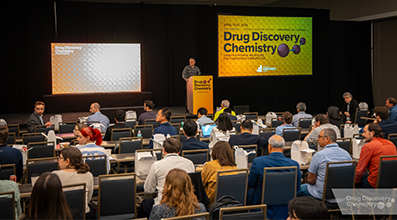
Explore upcoming conferences and scientific meetings where you can connect with our team.

At Sygnature Discovery, we deliver world-leading drug discovery solutions to accelerate your compound from idea to clinic.

Our leadership team brings diverse experience and insight, driving collaboration and innovation across drug discovery.

Explore careers at Sygnature Discovery and join a global team committed to science, collaboration, and integrity.
Inobrodib, an exciting, first-in-class oral anti-cancer drug in clinical development by CellCentric, was collaboratively designed, synthesised and supported on its pre-clinical journey by an integrated project team at Sygnature Discovery. Inobrodib is now showing promising results in Phase I and II trials for multiple myeloma and other cancer types.
At Sygnature Discovery, we deliver world-leading drug discovery solutions to accelerate your compound from idea to clinic.
Our leadership team brings diverse experience and insight, driving collaboration and innovation across drug discovery.
Explore careers at Sygnature Discovery and join a global team committed to science, collaboration, and integrity.
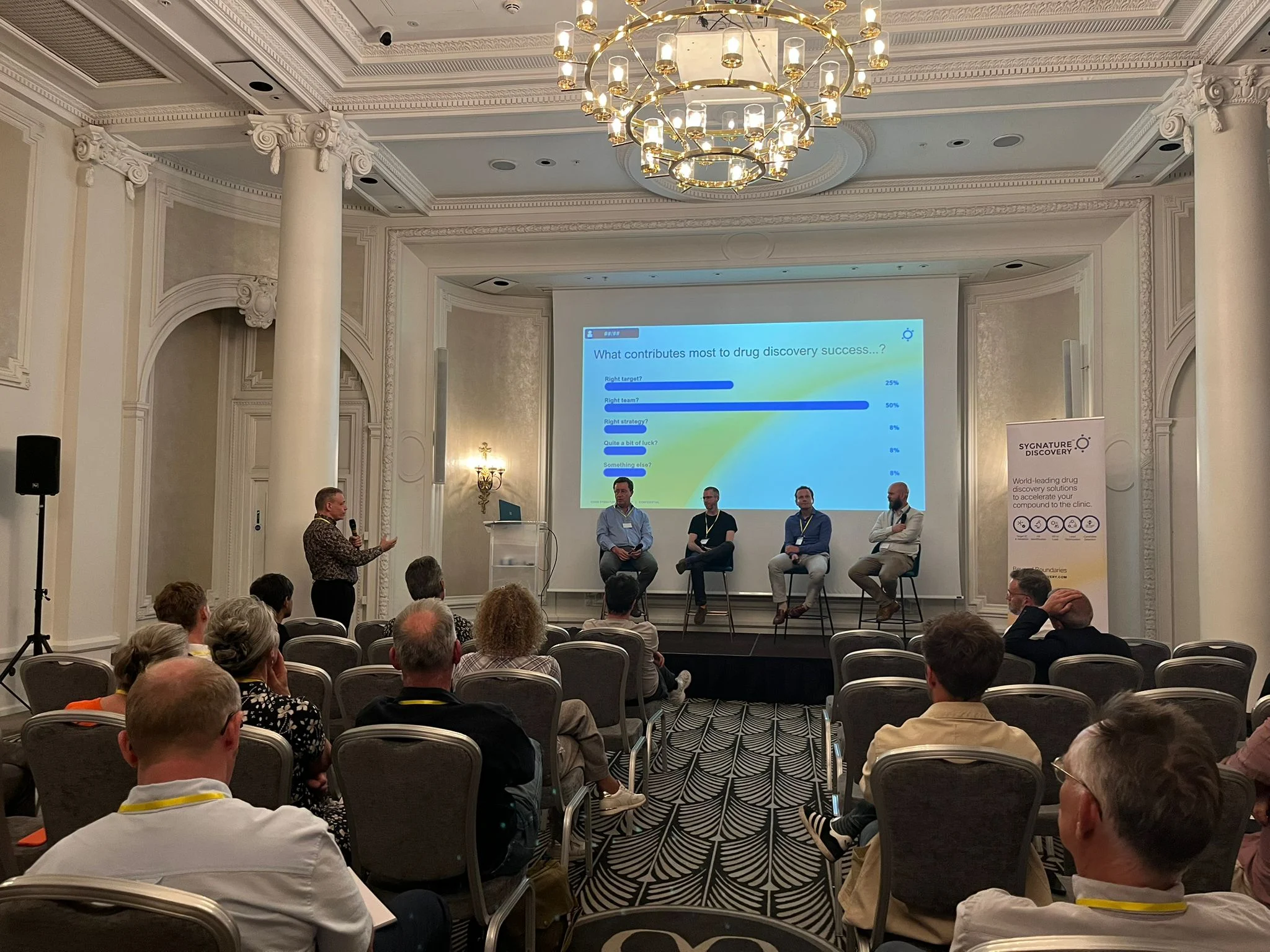
At a recent Sygnature-hosted event in London, we brought together leaders from across biotech, investment, and drug discovery to explore a critical question: how can companies de-risk fundraising in today’s environment?
What emerged was a broader and more nuanced discussion, not just about capital, but about what truly drives success in drug discovery, and how the right R&D strategy and partnerships can help reduce both scientific and financial risk.
Success Begins with the Team
When we polled the audience on what matters most in drug discovery success: team, target, strategy, or luck – the response was clear. The team stood out as the single most important factor.
However, the discussion made clear that “team” is not limited to the scientists driving discovery. It encompasses leadership, investors, CRO partners, and clinical experts, each playing a critical role in shaping outcomes.
What distinguishes strong teams is not just technical capability, but how they operate. They are able to recognize opportunity in unexpected data, make high-quality decisions quickly, and pivot when needed.
As one panelist put it, “fortune favours the prepared mind. It’s not just about seeing something, it’s about being prepared to act on it.”
Biology Is Foundational, but Execution Determines Value
There was broad agreement that well-validated biology remains a critical driver of success. In particular, targets supported by strong genetic or human disease evidence can significantly improve the likelihood of clinical success, especially in later-stage trials.
But strong biology alone is not enough. Programs frequently fail when promising science is not translated effectively or executed rigorously. The panel emphasized that biology creates potential, but it is execution, driven by the right team, that ultimately determines success.
A More Demanding Funding Landscape
The current funding environment is reshaping how biotech companies operate. Capital is tighter, expectations are higher, and investors are increasingly focused on de-risked opportunities.
This shift is pushing companies to demonstrate more progress earlier, often advancing programs further before securing funding. At the same time, traditional exit routes such as IPOs and M&A are less predictable, adding further pressure to build robust, differentiated programs.
As a result, R&D strategy and fundraising strategy are now closely interconnected. De-risking is no longer a later-stage objective, it must be considered from the outset.
The Evolving Role of CRO Partnerships
One of the clearest themes throughout the discussion was the growing importance of outsourced R&D models. Rather than building large internal infrastructure, many companies are choosing to partner with CROs to accelerate progress while maintaining flexibility.
These partnerships offer clear advantages, including speed, access to specialized expertise, and more efficient use of capital. However, the panel stressed that their success depends heavily on how they are approached.
As highlighted in the discussion, the most effective collaborations are those where CROs are treated not as vendors, but as true partners, integrated into the decision-making process and aligned around shared goals. In this model, external expertise becomes an extension of the internal team, strengthening both execution and outcomes.
Speed as a Competitive Advantage
In today’s environment, speed is increasingly critical, but only when it is applied thoughtfully. Moving quickly without structure can introduce risk, but moving too slowly can be equally damaging, particularly in a competitive and capital-constrained landscape.
The panel highlighted the growing use of more agile approaches, with shorter development cycles and more frequent decision points. This enables teams to generate data faster, make informed decisions sooner, and adjust direction when needed.
Ultimately, the goal is not speed alone, but what one speaker described as “controlled speed” – a balance between pace and scientific rigor.
Bridging Academia and Industry
Many innovative ideas originate in academia, but translating them into successful biotech programs remains a challenge. Differences in expectations, timelines, and resources can create friction early in the process.
Successful transitions require close collaboration, clear communication, and a shared understanding of what is needed to move from discovery to development. Early validation and realistic goal-setting are key, as is helping academic founders understand investor expectations.
The panel also highlighted the role of informal relationship-building, with many successful collaborations starting through ongoing conversations rather than formal processes.
Differentiation Is No Longer Optional
The panel emphasized the importance of pursuing truly novel, first-in-class approaches. In an increasingly competitive global environment, differentiation is critical to attracting funding and remaining competitive.
Fast-following strategies were seen as less viable, particularly given the pace of progress in other markets. For emerging biotechs, building clearly differentiated programs from the outset is increasingly important.
Learning to Fail and Pivot Effectively
Failure remains an inevitable part of drug discovery, but the way it is handled can significantly impact long-term success.
As highlighted in the discussion, teams need “the foresight of how to fail successfully,” enabling them to recognise failure early and pivot effectively.
The panel emphasized the importance of recognizing failure early and acting decisively. Agile teams are better positioned to pivot quickly, redirecting effort and resources without losing momentum.
Rather than avoiding failure, the most effective organizations focus on failing efficiently, capturing insights and applying them to the next opportunity.
The discussion also highlighted a shift toward leaner and more flexible operating models. Instead of building large, fixed teams, companies are increasingly relying on smaller internal groups supported by external expertise.
This includes the use of fractional leadership roles and broader networks of specialists, allowing organizations to access the right expertise at the right time without the overhead of traditional structures.
These models support greater agility and more efficient use of capital, both critical in the current environment.
Final Thoughts
While the panel explored many individual factors, team, biology, funding, and strategy, the overarching takeaway was clear: success depends on how these elements come together.
Strong science is essential, but it must be supported by the right team, executed with speed and discipline, and enabled by effective partnerships.
In this context, smarter R&D collaborations are not just operational choices, they are central to de-risking, accelerating progress, and ultimately improving the probability of success.
The Panelists at the Event

Peak Proteins, NuChem Sciences, and SB Drug Discovery have now fully integrated with Sygnature Discovery.