


Featured Resources
-
STORM Therapeutics: From Lead to Pre-Candidate Nomination in 18 Months

STORM Therapeutics: From Lead to Pre-Candidate Nomination in 18 Months
Case study


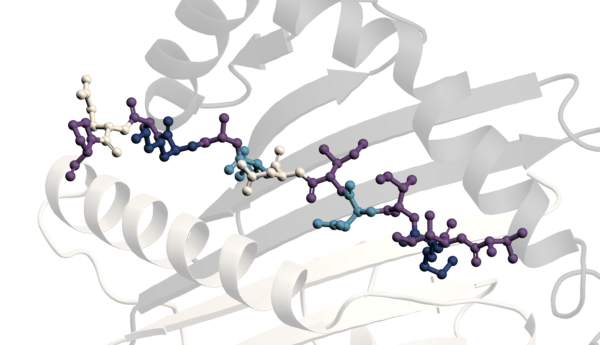


Discover precise insights into brain neurochemistry with Sygnature Discovery's in vivo microdialysis and cOFM services. With over 20 years of expertise, we design bespoke studies that reveal how compounds modulate neurotransmitter systems in health and disease. Using UHPLC/HPLC with electrochemical detection or mass spectrometry, we deliver robust PK/PD data to support confident CNS decision making.


July 30, 2015

Inobrodib, an exciting, first-in-class oral anti-cancer drug in clinical development by CellCentric, was collaboratively designed, synthesised and supported on its pre-clinical journey by an integrated project team at Sygnature Discovery. Inobrodib is now showing promising results in Phase I and II trials for multiple myeloma and other cancer types.

In drug discovery, generating targets is no longer the challenge. The real question is how to identify the few worth investing months of research and significant resources to pursue. Hear expert perspectives on how AI, pathway analysis and scientific expertise are shaping modern target identification.
July 7, 2026

Stay up to date with the latest company updates, milestones, and announcements.
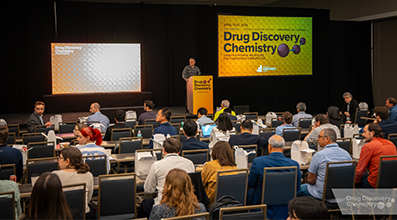
Explore upcoming conferences and scientific meetings where you can connect with our team.

At Sygnature Discovery, we deliver world-leading drug discovery solutions to accelerate your compound from idea to clinic.

Our leadership team brings diverse experience and insight, driving collaboration and innovation across drug discovery.

Explore careers at Sygnature Discovery and join a global team committed to science, collaboration, and integrity.
Inobrodib, an exciting, first-in-class oral anti-cancer drug in clinical development by CellCentric, was collaboratively designed, synthesised and supported on its pre-clinical journey by an integrated project team at Sygnature Discovery. Inobrodib is now showing promising results in Phase I and II trials for multiple myeloma and other cancer types.
At Sygnature Discovery, we deliver world-leading drug discovery solutions to accelerate your compound from idea to clinic.
Our leadership team brings diverse experience and insight, driving collaboration and innovation across drug discovery.
Explore careers at Sygnature Discovery and join a global team committed to science, collaboration, and integrity.
How Translational Science Accelerates Drug Development
In discovery and early development, the value of biomarkers lies in their ability to reduce biological uncertainty. They provide a structured way to test whether a program is built on the right disease biology, whether a target is meaningfully engaged, and whether experimental models are behaving as expected. When used deliberately, biomarkers shift decision making upstream—where risk can be addressed before it accumulates.
Biomarkers are drug development tools rather than optional supplements, whose value depends on having a clearly defined context of use and a direct link to decision making.1
Biomarkers as Preclinical Hypothesis Testers
In the preclinical setting, biomarkers are most effective when they function as hypothesis testers rather than broad descriptors. The key question is not how many parameters can be measured, but whether the data generated resolve a specific biological uncertainty. This requires clarity on which pathways matter, what constitutes meaningful modulation, and how that modulation should manifest across experimental systems.
Here, −omics technologies are particularly valuable when applied with discipline. Transcriptomic and proteomic profiling can test whether disease associated pathways are consistently perturbed across models and whether pharmacological intervention moves those pathways in the expected direction. When interpreted in the context of a working disease model, these data help distinguish robust mechanisms from artefacts of model choice or experimental design.
The goal at this stage is not coverage but convergence. Effective biomarker strategies reduce complexity by integrating signals across platforms and models, enabling teams to prioritise markers that sit close to core disease biology rather than peripheral responses. This approach builds biological confidence and supports earlier, more informed portfolio decisions.2
Preclinical Translation Starts with Disease Biology
A common misconception is that translation begins in first in human studies. In practice, translational success is largely determined earlier, by how rigorously disease biology has been interrogated and how well preclinical biomarkers reflect that biology.
Preclinical −omics approaches allow teams to assess conservation of disease relevant pathways across species and experimental systems, and to evaluate whether pharmacological effects align with those pathways rather than produce model specific signals. When biomarker development evolves alongside hypothesis refinement, both mature together. Biomarkers are challenged as understanding deepens, assumptions are tested, and alternative explanations are explored.
This iterative process produces mechanistic reference points that remain useful later, providing a basis for interpreting target engagement rather than retrofitting explanations to ambiguous data—a principle that has been highlighted repeatedly in reviews of biomarker driven drug development.1
Managing Complexity in −Omics Driven Discovery
High dimensional datasets are now routine in discovery, but they do not eliminate the need for judgement. Most −omics studies surface a mixture of core biology, secondary effects, and noise. The challenge is not detection, but interpretation.
Context is built through thoughtful experimental design, appropriate model selection, and validation across complementary systems. Integrating multiple −omics layers is valuable when it strengthens confidence in a mechanistic conclusion, not when it simply adds technical sophistication. Importantly, biomarkers are most informative when anchored to biological plausibility and experimental purpose.2
Looking Ahead
Preclinical biomarkers are not downstream deliverables of discovery; they are part of how discovery thinks. When biomarker strategies are built around mechanism, tested across systems, and refined as biology evolves, they reduce uncertainty long before clinical data exist.
The programs that progress most efficiently are rarely those with the most data. They are the ones where biomarkers reflect a clear view of disease, a disciplined approach to hypothesis testing, and an honest assessment of biological risk.
References
1. Kraus, V. B. Biomarkers as drug development tools: discovery, validation, qualification and use. Nature Reviews Rheumatology 14, 354–362 (2018).
2. Cummings, J. L. et al. Biomarker guided decision making in clinical drug development. Nature Reviews Drug Discovery 24, 589–609 (2025).


Peak Proteins, NuChem Sciences, and SB Drug Discovery have now fully integrated with Sygnature Discovery.