


Featured Resources
-
STORM Therapeutics: From Lead to Pre-Candidate Nomination in 18 Months

STORM Therapeutics: From Lead to Pre-Candidate Nomination in 18 Months
Case study


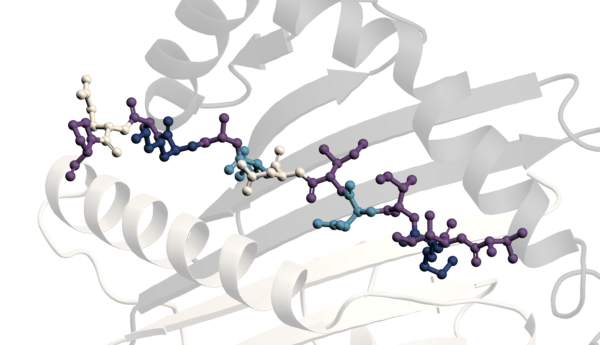


Discover precise insights into brain neurochemistry with Sygnature Discovery's in vivo microdialysis and cOFM services. With over 20 years of expertise, we design bespoke studies that reveal how compounds modulate neurotransmitter systems in health and disease. Using UHPLC/HPLC with electrochemical detection or mass spectrometry, we deliver robust PK/PD data to support confident CNS decision making.


July 30, 2015

Inobrodib, an exciting, first-in-class oral anti-cancer drug in clinical development by CellCentric, was collaboratively designed, synthesized and supported on its pre-clinical journey by an integrated project team at Sygnature Discovery. Inobrodib is now showing promising results in Phase I and II trials for multiple myeloma and other cancer types.

In drug discovery, generating targets is no longer the challenge. The real question is how to identify the few worth investing months of research and significant resources to pursue. Hear expert perspectives on how AI, pathway analysis and scientific expertise are shaping modern target identification.
July 7, 2026

Stay up to date with the latest company updates, milestones, and announcements.
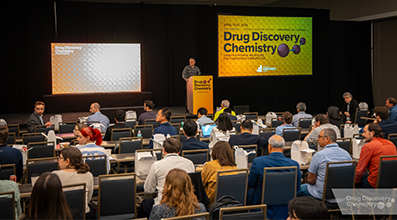
Explore upcoming conferences and scientific meetings where you can connect with our team.

At Sygnature Discovery, we deliver world-leading drug discovery solutions to accelerate your compound from idea to clinic.

Our leadership team brings diverse experience and insight, driving collaboration and innovation across drug discovery.

Explore careers at Sygnature Discovery and join a global team committed to science, collaboration, and integrity.
Inobrodib, an exciting, first-in-class oral anti-cancer drug in clinical development by CellCentric, was collaboratively designed, synthesized and supported on its pre-clinical journey by an integrated project team at Sygnature Discovery. Inobrodib is now showing promising results in Phase I and II trials for multiple myeloma and other cancer types.
At Sygnature Discovery, we deliver world-leading drug discovery solutions to accelerate your compound from idea to clinic.
Our leadership team brings diverse experience and insight, driving collaboration and innovation across drug discovery.
Explore careers at Sygnature Discovery and join a global team committed to science, collaboration, and integrity.
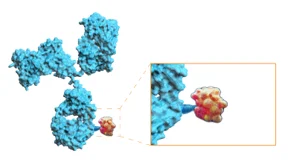
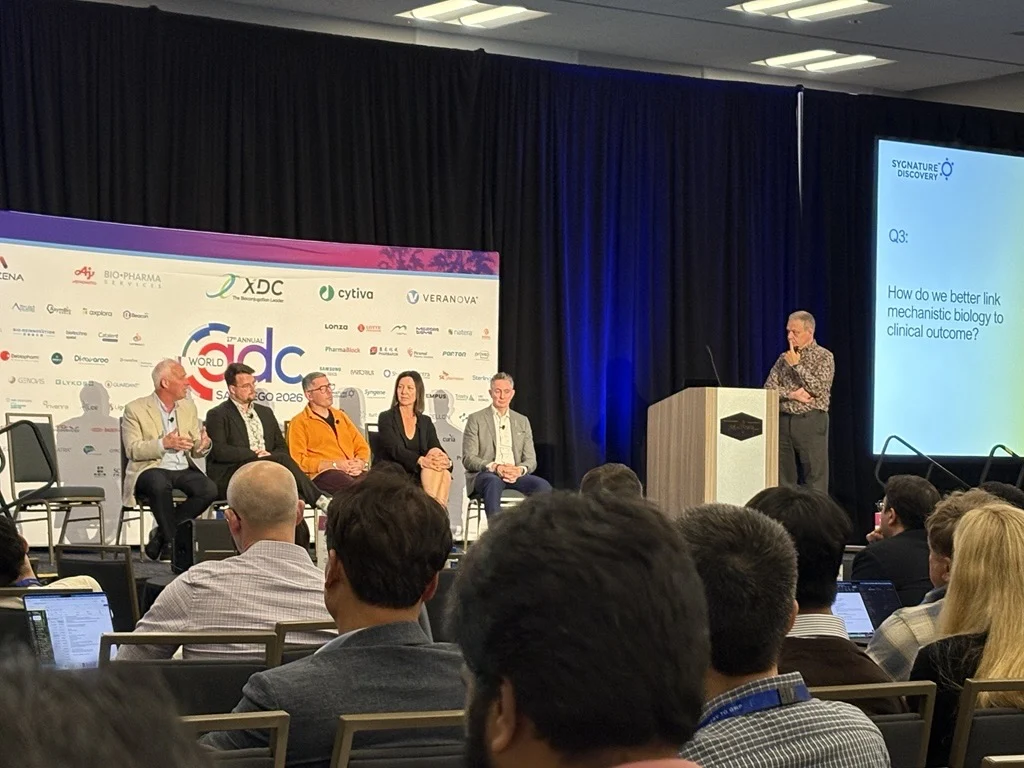
At this year’s World ADC London, Sygnature Discovery hosted a panel discussion exploring a topic that continues to reshape oncology drug development: what will define the next generation of antibody–drug conjugates (ADCs)?
The conversation brought together voices from across the ADC ecosystem, including:
Before the discussion began, we ran a live poll to get a real‑time pulse from the room.
From 46 respondents, the top areas believed to define next‑generation ADCs were:
These priorities shaped what became an insightful, technical, and refreshingly honest discussion. Below, we share our key learnings, combining Sygnature’s perspective with expert viewpoints from our panel.
One of the strongest themes from the panel was the growing importance of tolerability. Potency isn’t the bottleneck anymore; chronic toxicity often is. But the panel also noted that we have new ways to overcome these challenges. As Allan Jordan noted:
“We talk of selectivity squared… having the selectivity of the antibody but also the selectivity of the payload and moving away from those toxic payloads. I think a lot of this comes down to a fundamental understanding of the biology.”
Mohit Trikha reinforced this transformation, from the day-to-day patient perspective:
“A patient doesn’t really care whether they’re having neutropenia or interstitial lung disease. What matters to them is, hey, I’ve got to deal with cytopenias… I don’t know what ocular tox is. Patients are worried about the GI tox, vomiting or diarrhoea.”
This points to a clear opportunity: ADCs will win when their efficacy more significantly outweigh the dose limiting factors, enabling a netter therapeutics wind and more consistent dosing for patients.
Explore how medicinal chemistry influences modern ADC design in our blog: https://www.sygnaturediscovery.com/blog/evolving-role-of-med-chem-in-adc-development/.
Our panelists agreed that linker and conjugation innovations will help shape the next evolution of ADC performance toward these goals.
Ya‑Chi Chen summarized it well:
“The first generation (of ADCs) had stable linkers, which may have been associated with toxicity, or unstable linkers, which caused toxicity due to premature release of the payload.”
For Sygnature, this resonates strongly with what our integrated ADC discovery team observes in client programs: site‑specific conjugation, tumor‑responsive linkers, and solubility‑tuned ADCs consistently produce more predictable PK/PD behavior.
But improved ADCs will not come just form improved chemistry – our understanding of biological mechanism also needs to become part of the critical path toward better therapeutics. As Josh Greally added:
“When we look at the payloads, we don’t yet have guidelines to understand what makes a good payload… We also have to understand antibody–antigen engagement, internalization, linker cleavage, and then endosomal escape. I don’t think we fully understand the payload biochemical properties required for the desired outcome.”
The panel explored the promise and pitfalls of newer ADC formats.
When bispecific ADCs can be viable:
Dual‑payload ADCs can also help overcome resistance and engineer synergistic mechanisms.
Ya-Chi Chen highlighted some common pairings:
“We see Topo‑I payloads damaging the DNA and dual payloads also blocking the DNA repair pathway. We also see MMAE plus Topo‑I targeting two checkpoints of the cell cycle to prevent escape.”
But the panel was also clear that complexity isn’t inherently an advantage and leads to challenges in deconvoluting the path to clinic.
As Mohit Trikha cautioned:
“If we get the dual payload ratio wrong, for example 4:2 versus 2:4, you only get one shot at it. You don’t know from a tox perspective which component will dominate.”
Sygnature’s perspective:
These technologies can be transformative, but biological rationale must lead the ADC design choices, not the reverse. And we need to be holistic in our thinking as we evaluate these agents to determine their clinical suitability. The application of dual payloads is primarily employed to overcome resistance mechanisms, yet it doesn’t address the payload toxicity issues, we believe payloads selection for dual payload strategies need to be carefully thought through to ensure that it doesn’t just double the toxicity of the ADC.
One of the most compelling insights came from a debate about patient selection. Historically, ADCs have relied on antigen expression as the key determinant for clinical success. But internalization is emerging as a much stronger predictor.
As Mohit Trikha reflected:
“It’s not about expression, it’s about internalization. Precious things can come in small packages.”
This is a pivotal shift for ADC developers.
It suggests that early internalization and trafficking assays should become core components of target identification and validation, this should also be a key parameter that is assessed throughout the ADC development process.
The relationship between dose, drug-antibody ratio (DAR) and delivery came up repeatedly.
ADCs have historically escalated DAR to increase potency. But lower DAR variants often deliver cleaner safety profiles, allowing higher antibody doses that can improve overall tumor exposure more efficiently than simply adding more payload.
As Josh Greally explained:
“We need to understand exactly what the payload mechanisms are. We often go in with a prerequisite DAR, but we need to ask if that’s the right approach based on delivery. Because specific parameters have worked well for one molecule doesn’t mean it works for all, we need to optimise for each ADC, the correct DAR will be influenced by multiple aspects such as: indication, payload, linker, conjugation and antibody”
Bob Lutz added:
“I think as we go along we’ll be able to reduce the DAR more and more as we select patients better. That translates to improved safety. I do think we’re going to be moving in all cases to the lowest DAR that works.”
This mindset aligns with the shift toward precision tuning, rather than “maximum payload loading.”
A particularly exciting conversation centered around payloads that once failed as systemic drugs, often because they were:
As Allan Jordan explained:
“The fallen‑angel payloads… all the forgotten assets that had systemic toxicity or poor tissue penetration… they are positioned beautifully to be ADC payloads.”
Sygnature has increasingly supported partners in rapidly evaluating archived small molecules for ADC potential, using conjugation feasibility and intracellular trafficking assays to identify promising candidates.
This is a high‑value opportunity for biotechs looking to expand their pipelines quickly and efficiently.
To see how the field is exploring unconventional payloads, mechanisms and delivery strategies, read our blog: https://www.sygnaturediscovery.com/blog/exploring-new-paths-in-adc-development/.
Our panel at World ADC made one thing clear: the future of ADCs lies in a more integrated approach, with multidisciplinary teams working closely together with a patient centered approach. Success will come from:
These insights reflect the direction of our own work at Sygnature Discovery, where interdisciplinary teams collaborate to build ADCs that deliver on all dimensions of therapeutic index.



Peak Proteins, NuChem Sciences, and SB Drug Discovery have now fully integrated with Sygnature Discovery.