



Featured Resources
-
STORM Therapeutics: From Lead to Pre-Candidate Nomination in 18 Months

STORM Therapeutics: From Lead to Pre-Candidate Nomination in 18 Months
Case study


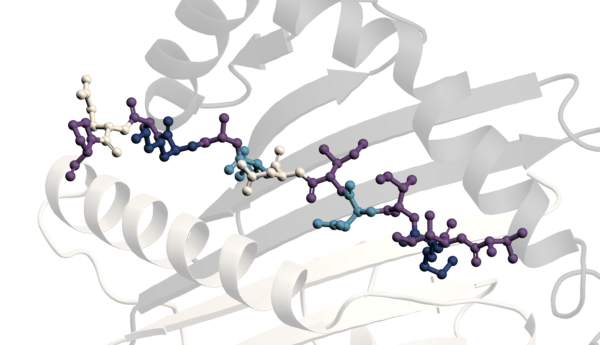


Discover precise insights into brain neurochemistry with Sygnature Discovery's in vivo microdialysis and cOFM services. With over 20 years of expertise, we design bespoke studies that reveal how compounds modulate neurotransmitter systems in health and disease. Using UHPLC/HPLC with electrochemical detection or mass spectrometry, we deliver robust PK/PD data to support confident CNS decision making.


July 30, 2015

Inobrodib, an exciting, first-in-class oral anti-cancer drug in clinical development by CellCentric, was collaboratively designed, synthesised and supported on its pre-clinical journey by an integrated project team at Sygnature Discovery. Inobrodib is now showing promising results in Phase I and II trials for multiple myeloma and other cancer types.

In drug discovery, generating targets is no longer the challenge. The real question is how to identify the few worth investing months of research and significant resources to pursue. Hear expert perspectives on how AI, pathway analysis and scientific expertise are shaping modern target identification.
July 7, 2026

Stay up to date with the latest company updates, milestones, and announcements.

Explore upcoming conferences and scientific meetings where you can connect with our team.

At Sygnature Discovery, we deliver world-leading drug discovery solutions to accelerate your compound from idea to clinic.

Our leadership team brings diverse experience and insight, driving collaboration and innovation across drug discovery.

Explore careers at Sygnature Discovery and join a global team committed to science, collaboration, and integrity.
Inobrodib, an exciting, first-in-class oral anti-cancer drug in clinical development by CellCentric, was collaboratively designed, synthesised and supported on its pre-clinical journey by an integrated project team at Sygnature Discovery. Inobrodib is now showing promising results in Phase I and II trials for multiple myeloma and other cancer types.
At Sygnature Discovery, we deliver world-leading drug discovery solutions to accelerate your compound from idea to clinic.
Our leadership team brings diverse experience and insight, driving collaboration and innovation across drug discovery.
Explore careers at Sygnature Discovery and join a global team committed to science, collaboration, and integrity.
Central to its pathophysiology is the introduction of monoiodoacetate (MIA) into the articular space, which instigates chondrocyte death and consequential cartilage damage, replicating the degenerative processes witnessed in osteoarthritis. Given this foundational pathology, the model becomes an exemplary tool for the evaluation of prospective OA joint pain targets.
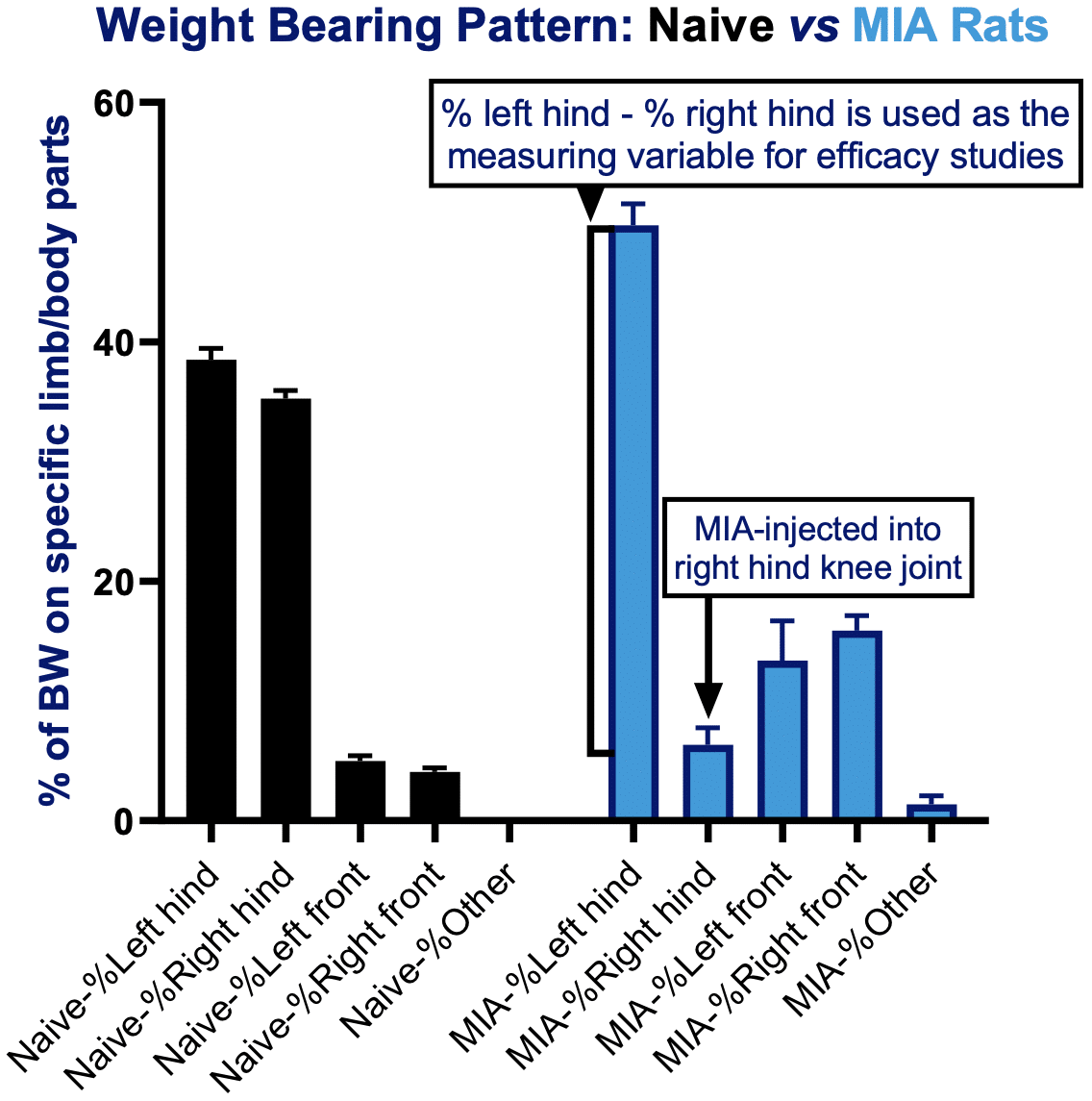
Induction in the MIA model involves a precise intra-articular injection of MIA into the knee joint of rat. To accurately quantify the resultant pain, a dynamic weight-bearing (DWB) methodology is employed. The temporal evolution of pain in this model is noteworthy. The initial period, spanning up to 7 days post-induction, is largely characterized by an inflammatory phase, rendering it sensitive to NSAID intervention. As the model progresses, the late phase, typically between 14 to 28 days, sees a transition to a predominantly NSAID-insensitive pain profile.
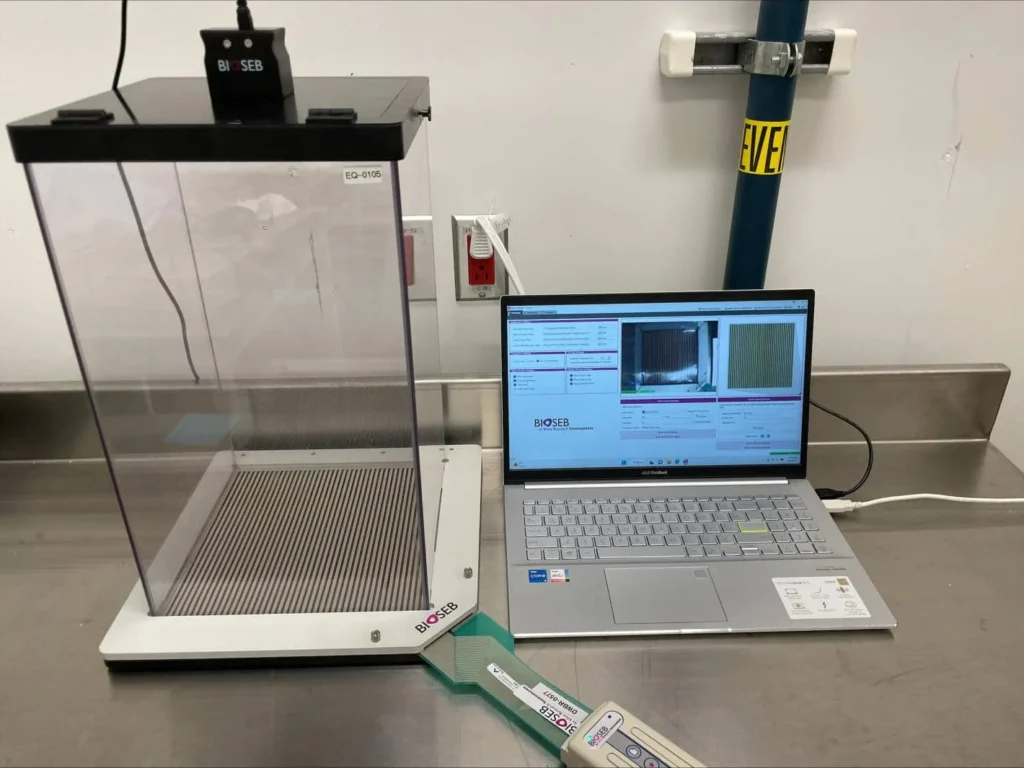
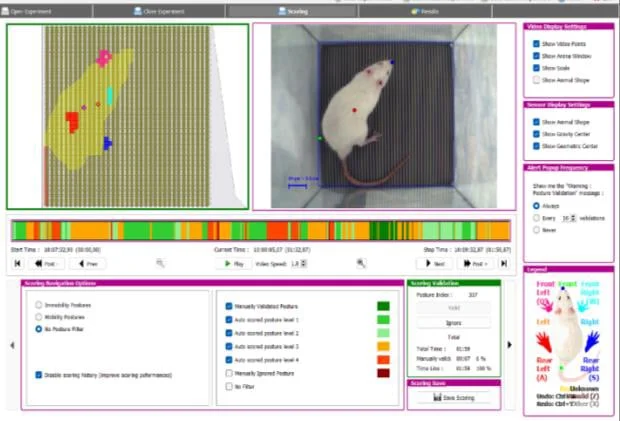
Our foundational study design for the MIA joint pain model invariably encompasses 4-6 groups, with each group being populated by 10 subjects, ensuring a rich tapestry of data points and a robust statistical framework. As a testament to the model’s sensitivity and reliability, Naproxen and Dexamethasone have been incorporated and tested as positive controls.
Through rigorous evaluations within the framework of the MIA joint pain model, Sygnature Discovery has identified and operationalized distinct dosing paradigms to elicit the “joint pain” phenotype. Predominantly, doses ranging from 2-3 mg of MIA have emerged as the optimal concentration to drive this phenotype. For the sake of precision and reproducibility, our validation endeavors have consistently employed a dose of 3 mg MIA, optimizing the model’s sensitivity and relevance.
Post-induction, a salient observation is the weight-bearing deficit manifesting in the ipsilateral right hind limb—a physiological reaction that persisted up to four weeks. This persistent alteration in weight distribution underscores the model’s ability to reliably mirror the chronic pain dynamics typically associated with osteoarthritis.
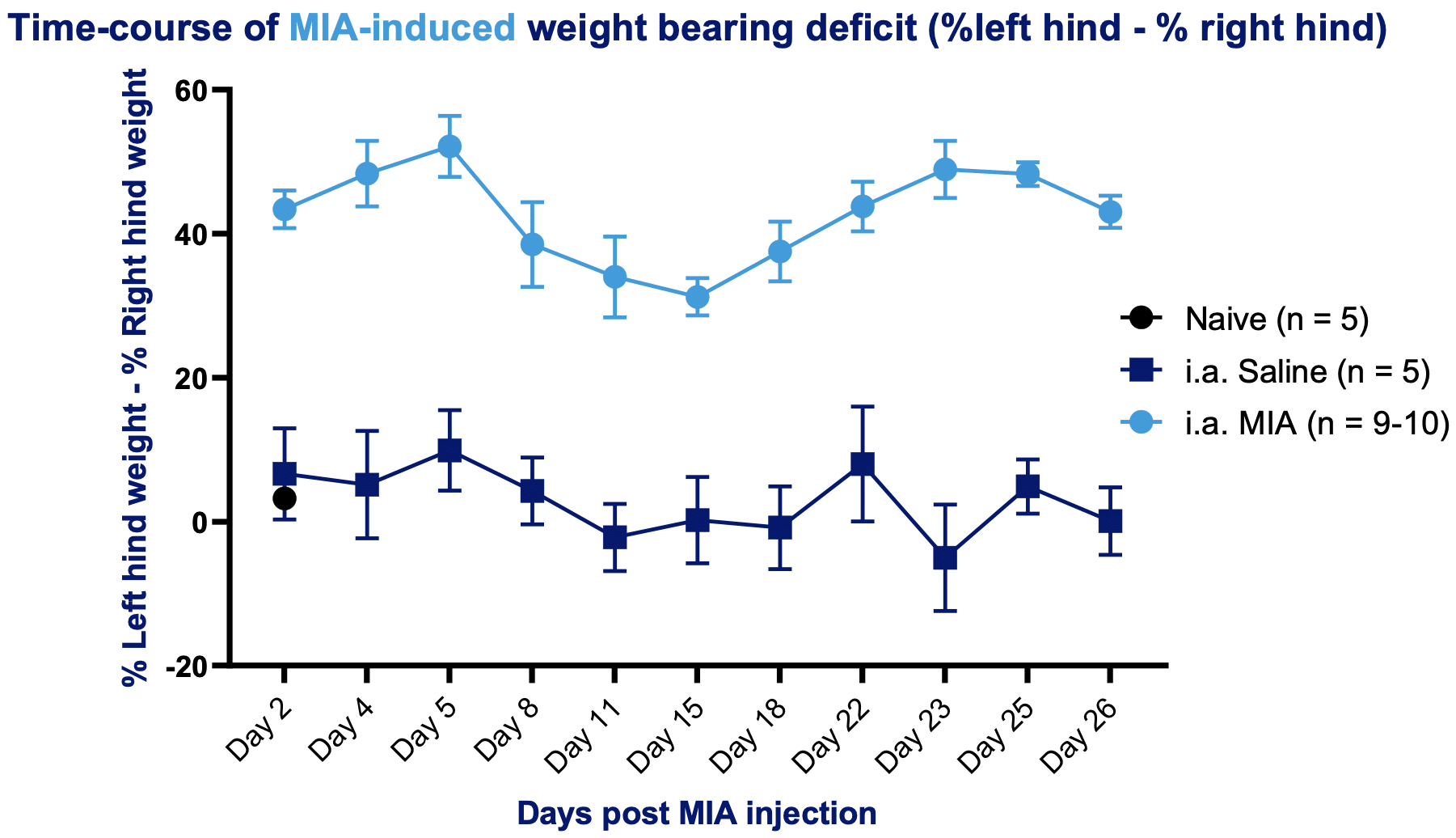
In terms of pharmacological interventions, our findings with the NSAID Naproxen and the steroid Dexamethasone are particularly illuminating. Naproxen demonstrates efficacy primarily within the early phase, aligning with the model’s inflammatory and NSAID-sensitive period. Conversely, Dexamethasone showcases a broader spectrum of activity, exerting therapeutic effects during both the initial inflammatory stage and the subsequent NSAID-insensitive phase. This nuanced differential response further attests to the model’s discriminating power and its capacity to discern between varied pharmacological mechanisms of action.
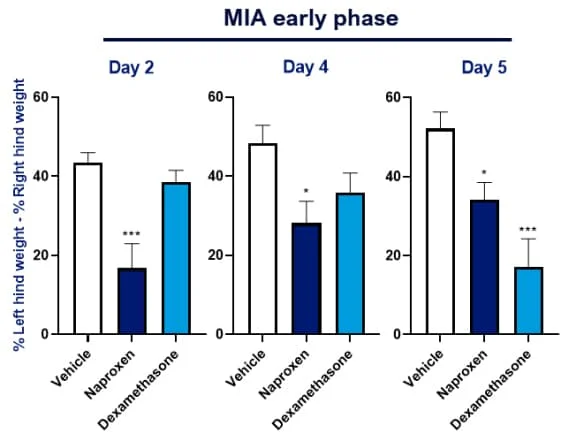
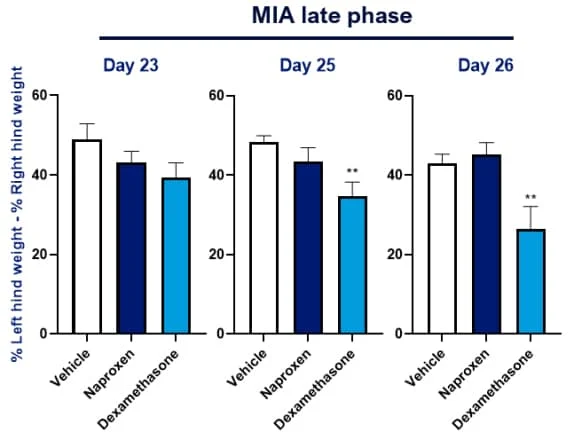
In summation, the parameters and outcomes observed in the MIA joint pain model at Sygnature Discovery are a testament to the model’s sophistication, reliability, and paramount relevance in the realm of osteoarthritis pain research.


Peak Proteins, NuChem Sciences, and SB Drug Discovery have now fully integrated with Sygnature Discovery.