


Featured Resources
-
STORM Therapeutics: From Lead to Pre-Candidate Nomination in 18 Months

STORM Therapeutics: From Lead to Pre-Candidate Nomination in 18 Months
Case study


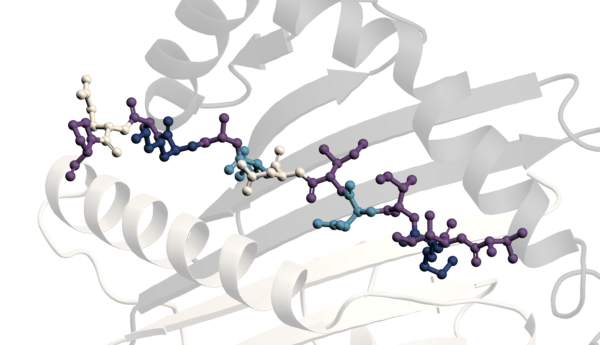


Discover precise insights into brain neurochemistry with Sygnature Discovery's in vivo microdialysis and cOFM services. With over 20 years of expertise, we design bespoke studies that reveal how compounds modulate neurotransmitter systems in health and disease. Using UHPLC/HPLC with electrochemical detection or mass spectrometry, we deliver robust PK/PD data to support confident CNS decision making.


July 30, 2015

Inobrodib, an exciting, first-in-class oral anti-cancer drug in clinical development by CellCentric, was collaboratively designed, synthesised and supported on its pre-clinical journey by an integrated project team at Sygnature Discovery. Inobrodib is now showing promising results in Phase I and II trials for multiple myeloma and other cancer types.

In drug discovery, generating targets is no longer the challenge. The real question is how to identify the few worth investing months of research and significant resources to pursue. Hear expert perspectives on how AI, pathway analysis and scientific expertise are shaping modern target identification.
July 7, 2026

Stay up to date with the latest company updates, milestones, and announcements.
Explore upcoming conferences and scientific meetings where you can connect with our team.

At Sygnature Discovery, we deliver world-leading drug discovery solutions to accelerate your compound from idea to clinic.

Our leadership team brings diverse experience and insight, driving collaboration and innovation across drug discovery.

Explore careers at Sygnature Discovery and join a global team committed to science, collaboration, and integrity.
Inobrodib, an exciting, first-in-class oral anti-cancer drug in clinical development by CellCentric, was collaboratively designed, synthesised and supported on its pre-clinical journey by an integrated project team at Sygnature Discovery. Inobrodib is now showing promising results in Phase I and II trials for multiple myeloma and other cancer types.
At Sygnature Discovery, we deliver world-leading drug discovery solutions to accelerate your compound from idea to clinic.
Our leadership team brings diverse experience and insight, driving collaboration and innovation across drug discovery.
Explore careers at Sygnature Discovery and join a global team committed to science, collaboration, and integrity.

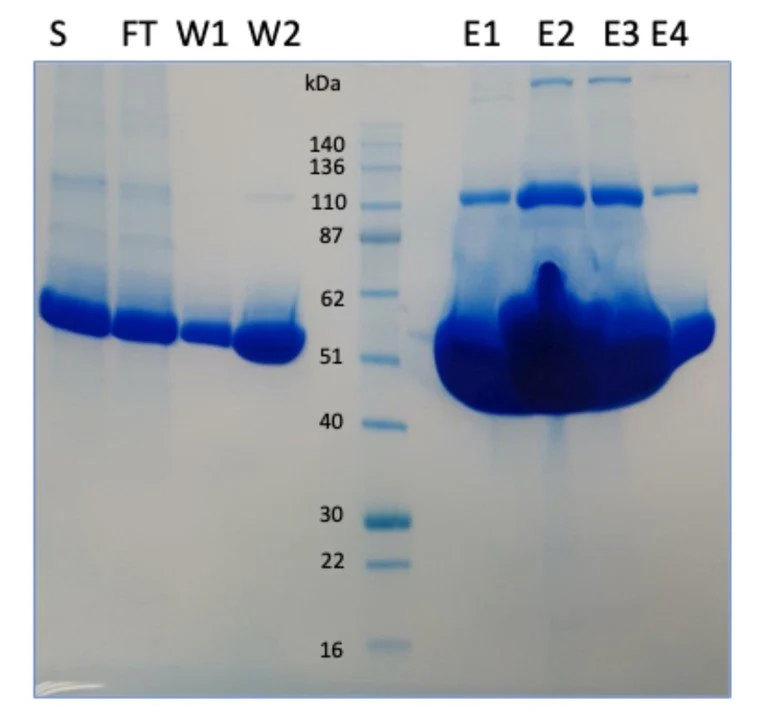
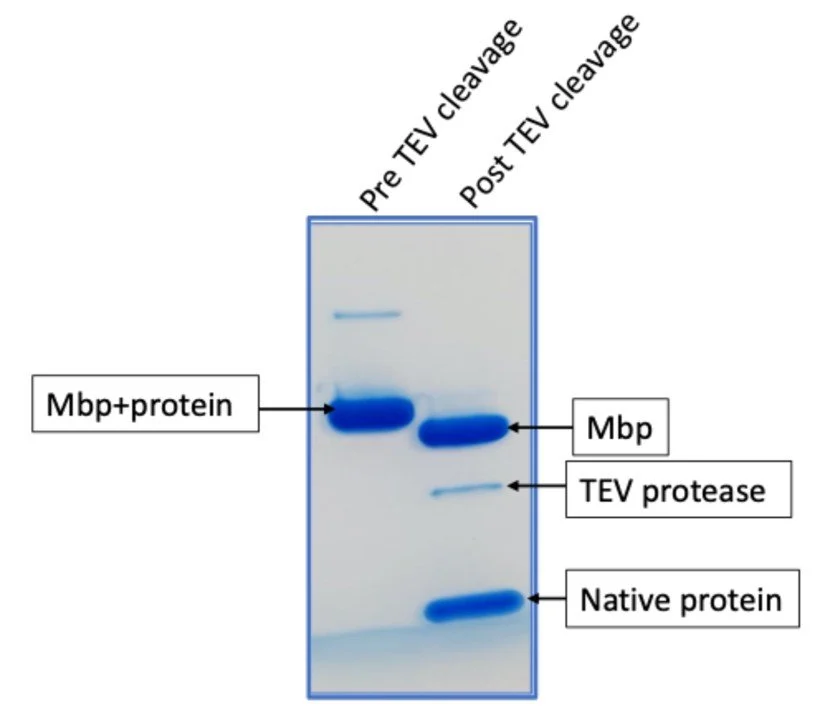
Smaller proteins or large peptides can be difficult to express, however this problem can usually be solved by the addition of fusion proteins. The construct we created included the fusion protein, maltose binding protein (MBP) along with 6His and a TEV cleavage site. The use of the MBP allowed the peptide to be successfully secreted in large amounts from our HEK293 suspension cells expression system, where cells are grown in serum-free media (Figure 1). After capturing the protein via nickel affinity chromatography, the MBP was cleaved from the peptide by using TEV protease which cleaves at the TEV cleavage sequence (ENLYFQ/G). In this case the client could not accept an additional Gly at the N-terminus so we butted the ENLYFQ sequence against the desired N-terminal residue which should have been amenable to TEV cleavage. Removal of any uncleaved protein as well as the TEV protease (which is also 6His tagged) was achieved through a second subtractive nickel column (Figure 2). This protocol worked incredibly well and resulted in >90% pure untagged protein, which the client had requested.
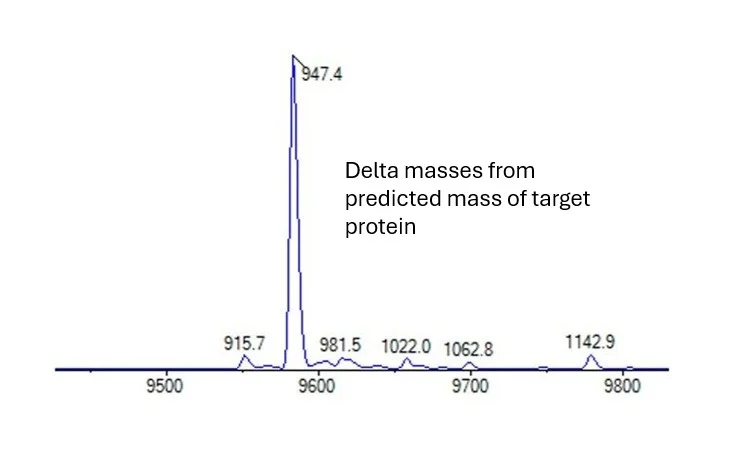
As part of our protein quality check, we routinely analyse proteins using our in-house mass spectrometer. The intact mass spectrum revealed some very unexpected yet interesting results regarding post translational modifications. This specific protein was revealed to be O-glycosylated; identified with a mass addition of +947Da (Figure 3). This corresponds to the mass of an O-glycosylation – Hex(1)HexNAc(1)NeuAc(2). In addition to the 947Da mass, other peaks are seen that indicate the presence of HexNAc, hexose and sialic acids that may be observed due to in-source fragmentation. These would all be consistent with a commonly observed O-linked tetrasaccharide (Vögtle et al., 2019). As well as this glycosylation, the intact mass trace also revealed that this protein had 3 disulphide bonds (as seen by the deduction of -6Da). These modifications were previously unreported in both the literature and Uniprot, and clearly demonstrated the benefit of conducting thorough intact mass spectrometry analysis.
The careful planning of this purification, from construct design through to purification showed how useful the MBP fusion can be in driving the expression and secretion of small peptides from mammalian cells. Moreover, this case study demonstrates how our protein characterisation services using mass spectrometry are extremely useful in identifying any post translational modifications your protein may possess.

Peak Proteins, NuChem Sciences, and SB Drug Discovery have now fully integrated with Sygnature Discovery.