


Featured Resources
-
STORM Therapeutics: From Lead to Pre-Candidate Nomination in 18 Months

STORM Therapeutics: From Lead to Pre-Candidate Nomination in 18 Months
Case study
📣From lead to pre-candidate nomination in 18 months. Explore the STORM Therapeutics case study




Discover precise insights into brain neurochemistry with Sygnature Discovery's in vivo microdialysis and cOFM services. With over 20 years of expertise, we design bespoke studies that reveal how compounds modulate neurotransmitter systems in health and disease. Using UHPLC/HPLC with electrochemical detection or mass spectrometry, we deliver robust PK/PD data to support confident CNS decision making.


July 30, 2015

Inobrodib, an exciting, first-in-class oral anti-cancer drug in clinical development by CellCentric, was collaboratively designed, synthesised and supported on its pre-clinical journey by an integrated project team at Sygnature Discovery. Inobrodib is now showing promising results in Phase I and II trials for multiple myeloma and other cancer types.

At Sygnature Discovery, we deliver world-leading drug discovery solutions to accelerate your compound from idea to clinic.

Our leadership team brings diverse experience and insight, driving collaboration and innovation across drug discovery.

Explore careers at Sygnature Discovery and join a global team committed to science, collaboration, and integrity.
Inobrodib, an exciting, first-in-class oral anti-cancer drug in clinical development by CellCentric, was collaboratively designed, synthesised and supported on its pre-clinical journey by an integrated project team at Sygnature Discovery. Inobrodib is now showing promising results in Phase I and II trials for multiple myeloma and other cancer types.
At Sygnature Discovery, we deliver world-leading drug discovery solutions to accelerate your compound from idea to clinic.
Our leadership team brings diverse experience and insight, driving collaboration and innovation across drug discovery.
Explore careers at Sygnature Discovery and join a global team committed to science, collaboration, and integrity.
In recent years Fragment Screening has become a highly regarded alternative to the traditional High Throughput Screening (HTS) strategy for finding hit compounds against a biological target of interest. These low molecular weight fragments have simpler structures and therefore a higher chance of binding, albeit with less affinity, to proteins. Therefore, much smaller libraries, of the order of 100’s, covering diverse chemical space, can be screened for a relatively higher hit rate compared to 100,000’s for HTS.
Fragment screens not only find a diverse range of binding modes/interactions to known active sites but can also highlight allosteric sites and novel binding pockets. Fragment screening can produce exciting leads for previously intractable protein targets.
These small fragment hits can then be readily augmented to become more drug-like with improved properties such as potency and solubility. This strategy is known as Fragment Based Drug Design (FBDD). 1
Fragment screening yields weak binders which require sensitive techniques to be detectable. Methods such as Surface Plasmon Reference (SPR), Thermal Shift Assay (TSA), MicroScale Thermophoresis (MST), NMR (ligand-observed), and X-Ray Crystallography are all suitable for this type of screening. Here at Sygnature Discovery we have assembled a full platform to support FBDD programmes.
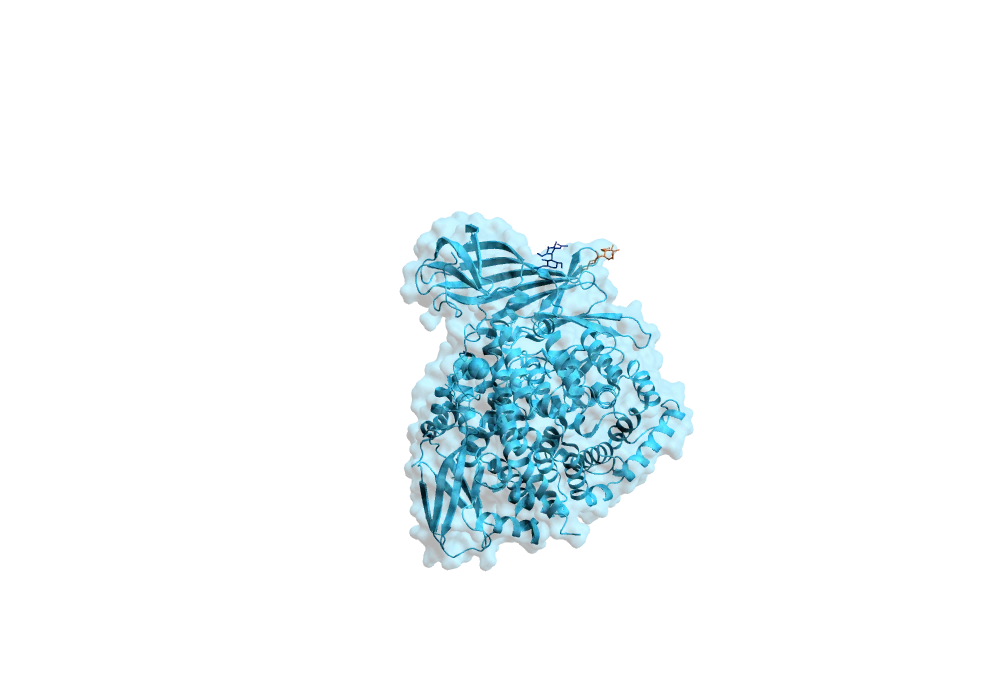
Crystallography is a key method for FBDD as it can confirm binding and generate very detailed information about the protein-fragment interaction within the 3D protein structure. In short, large numbers of crystals are grown and soaked as singletons in the fragment solution followed by diffraction data collection. One of the breakthroughs in crystallography fragment screening is the development in the associated computational programs. Since fragments are weak binders, it is hard to detect the low occupancy ligand in a conventional map. The PanDDA2 (Pan Dataset Density Analysis – Figure 2), algorithm developed especially for the analysis of weak fragment binding from large numbers of datasets, helps to amplify the signal of weak binders.
Requirements for crystallography fragment screening are:
Sygnature Discovery Sciences has a proprietary highly soluble fragment library collated for X-ray fragment screening. Our structural biology groups in Cheshire, England and Montreal, Canada are well equipped for semi-automated fragment screening and have run several successful fragment screening campaigns.
We utilise a Formulatrix RockImager plate hotel for crystal drop imaging, and accurate positioning with which to program the firing of compound microdroplets using an Echo dispenser. This delivers fragments into the drop but not directly onto the crystal (to avoid physical damage) – Figure 1a. There is also a crystal shifter, to allow rapid crystal harvesting, and we regularly access beamtime at several synchrotrons in Europe and North America. We have the in-house computing facility pipeline for diffraction data analysis, PanDDA analysis, and structure refinements.


Here at Sygnature we have recently completed a fragment screen for a client on a cancer target. A biophysical Thermal Shift Assay was run using 1250 fragments from the Sygnature library. Also, in parallel, a client-guided subset of 400 fragments was screened by X-ray crystallography.
Protein was supplied by the client for this project, but we can produce and purify protein constructs in-house if required. We had initially scouted for suitable crystallisation conditions at both 4oC and 20oC around published literature conditions and using a suite of commercially available wide screens. This particular target only crystallised at 4-8oC and couldn’t withstand more than 30 minutes at room temperature. Our structural biology group in Canada is equipped to do the crystallisation, crystal soaking and harvesting at 8oC. Therefore, frozen protein stocks and the 400 fragments were shipped to Canada, ready for crystallisation. Crystals were produced, soaked with fragments overnight, harvested into liquid nitrogen, then data collected, typically between 1.7-2.1Å at the Canadian Light Source. Utilising the semi-automated, in-house data analysis pipeline we were able to find and identify binding poses for the bound fragments.
The output from both the Thermal Shift Assay Screen and X-ray Fragment Screen was analysed, and the active site mapped out with many possible interactions. Computational chemistry techniques were employed to grow and merge several of these fragment hits to produce series of new compounds. These newly designed compounds were then tested in both biophysics and crystallography.
The soaking of these new compounds into our protein crystals is now routine, and taking advantage of mail-in automatic data collection allows the delivery of protein structure complexes within 1-2 weeks – Figure 1b.
This fast turnaround has enabled our chemists, in collaboration with our client, to rapidly evolve their hit molecules.
This work was a great example of seamless cross-site collaboration between our scientific functions to deliver on a project. Chemistry and Biophysics in our Nottingham campus, and Protein Crystallography both in Montreal, Canada and in Cheshire, England delivered fragment-bound protein structures.
Here at Sygnature we have the capability and expertise to run Fragment Screens on protein targets using the most appropriate methods for each specific target. That could be the biophysical approaches using SPR, TSA, MST and/or the structural methods of lo-NMR or X-ray Crystallography (at 8oC or 20oC). The delivery of fragment data can produce exciting leads to start the rational drug design for your target of interest.
Peak Proteins, NuChem Sciences, and SB Drug Discovery have now fully integrated with Sygnature Discovery.
