



Featured Resources
-
STORM Therapeutics: From Lead to Pre-Candidate Nomination in 18 Months

STORM Therapeutics: From Lead to Pre-Candidate Nomination in 18 Months
Case study




Discover precise insights into brain neurochemistry with Sygnature Discovery's in vivo microdialysis and cOFM services. With over 20 years of expertise, we design bespoke studies that reveal how compounds modulate neurotransmitter systems in health and disease. Using UHPLC/HPLC with electrochemical detection or mass spectrometry, we deliver robust PK/PD data to support confident CNS decision making.


July 30, 2015

Inobrodib, an exciting, first-in-class oral anti-cancer drug in clinical development by CellCentric, was collaboratively designed, synthesized and supported on its pre-clinical journey by an integrated project team at Sygnature Discovery. Inobrodib is now showing promising results in Phase I and II trials for multiple myeloma and other cancer types.

In drug discovery, generating targets is no longer the challenge. The real question is how to identify the few worth investing months of research and significant resources to pursue. Hear expert perspectives on how AI, pathway analysis and scientific expertise are shaping modern target identification.
July 7, 2026

Stay up to date with the latest company updates, milestones, and announcements.
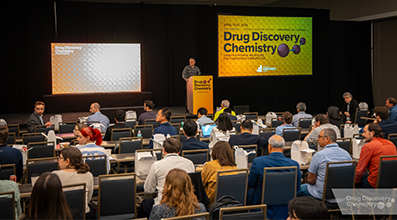
Explore upcoming conferences and scientific meetings where you can connect with our team.

At Sygnature Discovery, we deliver world-leading drug discovery solutions to accelerate your compound from idea to clinic.

Our leadership team brings diverse experience and insight, driving collaboration and innovation across drug discovery.

Explore careers at Sygnature Discovery and join a global team committed to science, collaboration, and integrity.
Inobrodib, an exciting, first-in-class oral anti-cancer drug in clinical development by CellCentric, was collaboratively designed, synthesized and supported on its pre-clinical journey by an integrated project team at Sygnature Discovery. Inobrodib is now showing promising results in Phase I and II trials for multiple myeloma and other cancer types.
At Sygnature Discovery, we deliver world-leading drug discovery solutions to accelerate your compound from idea to clinic.
Our leadership team brings diverse experience and insight, driving collaboration and innovation across drug discovery.
Explore careers at Sygnature Discovery and join a global team committed to science, collaboration, and integrity.
In this case study Sarah Beck outlines our recent success using the BacMam system in HEK293-6E cells to generate high level expression of a GFP-tagged membrane protein required by a client on a large-scale.
In the Protein & Structure Dept here at Sygnature Discovery, as well as producing many classes of secreted proteins, we routinely express membrane proteins for biophysical and structural determination studies, including X-ray crystallography and cryo-EM. Expression of membrane proteins is performed using the flashBACTM baculovirus Sf9 and Sf21 insect cell system (licensed from Oxford Expression Technologies) or we can transiently transfect mammalian cells (HEK293-6E and CHO-3E7 cell lines on license from the National Research Council in Canada, and Expi293F cell line on license from Thermo Fisher Scientific) with pTT5 expression plasmids at scales up to 25L.
Baculovirus transduction of mammalian cells (BacMam system) is a rapid, low-cost alternative method to express membrane proteins that has been used over many years. The BacMam system uses modified baculoviruses that contain mammalian expression cassettes for viral gene delivery and transient expression in mammalian cells. Furthermore, co-infecting with multiple BacMam viruses to simultaneously deliver multiple genes can be used to express membrane protein complexes, such as a GPCR bound to its protein ligand.
Recombinant bacmid DNA was produced using the Bac-to-Bac system and this was used to transfect Sf9 cells to generate recombinant baculovirus.
The baculovirus preparation was used in the BacMam system to deliver the GFP-tagged membrane protein gene into HEK293-6E mammalian cells. Expression of the GFP-tagged membrane protein was assessed using fluorescent size-exclusion chromatography (FSEC). The cells were lysed, solubilized in detergent and clarified using ultracentrifugation prior to FSEC analysis. A Superose 6 10/300 column attached to an AKTA Pure FPLC system was used to perform FSEC and collect fractions.
Our early transduction experiments using the BacMam system gave no GFP expression (Figure 1).
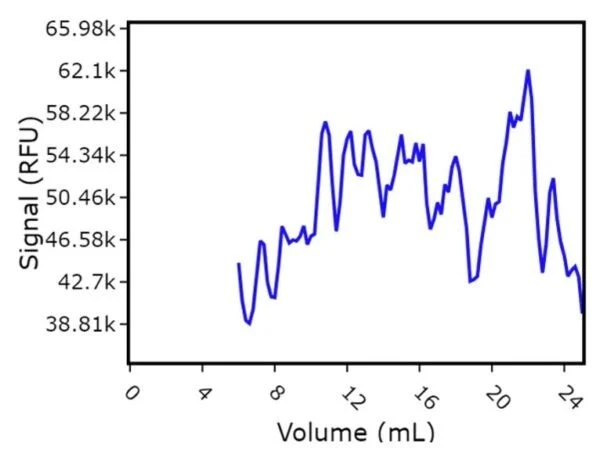
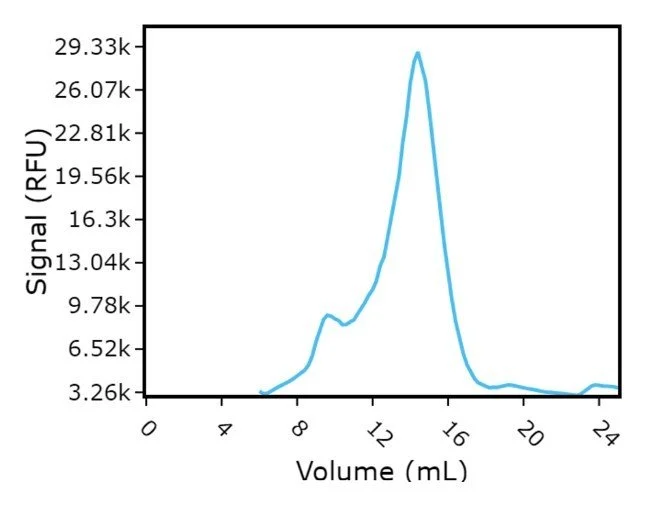
One observation from our work is that there was not a clear correlation between infectious virus and the ability to transduce HEK cells and generate GFP-tagged membrane proteins. We sometimes generated good infectious virus preparations that gave no or minimal expression. We found the way in which the recombinant baculovirus was produced, in particular the type of media used at this stage, had a significant effect on the eventual expression of the membrane protein in the BacMam system. In addition, the concentration of virus at transduction and time of harvest were key conditions to optimize before large-scale expression of the GFP-tagged membrane protein. A good signal was seen for the GFP-tagged membrane protein at the expected retention volume of 14 mL (Figure 2). Furthermore, there was high consistency of expression levels of this GFP-tagged membrane protein in large-scale cultures from multiple preparations of the BacMam baculovirus, demonstrating the reproducibility of the BacMam expression system in our HEK293-6E cells.
A 12L HEK293-6E culture expressing the GFP-tagged membrane protein was successfully purified. The high yield and purity that Peak Proteins were able to obtain meant the client had a supply of high-quality membrane protein reagent to enable their drug discovery activities.
We have established a protocol for successfully expressing high quality, challenging membrane proteins using the BacMam system. Our learning in this study has shown us which expression conditions to tweak for any future membrane proteins we are asked to produce.

Peak Proteins, NuChem Sciences, and SB Drug Discovery have now fully integrated with Sygnature Discovery.