


Featured Resources
-
STORM Therapeutics: From Lead to Pre-Candidate Nomination in 18 Months

STORM Therapeutics: From Lead to Pre-Candidate Nomination in 18 Months
Case study


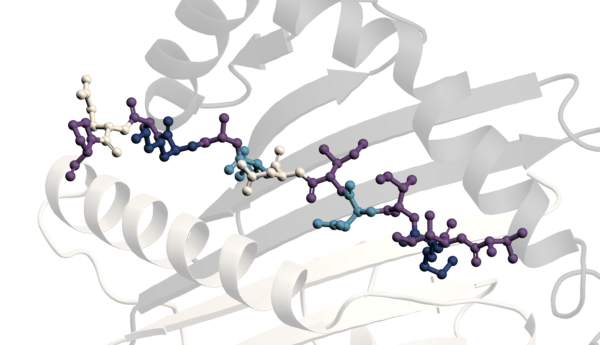


Discover precise insights into brain neurochemistry with Sygnature Discovery's in vivo microdialysis and cOFM services. With over 20 years of expertise, we design bespoke studies that reveal how compounds modulate neurotransmitter systems in health and disease. Using UHPLC/HPLC with electrochemical detection or mass spectrometry, we deliver robust PK/PD data to support confident CNS decision making.


July 30, 2015

Inobrodib, an exciting, first-in-class oral anti-cancer drug in clinical development by CellCentric, was collaboratively designed, synthesized and supported on its pre-clinical journey by an integrated project team at Sygnature Discovery. Inobrodib is now showing promising results in Phase I and II trials for multiple myeloma and other cancer types.

In drug discovery, generating targets is no longer the challenge. The real question is how to identify the few worth investing months of research and significant resources to pursue. Hear expert perspectives on how AI, pathway analysis and scientific expertise are shaping modern target identification.
July 7, 2026

Stay up to date with the latest company updates, milestones, and announcements.
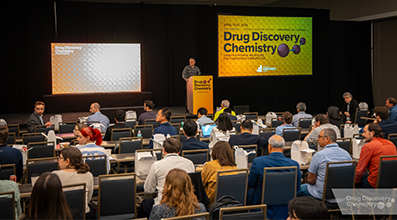
Explore upcoming conferences and scientific meetings where you can connect with our team.

At Sygnature Discovery, we deliver world-leading drug discovery solutions to accelerate your compound from idea to clinic.

Our leadership team brings diverse experience and insight, driving collaboration and innovation across drug discovery.

Explore careers at Sygnature Discovery and join a global team committed to science, collaboration, and integrity.
Inobrodib, an exciting, first-in-class oral anti-cancer drug in clinical development by CellCentric, was collaboratively designed, synthesized and supported on its pre-clinical journey by an integrated project team at Sygnature Discovery. Inobrodib is now showing promising results in Phase I and II trials for multiple myeloma and other cancer types.
At Sygnature Discovery, we deliver world-leading drug discovery solutions to accelerate your compound from idea to clinic.
Our leadership team brings diverse experience and insight, driving collaboration and innovation across drug discovery.
Explore careers at Sygnature Discovery and join a global team committed to science, collaboration, and integrity.
A client required a nuclear receptor protein to support surface plasmon resonance (SPR) studies using a Biacore platform.
Although the target had been produced previously and was commercially available, it was well known to present stability challenges. The client’s requirements extended beyond simple protein production. The final material needed to:
The challenge was therefore to generate a high-quality, well-characterized protein preparation capable of supporting reliable SPR experiments.
Following a detailed review of the available literature and discussions with the client, a construct was designed that incorporated:
To generate fully biotinylated protein, the construct was co-expressed with biotin ligase, allowing intracellular biotinylation during protein production.
Given the well-documented stability issues associated with the target, the expression and purification strategy was developed around maintaining protein integrity. The protein was produced and purified in the presence of both:
This approach was used to minimize aggregation and address the known stability challenges associated with the receptor.
Following affinity purification, a polishing size exclusion chromatography step generated milligram quantities of purified protein suitable for client studies.
The removal of detergent was also investigated to support potential use in alternative screening formats. While a second preparation could be generated, yields were significantly reduced as the underlying stability issues re-emerged.
A comprehensive analytical characterization package was used to evaluate the final protein preparation.
Quality control demonstrated that the protein was:
In addition, thermal shift analysis produced a clean and reproducible melting profile, providing further evidence that the protein preparation was suitable for downstream biophysical studies.
This combination of analytical approaches provided confidence that the material met the quality requirements for SPR applications.
Using the optimized production and purification strategy, Sygnature Discovery successfully delivered stable, highly purified, site-specifically biotinylated protein for the client’s SPR program.
The client subsequently reported a 20-fold increase in SPR assay window compared with material that had previously been used.
This improvement demonstrated how protein quality, stability, and biophysical suitability can directly influence downstream assay performance.
Producing proteins for biophysical studies often requires more than achieving expression and purity targets. Protein stability, functional integrity, and compatibility with assay formats can all influence the quality of the resulting data.
This project demonstrates how a combination of construct design, stability optimization, site-specific biotinylation, purification strategy, and analytical characterization can help generate proteins that are not only produced successfully but also perform effectively in downstream applications.
✅ Nuclear receptor protein successfully produced for SPR studies
✅ Construct designed with 6His tag and AviTag
✅ Intracellular biotinylation achieved through co-expression of biotin ligase
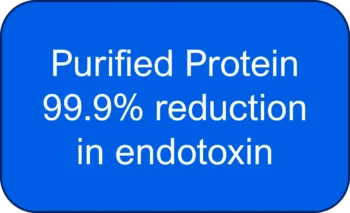
✅ Greater than 95% purity achieved
✅ 100% biotinylation confirmed by intact mass spectrometry
✅ Protein stability supported through use of stabilizing ligand and detergent
✅ Clean, reproducible thermal shift profile obtained
✅ Client observed a 20-fold increase in SPR assay window

Peak Proteins, NuChem Sciences, and SB Drug Discovery have now fully integrated with Sygnature Discovery.