



Featured Resources
-
STORM Therapeutics: From Lead to Pre-Candidate Nomination in 18 Months

STORM Therapeutics: From Lead to Pre-Candidate Nomination in 18 Months
Case study




Discover precise insights into brain neurochemistry with Sygnature Discovery's in vivo microdialysis and cOFM services. With over 20 years of expertise, we design bespoke studies that reveal how compounds modulate neurotransmitter systems in health and disease. Using UHPLC/HPLC with electrochemical detection or mass spectrometry, we deliver robust PK/PD data to support confident CNS decision making.


July 30, 2015

Inobrodib, an exciting, first-in-class oral anti-cancer drug in clinical development by CellCentric, was collaboratively designed, synthesised and supported on its pre-clinical journey by an integrated project team at Sygnature Discovery. Inobrodib is now showing promising results in Phase I and II trials for multiple myeloma and other cancer types.

In drug discovery, generating targets is no longer the challenge. The real question is how to identify the few worth investing months of research and significant resources to pursue. Hear expert perspectives on how AI, pathway analysis and scientific expertise are shaping modern target identification.
July 7, 2026

Stay up to date with the latest company updates, milestones, and announcements.
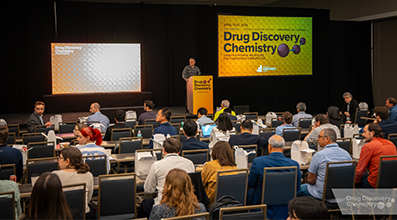
Explore upcoming conferences and scientific meetings where you can connect with our team.

At Sygnature Discovery, we deliver world-leading drug discovery solutions to accelerate your compound from idea to clinic.

Our leadership team brings diverse experience and insight, driving collaboration and innovation across drug discovery.

Explore careers at Sygnature Discovery and join a global team committed to science, collaboration, and integrity.
Inobrodib, an exciting, first-in-class oral anti-cancer drug in clinical development by CellCentric, was collaboratively designed, synthesised and supported on its pre-clinical journey by an integrated project team at Sygnature Discovery. Inobrodib is now showing promising results in Phase I and II trials for multiple myeloma and other cancer types.
At Sygnature Discovery, we deliver world-leading drug discovery solutions to accelerate your compound from idea to clinic.
Our leadership team brings diverse experience and insight, driving collaboration and innovation across drug discovery.
Explore careers at Sygnature Discovery and join a global team committed to science, collaboration, and integrity.
Modern recombinant protein expression technologies have transformed protein production. With a wide range of expression systems, affinity tags, and purification tools available, many proteins can now be produced and purified through relatively streamlined workflows.
However, successful protein purification still depends on understanding the protein itself. At Sygnature Discovery, we frequently find that proteins do not always behave as sequence-based predictions suggest. Structural features, post-translational modifications, and protein heterogeneity can all influence purification behavior, making experimental characterization an important part of many protein science programs.
One of the most important properties influencing protein purification is charge.
Proteins contain both acidic and basic amino acid residues, and their overall charge depends on the surrounding pH. The pH at which a protein carries no net charge is known as its isoelectric point (pI). Below its pI, a protein carries a net positive charge; above its pI, it carries a net negative charge.
These charge properties form the basis of ion exchange chromatography (IEX), a purification technique that separates proteins according to their interaction with charged chromatography resins.
Theoretical pI values can be readily calculated from amino acid sequence and provide a useful starting point when designing purification strategies. However, theory does not always predict how a protein will behave experimentally.
A common assumption is that a protein’s amino acid sequence will accurately predict its charge properties during purification. In practice, this is not always the case.
Protein structure can influence the accessibility of charged residues, while post-translational modifications can significantly alter a protein’s overall charge and chromatographic behavior.
Here are some examples of this challenge.
Based on its amino acid sequence, a target protein was predicted to carry a positive charge at neutral pH. As a result, the expectation was that it would bind to a cation exchange resin.
However, a heavily phosphorylated form of the protein was selectively expressed. Because phosphorylation introduces negatively charged ions, the protein behaved very differently from the original prediction.
Instead of binding to a cation exchange resin, the protein purified successfully using to an anion exchange resin.
The lesson was simple: sequence-based predictions provided a useful starting point, but characterization revealed the true behavior of the protein.
In another project, a target protein existed in several distinct forms, including mono-phosphorylated, di-phosphorylated, and tri-phosphorylated species.
Although these proteins were similar, the additional phosphate groups altered their charge sufficiently to allow them to be separated using ion exchange (IEX) chromatography. A strong anion exchange resin combined with a shallow salt gradient successfully resolved the different forms from one another.
This separation proved critical because only the mono-phosphorylated species ultimately produced crystals suitable for structure determination.
Without separating these protein populations, obtaining the desired structure may not have been possible.
These examples highlight an important principle in protein science: proteins do not always behave according to expectations.
While sequence analysis and pI calculations are valuable tools, they cannot fully account for the effects of protein structure, phosphorylation, glycosylation, or other modifications that may be present in a recombinant protein preparation.
For this reason, pH scouting studies and ion exchange screening experiments can play an important role in purification development. Taking time to experimentally evaluate protein behavior often helps identify the most effective purification strategy and can reveal differences between protein species that would otherwise remain hidden.
Affinity purification technologies have simplified many recombinant protein workflows, but ion exchange chromatography remains a valuable technique because of its ability to separate protein species based on subtle charge differences.
More importantly, these studies reinforce a broader lesson. Successful protein purification is not simply about choosing the right chromatography column. It is about understanding the biological and biochemical properties of the target protein and using that knowledge to guide purification strategy.
At Sygnature Discovery, we combine theoretical prediction with experimental characterization to ensure that the protein being advanced into downstream studies is the right protein species for the task.
Theoretical calculations provide a useful starting point for protein purification, but they rarely tell the whole story. Post-translational modifications, structural features, and protein heterogeneity can all influence how a protein behaves during purification.
By experimentally characterizing protein behavior and understanding the factors that influence charge, it is often possible to identify purification strategies that would not have been apparent from sequence analysis alone. In many cases, that deeper understanding can make the difference between obtaining a protein sample and obtaining the specific protein species needed for successful downstream research.


Peak Proteins, NuChem Sciences, and SB Drug Discovery have now fully integrated with Sygnature Discovery.