


Featured Resources
-
STORM Therapeutics: From Lead to Pre-Candidate Nomination in 18 Months

STORM Therapeutics: From Lead to Pre-Candidate Nomination in 18 Months
Case study




Discover precise insights into brain neurochemistry with Sygnature Discovery's in vivo microdialysis and cOFM services. With over 20 years of expertise, we design bespoke studies that reveal how compounds modulate neurotransmitter systems in health and disease. Using UHPLC/HPLC with electrochemical detection or mass spectrometry, we deliver robust PK/PD data to support confident CNS decision making.


July 30, 2015

Inobrodib, an exciting, first-in-class oral anti-cancer drug in clinical development by CellCentric, was collaboratively designed, synthesised and supported on its pre-clinical journey by an integrated project team at Sygnature Discovery. Inobrodib is now showing promising results in Phase I and II trials for multiple myeloma and other cancer types.

In drug discovery, generating targets is no longer the challenge. The real question is how to identify the few worth investing months of research and significant resources to pursue. Hear expert perspectives on how AI, pathway analysis and scientific expertise are shaping modern target identification.
July 7, 2026

Stay up to date with the latest company updates, milestones, and announcements.
Explore upcoming conferences and scientific meetings where you can connect with our team.

At Sygnature Discovery, we deliver world-leading drug discovery solutions to accelerate your compound from idea to clinic.

Our leadership team brings diverse experience and insight, driving collaboration and innovation across drug discovery.

Explore careers at Sygnature Discovery and join a global team committed to science, collaboration, and integrity.
Inobrodib, an exciting, first-in-class oral anti-cancer drug in clinical development by CellCentric, was collaboratively designed, synthesised and supported on its pre-clinical journey by an integrated project team at Sygnature Discovery. Inobrodib is now showing promising results in Phase I and II trials for multiple myeloma and other cancer types.
At Sygnature Discovery, we deliver world-leading drug discovery solutions to accelerate your compound from idea to clinic.
Our leadership team brings diverse experience and insight, driving collaboration and innovation across drug discovery.
Explore careers at Sygnature Discovery and join a global team committed to science, collaboration, and integrity.

Innovative approaches that improve outcomes and support more sustainable laboratory practices are becoming increasingly important across drug discovery. At Sygnature Discovery’s Protein Science division, we have recently implemented a recombinant Factor C (rFC)-based endotoxin detection assay that delivers robust analytical performance while reducing reliance on horseshoe crab-derived reagents.
Endotoxins are lipopolysaccharide (LPS) components of the outer membrane of Gram-negative bacteria such as E. coli. These molecules are released as bacteria grow and die and can trigger a strong inflammatory response in humans. Excessive exposure may lead to septic shock and organ failure, making accurate endotoxin detection essential for pharmaceuticals, biologics, vaccines, medical devices and research materials that may come into contact with the body. Endotoxin contamination can also affect cell-based, in vivo and in vitro studies, potentially compromising experimental outcomes and data quality.
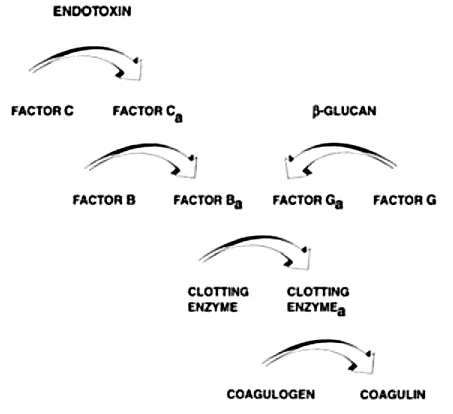
The horseshoe crab (Limulus polyphemus) can be described as a living fossil. This species has survived for more than 450 million years and possesses a unique immune defence mechanism. Amoebocytes in horseshoe crab blood detect bacterial invasion and trigger a highly sensitive clotting response (Figure 1). This defence mechanism evolved because, unlike warm-blooded animals, horseshoe crabs cannot raise their body temperature to combat infection. The clotting cascade begins when LPS endotoxins bind to Factor C, initiating a serine protease pathway that ultimately forms a protective clot around the invading bacteria.
During the 1960s, researchers recognized the potential of this clotting mechanism as a highly sensitive method for detecting bacterial endotoxins. This led to the development of the Limulus amoebocyte lysate (LAL) assay, which was approved by the FDA in 1977 and remains the primary method for testing parenteral drugs, vaccines, intravenous fluids and many implanted medical devices. The LAL assay represented a significant advance over earlier animal-based pyrogen tests and has become one of the most important tools for ensuring product safety.
For decades the LAL test has made use of the Factor C pathway (Figure1) to detect endotoxin contamination using a qualitative gel clot. Although we’ve moved onto a quantitative method, LAL remains the key ingredient and is generated by bleeding live horseshoe crabs.
Crab bleeding is estimated to cause 70,000 horseshoe crab deaths per year in the USA [1], as many crabs do not survive the bleeding process (10-30%), and the long-term effects on those that do are poorly understood. Harvesting of horseshoe crabs for biomedical applications has raised concerns about the long-term sustainability of some populations and the wider ecological impact on species that depend upon them. Horseshoe crab eggs are a crucial food source for many species, including the red knot shorebird, which undertakes an annual 19,000-mile migration [2].
Accurate endotoxin measurement is a critical component of many protein production, characterization and downstream application workflows at Sygnature Discovery. Our Protein Science team routinely works to minimize endotoxin contamination through carefully controlled purification processes and robust analytical testing, helping to ensure that client materials are suitable for downstream research applications.
Within the Protein Science department, we have been trialling a new endotoxin detection test based on recombinant Factor C (rFC) and a small fluorescent peptide. By switching to this recombinant Factor C alternative, we are helping to reduce the number of live crabs that need to be bled, aligning with our commitment to more environmentally friendly practices. We have carried out internal experiments to ensure that it gives comparable results to previously used LAL assay.
Beyond reducing reliance on animal-derived reagents, the rFC assay offers several scientific and practical advantages. The measurable range of endotoxin concentrations is substantially wider, from 0.05 EU/mL to 50 EU/mL, compared with 0.1 EU/mL to 1 EU/mL using our previous method. The assay also requires less sample material, is quicker to perform and provides more reliable standard curve generation (Figure 2 and 3).
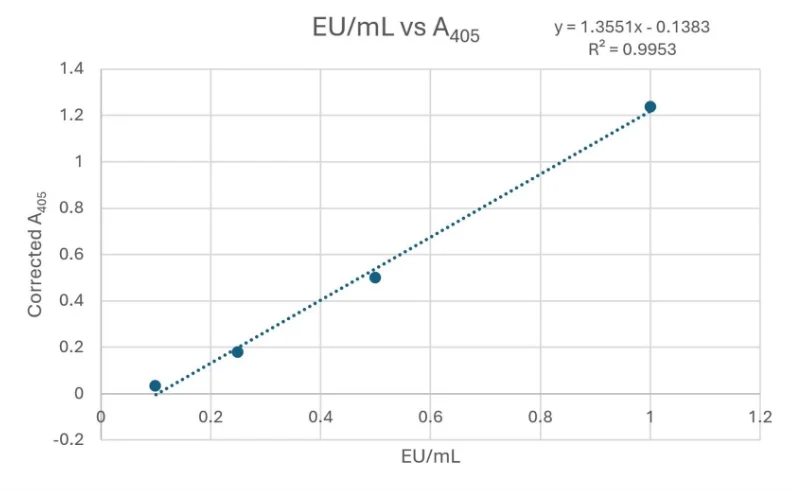
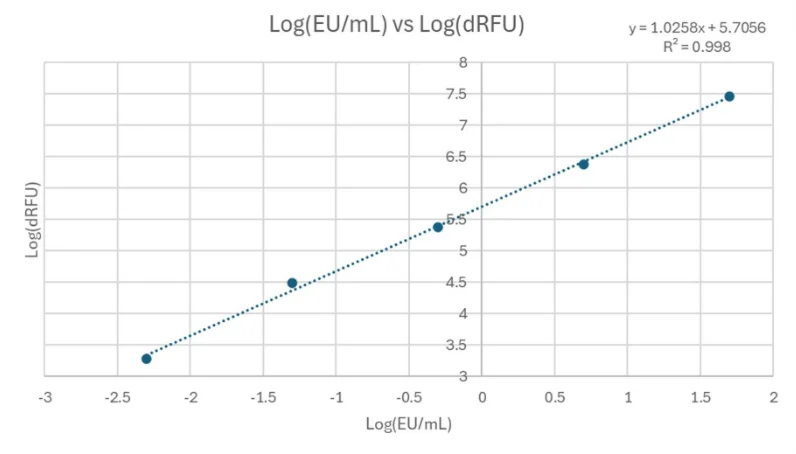
The graphs above show the old (endogenous Factor C) and new (rFC alternative) standard curves. The new standard curve is plotted on a logarithmic scale, this illustrates the wider range of endotoxin concentrations that are detectable with this kit.
Our evaluation of recombinant Factor C technology demonstrated performance comparable to traditional LAL-based methods while delivering a number of operational and analytical advantages. By transitioning to an rFC-based assay, Sygnature Discovery continues to combine scientific rigour with responsible laboratory practices.
The adoption of rFC technology enables us to generate high-quality endotoxin data for our clients while reducing dependence on horseshoe crab-derived reagents. It is a practical example of how innovation can support both scientific excellence and more sustainable approaches to drug discovery.
[1] https://doi.org/10.3389/fmars.2018.00185
[2] https://earthjustice.org/experts/ben-levitan/a-pathway-to-end-the-medical-harvest-of-horseshoe-crabs




Peak Proteins, NuChem Sciences, and SB Drug Discovery have now fully integrated with Sygnature Discovery.