


Featured Resources
-
STORM Therapeutics: From Lead to Pre-Candidate Nomination in 18 Months

STORM Therapeutics: From Lead to Pre-Candidate Nomination in 18 Months
Case study




July 30, 2015

Inobrodib, an exciting, first-in-class oral anti-cancer drug in clinical development by CellCentric, was collaboratively designed, synthesised and supported on its pre-clinical journey by an integrated project team at Sygnature Discovery. Inobrodib is now showing promising results in Phase I and II trials for multiple myeloma and other cancer types.

At Sygnature Discovery, we deliver world-leading drug discovery solutions to accelerate your compound from idea to clinic.

Our leadership team brings diverse experience and insight, driving collaboration and innovation across drug discovery.

Explore careers at Sygnature Discovery and join a global team committed to science, collaboration, and integrity.
Inobrodib, an exciting, first-in-class oral anti-cancer drug in clinical development by CellCentric, was collaboratively designed, synthesised and supported on its pre-clinical journey by an integrated project team at Sygnature Discovery. Inobrodib is now showing promising results in Phase I and II trials for multiple myeloma and other cancer types.
At Sygnature Discovery, we deliver world-leading drug discovery solutions to accelerate your compound from idea to clinic.
Our leadership team brings diverse experience and insight, driving collaboration and innovation across drug discovery.
Explore careers at Sygnature Discovery and join a global team committed to science, collaboration, and integrity.
scientific solutions | DMPK
Sygnature Discovery provides in vitro permeability assays that predict absorption, distribution, and CNS exposure, helping you make confident decision early in development. Our models, including PAMPA, MDCK, and Caco-2, deliver translationally relevant data that guide compound selection and optimization.

SUPPORTING YOUR RESEARCH
Characterizing compound interactions with these transporters supports accurate prediction of in vivo pharmacokinetics and informs potential drug-drug interaction risks. These insights strengthen pharmacokinetic modeling, CNS drug design, and strategic decision-making across discovery programs.

Permeability Expertise
Caco-2 cells, derived from human colorectal adenocarcinoma, differentiate into polarized monolayers resembling small intestinal enterocytes with apical microvilli and tight junctions. This human-derived model is widely used to investigate passive and active transport mechanisms, providing valuable insights into oral absorption and CNS penetration potential for new chemical entities.
MDCK cells, derived from canine kidney epithelium, form polarized monolayers with tight junctions suitable for permeability studies. Genetically modified MDCK variants overexpress human efflux transporters such as P-glycoprotein (MDR1) and BCRP, creating robust in vitro platforms for evaluating drug permeability, efflux liability, and CNS penetration potential. These models also help assess oral absorption and identify transporter-mediated drug-drug interaction risks.
The parallel artificial membrane permeability assay (PAMPA) is a high throughput in vitro model for predicting passive transcellular permeability independent of active transport processes. Sygnature Discovery uses the Corning® BioCoatTM PAMPA system, featuring a lipid/oil/lipid tri layer membrane that mimics biological barriers. PAMPA demonstrates strong correlation with cell-based permeability assays and known human absorption profiles for passively permeable compounds, making it a valuable tool in early drug development.
Resource hub

We bring together a dynamic blend of new talent and experienced pharmaceutical industry experts from a round the world, delivering excellence across every stage of discovery.

Integrated solid form and formulation strategies reduce risk, improve stability and solubility, and accelerate progression from candidate selection to clinic.
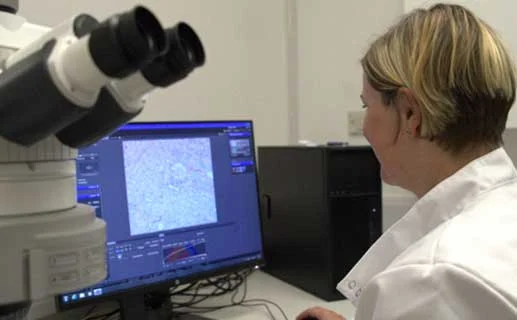
Validated in vivo models deliver clinically relevant data across therapeutic areas, accelerating confident decisions and reducing risk in drug development.

Peak Proteins has now fully integrated with Sygnature Discovery.
