


Featured Resources
-
STORM Therapeutics: From Lead to Pre-Candidate Nomination in 18 Months

STORM Therapeutics: From Lead to Pre-Candidate Nomination in 18 Months
Case study




July 30, 2015

Inobrodib, an exciting, first-in-class oral anti-cancer drug in clinical development by CellCentric, was collaboratively designed, synthesised and supported on its pre-clinical journey by an integrated project team at Sygnature Discovery. Inobrodib is now showing promising results in Phase I and II trials for multiple myeloma and other cancer types.

At Sygnature Discovery, we deliver world-leading drug discovery solutions to accelerate your compound from idea to clinic.

Our leadership team brings diverse experience and insight, driving collaboration and innovation across drug discovery.

Explore careers at Sygnature Discovery and join a global team committed to science, collaboration, and integrity.
Inobrodib, an exciting, first-in-class oral anti-cancer drug in clinical development by CellCentric, was collaboratively designed, synthesised and supported on its pre-clinical journey by an integrated project team at Sygnature Discovery. Inobrodib is now showing promising results in Phase I and II trials for multiple myeloma and other cancer types.
At Sygnature Discovery, we deliver world-leading drug discovery solutions to accelerate your compound from idea to clinic.
Our leadership team brings diverse experience and insight, driving collaboration and innovation across drug discovery.
Explore careers at Sygnature Discovery and join a global team committed to science, collaboration, and integrity.
Integrating process chemists in discovery teams isn’t just efficient, it’s transformative.

In early-stage discovery, it’s easy to defer tough decisions. Speed is critical, and the focus is often on quickly accessing new compounds to drive SAR. Medicinal chemists naturally prioritize flexibility and exploration, which means rapid iteration, often on linear or patchworked synthetic routes.
But as projects move toward lead optimization, those early synthetic decisions can become expensive liabilities:
By the time a compound is ready to be scaled, too many teams find themselves starting over.
At Sygnature Discovery, we approach this differently.
Rather than treating process chemistry as a late-stage bolt-on, we integrate process chemists early, alongside synthetic and medicinal teams during the discovery phase. This approach doesn’t slow things down. In fact, it does the opposite.
Process chemists are expert troubleshooters. They think in terms of route efficiency, reproducibility, cost, and safety, even when working at small scale. By contributing early, they:
One of the most effective strategies we’ve implemented is embedding one or two process chemists into a 5–10 person medicinal or synthetic chemistry team.
The impact is immediate:
This isn’t theory, it’s a model our clients have embraced. In every case where we’ve introduced this embedded approach, the teams have kept it, and expanded it.
While CDMOs play a vital role in the clinical and commercial stages, discovery-stage chemistry still lays the groundwork. Without early process insight, CDMOs often have to reverse-engineer the route, introducing delay, rework, or even changes in regulatory filings.
By contrast, process chemists involved early can:
This isn’t just about operational efficiency. It’s about preserving project momentum, reducing risk, and maximizing your investment in discovery.
In an increasingly competitive R&D environment, where timelines are compressed and failure rates are unforgiving, starting with scalability in mind is a strategic advantage.
Process chemistry doesn’t need to slow down innovation. Done right, it accelerates it, and gives your molecule the best chance of success, whether you’re headed for the clinic, licensing, or partnering.e foundations are solid.
At Sygnature Discovery, we believe in starting strong, so you can scale fast. Process chemistry isn’t a checkpoint, it’s a catalyst. And when integrated early, it gives you the confidence to move forward faster, knowing the foundations are solid.

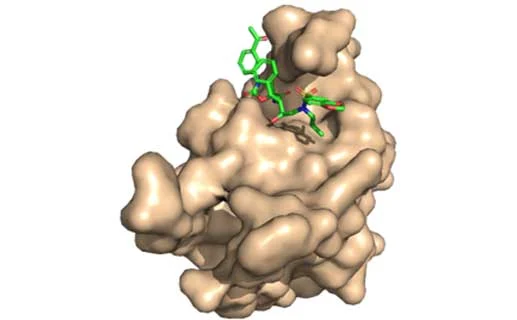
Peak Proteins has now fully integrated with Sygnature Discovery.
