



Featured Resources
-
STORM Therapeutics: From Lead to Pre-Candidate Nomination in 18 Months

STORM Therapeutics: From Lead to Pre-Candidate Nomination in 18 Months
Case study




Discover precise insights into brain neurochemistry with Sygnature Discovery's in vivo microdialysis and cOFM services. With over 20 years of expertise, we design bespoke studies that reveal how compounds modulate neurotransmitter systems in health and disease. Using UHPLC/HPLC with electrochemical detection or mass spectrometry, we deliver robust PK/PD data to support confident CNS decision making.


July 30, 2015

Inobrodib, an exciting, first-in-class oral anti-cancer drug in clinical development by CellCentric, was collaboratively designed, synthesized and supported on its pre-clinical journey by an integrated project team at Sygnature Discovery. Inobrodib is now showing promising results in Phase I and II trials for multiple myeloma and other cancer types.

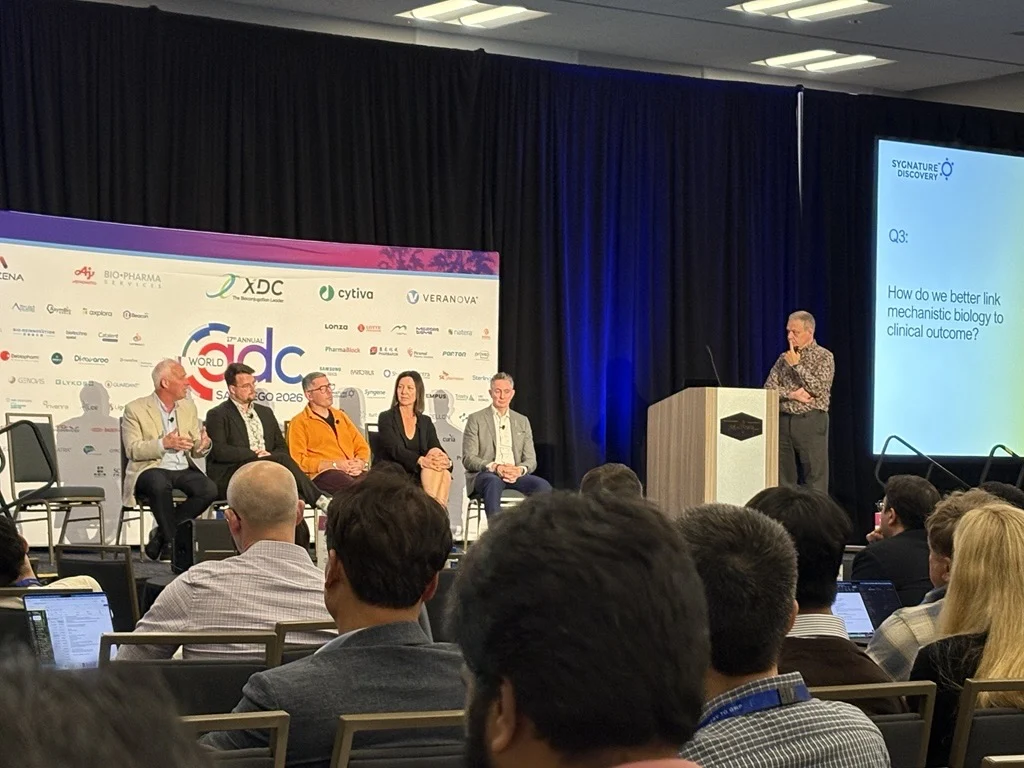
In drug discovery, generating targets is no longer the challenge. The real question is how to identify the few worth investing months of research and significant resources to pursue. Hear expert perspectives on how AI, pathway analysis and scientific expertise are shaping modern target identification.
July 7, 2026

Stay up to date with the latest company updates, milestones, and announcements.
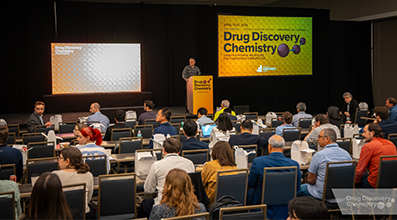
Explore upcoming conferences and scientific meetings where you can connect with our team.

At Sygnature Discovery, we deliver world-leading drug discovery solutions to accelerate your compound from idea to clinic.

Our leadership team brings diverse experience and insight, driving collaboration and innovation across drug discovery.

Explore careers at Sygnature Discovery and join a global team committed to science, collaboration, and integrity.
Inobrodib, an exciting, first-in-class oral anti-cancer drug in clinical development by CellCentric, was collaboratively designed, synthesized and supported on its pre-clinical journey by an integrated project team at Sygnature Discovery. Inobrodib is now showing promising results in Phase I and II trials for multiple myeloma and other cancer types.
At Sygnature Discovery, we deliver world-leading drug discovery solutions to accelerate your compound from idea to clinic.
Our leadership team brings diverse experience and insight, driving collaboration and innovation across drug discovery.
Explore careers at Sygnature Discovery and join a global team committed to science, collaboration, and integrity.
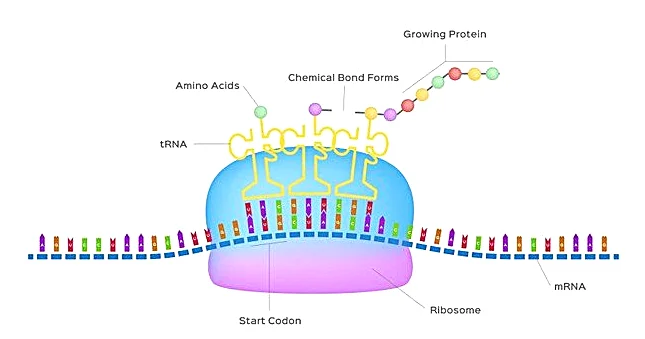
Codon optimization has become a widely used tool in recombinant protein production, helping researchers improve gene expression across a range of expression systems. However, while codon optimization can significantly enhance protein production in some situations, it is not always the right solution.
Understanding both its benefits and limitations is essential when designing successful protein expression strategies.
Protein synthesis relies on the translation of messenger RNA (mRNA) into a protein sequence. This process is directed by codons, three-nucleotide sequences that specify individual amino acids.
Although there are 64 possible codons, only 20 common amino acids are encoded, meaning that most amino acids can be represented by more than one codon. For example, leucine can be encoded by six different codons, whereas methionine and tryptophan are each encoded by only one.
Despite this redundancy, organisms do not use synonymous codons equally. Many species exhibit codon usage bias, preferentially using certain codons more frequently than others. In bacterial systems, this bias has been linked to the abundance of specific transfer RNAs (tRNAs), which can influence translation efficiency and overall protein production.
Codon optimization involves modifying a gene sequence to better match the codon preferences of a chosen expression host while maintaining the same amino acid sequence.
In bacterial and yeast expression systems, the use of preferred codons can improve translation efficiency and increase protein yield. Codon optimization can also be used to:
For many recombinant protein projects, codon optimization is therefore a valuable tool that can simplify cloning and improve protein expression.
Although codon optimization is often considered a routine step in recombinant protein production, its benefits are not universal.
In mammalian expression systems, codon usage bias appears to play a less prominent role than in bacterial systems. Factors such as mRNA structure can also influence translation efficiency, meaning that codon optimization alone does not necessarily result in higher protein expression levels.
In some cases, maintaining the native sequence may be important. For example, the incorporation of the 21st amino acid, selenocysteine, relies on specific RNA structural elements that distinguish a UGA codon encoding selenocysteine from a UGA stop codon. Altering these native sequences during codon optimization could disrupt the required RNA structures and affect correct protein production.
These examples illustrate that codon optimization should be considered a design tool rather than an automatic solution.
Interestingly, manipulating codon usage can also be used to deliberately reduce protein expression.
Studies have shown that protein-coding sequences exhibit codon pair bias, meaning that certain codon combinations occur more or less frequently than expected. Introducing suboptimal codon pairs can reduce translation efficiency and increase mRNA decay, resulting in lower protein production.
This principle has been applied in vaccine development, where codon pair deoptimization has been used to generate attenuated viruses with reduced virulence while maintaining the ability to induce an immune response. Such approaches have been explored as an alternative method for developing live attenuated vaccines.
Codon optimization remains a powerful tool for recombinant protein production, but successful expression depends on more than simply replacing rare codons with preferred alternatives. Factors including expression host biology, mRNA structure, protein complexity, and downstream application all influence the likelihood of success.
At Sygnature Discovery, gene design is considered alongside the broader expression strategy to identify the most appropriate route to producing functional recombinant protein. Whether working in bacterial, insect, or mammalian expression systems, selecting the right approach at the outset can help reduce development risk and improve the probability of successful protein production.
Codon optimization can improve recombinant protein expression, simplify construct design, and support efficient protein production. However, its effectiveness depends on the biology of both the target protein and the chosen expression system.
Understanding when to optimize, when to preserve native sequence features, and when alternative approaches may be required allows researchers to make more informed decisions and maximize the likelihood of successful protein expression.



Peak Proteins, NuChem Sciences, and SB Drug Discovery have now fully integrated with Sygnature Discovery.