

Featured Resources
-
STORM Therapeutics: From Lead to Pre-Candidate Nomination in 18 Months

STORM Therapeutics: From Lead to Pre-Candidate Nomination in 18 Months
Case study




Discover precise insights into brain neurochemistry with Sygnature Discovery's in vivo microdialysis and cOFM services. With over 20 years of expertise, we design bespoke studies that reveal how compounds modulate neurotransmitter systems in health and disease. Using UHPLC/HPLC with electrochemical detection or mass spectrometry, we deliver robust PK/PD data to support confident CNS decision making.


July 30, 2015

Inobrodib, an exciting, first-in-class oral anti-cancer drug in clinical development by CellCentric, was collaboratively designed, synthesised and supported on its pre-clinical journey by an integrated project team at Sygnature Discovery. Inobrodib is now showing promising results in Phase I and II trials for multiple myeloma and other cancer types.

In drug discovery, generating targets is no longer the challenge. The real question is how to identify the few worth investing months of research and significant resources to pursue. Hear expert perspectives on how AI, pathway analysis and scientific expertise are shaping modern target identification.
July 7, 2026

Stay up to date with the latest company updates, milestones, and announcements.
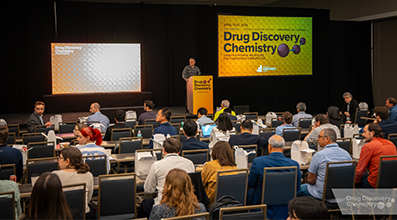
Explore upcoming conferences and scientific meetings where you can connect with our team.

At Sygnature Discovery, we deliver world-leading drug discovery solutions to accelerate your compound from idea to clinic.

Our leadership team brings diverse experience and insight, driving collaboration and innovation across drug discovery.

Explore careers at Sygnature Discovery and join a global team committed to science, collaboration, and integrity.
Inobrodib, an exciting, first-in-class oral anti-cancer drug in clinical development by CellCentric, was collaboratively designed, synthesised and supported on its pre-clinical journey by an integrated project team at Sygnature Discovery. Inobrodib is now showing promising results in Phase I and II trials for multiple myeloma and other cancer types.
At Sygnature Discovery, we deliver world-leading drug discovery solutions to accelerate your compound from idea to clinic.
Our leadership team brings diverse experience and insight, driving collaboration and innovation across drug discovery.
Explore careers at Sygnature Discovery and join a global team committed to science, collaboration, and integrity.
scientific solutions
Our scientists work as an extension of your team, powered by AI, automation, and a shared commitment to your success. We are ready to partner with you, from targeted project support to fully integrated discovery programs.

of our scientists hold PhDs
fully integrated drug discovery hubs in UK and North America
novel pre-clinical and 35+ clinical compounds delivered since 2011
Supporting Your Research
Our highly skilled scientists work as an extension of your team, combining deep expertise in the core drug discovery disciplines with AI, machine learning, and automation to deliver faster, smarter results.
We offer standalone and integrated scientific solutions across bioscience, protein science & structural biology, medicinal chemistry, computer-aided drug design (CADD), drug metabolism & pharmacokinetics (DMPK), form & formulation, and in vivo pharmacology.
Whether you need focused support for a specific challenge, or specialist input to complement your internal capabilities, we tailor our approach to your goals. With Sygnature, you gain more than a service provider, you gain a trusted scientific partner committed to delivering meaningful results and advancing your high-quality candidates to clinic.

We provide flexible access to exceptional scientific talent, tailored to projects of any size or complexity. Our scientists are supported by advanced AI tools that streamline workflows and improve decision-making. Whether you’re solving a specific challenge or scaling up a program, we deliver agile, high-impact solutions that move your science forward.
Our team draws on decades of experience to help you design smarter compounds and make faster decisions by combining AI-powered modeling, scientific expertise, and secure, collaborative data access. We solve complex challenges and accelerate your drug discovery journey.

With over 65 protein scientists at Sygnature Discovery globally, we take pride in providing high quality, fully characterized proteins for a wide range of applications such as enzymatic assays, in vivo studies, diagnostic kits, biotherapeutics, crystallography, cryo-EM and more.

Our in-depth knowledge of target biology, therapeutic area expertise and experience of working collaboratively at each stage of the drug discovery pipeline allows the efficient design and implementation of tailored high-quality assays, which help to accelerate your drug discovery programs.

From design to clinic, Sygnature Discovery’s global chemistry team partners with you to deliver molecules that matter by overcoming complexity, optimizing molecular properties, and accelerating discovery. Our dedicated project leaders and chemists work alongside you, co-designing strategies and guiding decisions.

At Sygnature Discovery, our integrated in vitro and in vivo DMPK platforms provide mechanistic insight and predictive data that support rational design and informed decision-making, from hit identification through to candidate nomination.

From candidate selection to clinic, we partner with you to design smart, scalable formulations built on solid-state insight, multidisciplinary expertise, and a shared commitment to scientific success.

Bridging the gap between scientific innovation and patient impact, we deliver high-quality, clinically relevant in vivo data that drives faster, smarter decisions through tailored study designs, advanced technologies, and close collaboration across disciplines, improving project outcomes and maximizing clinical relevance.

Drug discovery is evolving, and so are the challenges. As global health demands rise, the need for smarter, faster, and more connected science has never been greater. Yet too often, progress is slowed by disconnection between disciplines and data.
At Sygnature Discovery, our aim is to reshape how drug discovery is delivered. Through flexible services and integrated expertise, we enable innovation at every stage. With AI and automation embedded across our workflows, we help you move faster and make confident decisions, delivering results with confidence and integrity.
Whether we’re supporting you through the entire process or just a part of it, our goal isn’t simply to move you to the next stage, it’s to lay the foundations for a successfully marketed drug.
Choosing Sygnature Discovery means partnering with over 700 talented scientists from 50 countries, all focused on your priorities. With no internal drug programs, our sole focus is your success, ensuring total confidentiality and dedicated expertise.
Our co-located teams across the UK and North America collaborate to deliver data-driven, transparent, and rigorous science powered by AI and grounded in integrity. With 60+ candidates advanced since 2011 and many repeat customers, we’re trusted by partners worldwide to deliver excellence, whether for a single study or a strategic program.

Case Studies
Our customers tell us that we act as an extension of their team and provide high quality expertise at every stage of the drug discovery process. Whether we’re supporting you through the entire process, or just a part of it, our goal isn’t simply to move you to the next stage it’s to lay the foundations for a successfully marketed drug.
Progressing from lead to pre candidate nomination in less than half the industry standard timeline, this program shows how connected scientific teams and real time insight can accelerate complex discovery.
Many intriguing drug discovery programmes begin life at start-up biotech companies. Yet at the outset, these new organisations rarely have the resources or laboratory set-up immediately available to turn their ground-breaking ideas into a new medicine.
Leading generative artificial intelligence (GenAI) algorithms for de novo design are being used routinely within our medicinal chemistry programmes to enable rapid idea generation to address project objectives.
Corcept Therapeutics, located in Menlo Park, CA, is a leader in the discovery and development of drugs that regulate the effects of cortisol.
CellCentric are developing new treatments for cancer based on their understanding of epigenetics.
Fragment-based drug discovery allows a wide section of chemical space to be interrogated with a relatively small but diverse library of small molecules.
UK-based small molecule drug discovery company
Focus on identifying novel treatments of inflammatory respiratory diseases, such as COPD
Resources


Peak Proteins, NuChem Sciences, and SB Drug Discovery have now fully integrated with Sygnature Discovery.