

Featured Resources
-
STORM Therapeutics: From Lead to Pre-Candidate Nomination in 18 Months

STORM Therapeutics: From Lead to Pre-Candidate Nomination in 18 Months
Case study




Discover precise insights into brain neurochemistry with Sygnature Discovery's in vivo microdialysis and cOFM services. With over 20 years of expertise, we design bespoke studies that reveal how compounds modulate neurotransmitter systems in health and disease. Using UHPLC/HPLC with electrochemical detection or mass spectrometry, we deliver robust PK/PD data to support confident CNS decision making.


July 30, 2015

Inobrodib, an exciting, first-in-class oral anti-cancer drug in clinical development by CellCentric, was collaboratively designed, synthesised and supported on its pre-clinical journey by an integrated project team at Sygnature Discovery. Inobrodib is now showing promising results in Phase I and II trials for multiple myeloma and other cancer types.

In drug discovery, generating targets is no longer the challenge. The real question is how to identify the few worth investing months of research and significant resources to pursue. Hear expert perspectives on how AI, pathway analysis and scientific expertise are shaping modern target identification.
July 7, 2026
Stay up to date with the latest company updates, milestones, and announcements.
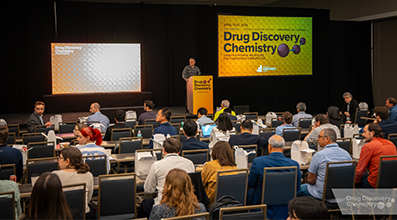
Explore upcoming conferences and scientific meetings where you can connect with our team.

At Sygnature Discovery, we deliver world-leading drug discovery solutions to accelerate your compound from idea to clinic.

Our leadership team brings diverse experience and insight, driving collaboration and innovation across drug discovery.

Explore careers at Sygnature Discovery and join a global team committed to science, collaboration, and integrity.
Inobrodib, an exciting, first-in-class oral anti-cancer drug in clinical development by CellCentric, was collaboratively designed, synthesised and supported on its pre-clinical journey by an integrated project team at Sygnature Discovery. Inobrodib is now showing promising results in Phase I and II trials for multiple myeloma and other cancer types.
At Sygnature Discovery, we deliver world-leading drug discovery solutions to accelerate your compound from idea to clinic.
Our leadership team brings diverse experience and insight, driving collaboration and innovation across drug discovery.
Explore careers at Sygnature Discovery and join a global team committed to science, collaboration, and integrity.
Scientific Solutions | Hit Identification
From high-quality starting points to optimized leads, we unite fragment screening, structural biology, computational chemistry and medicinal chemistry to keep your program moving forward .

Supporting Your Research
Sygnature Discovery’s fragment screening platform is built to help you find high-quality starting points and progress them with confidence. We combine a purpose-designed fragment library with integrated biophysics, structural biology, computational chemistry and chemistry to tailor each campaign to your target, your biology, and your program goals.
Our in-house fragment library has been carefully engineered to maximize the likelihood of identifying tractable hits. It is curated for optimal chemical space and shape coverage, and fragments are selected for high “sociability” to support efficient progression through follow-up chemistry. Recent library expansions have been pocket-docked and machine-learning – scored against a panel of 50 diverse therapeutic target pockets to ensure practical relevance.
With substantial experience across complementary fragment-screening technologies, our teams routinely apply FBDD to demanding targets such as nucleotide-binding proteins and molecular glue programs. From initial screening strategy to hit validation and evolution, we move your program forward with speed and clarity.

Sygnature’s in-house fragment library is designed to deliver tractable hits that are straightforward to evolve. Our poised fragments include clear points of diversity for derivatization, and the collection contains small analogue sets around key functional groups to enable rapid early structure–activity relationship (SAR) exploration. Structural links between the fragment collection, the Sygnature Lead Finder library, and selected commercial sets support SAR-by-catalogue, keeping momentum high after fragment hit identification.
The library is organized into two tiers to better enable a range of approaches to FBDD :
This tiered approach lets you tailor hit finding to your target biology and available platforms. Typical workflows include:
Providing this flexibility enables the prioritization of elements such as diversity or immediate structural enable, and the application of the best assay type for each target.

Fragment Screening Workflow
We deliver high-quality fragment hits through a robust and fully traceable workflow that connects technologies, libraries, and expertise. Every stage is integrated to provide clear visibility from start to finish, enable effective FBDD programs that keep projects moving decisively forward.
Identify screening concentration and potential hit rate.
Select the initial hit list
Analyze binding behavior and
potency in depth.
Rapid SAR and confirmation of hits, including orthogonal assays where needed.
Fragment follow-up is driven by structure-based design and rapid SAR generation to move efficiently from initial hits to optimized leads.
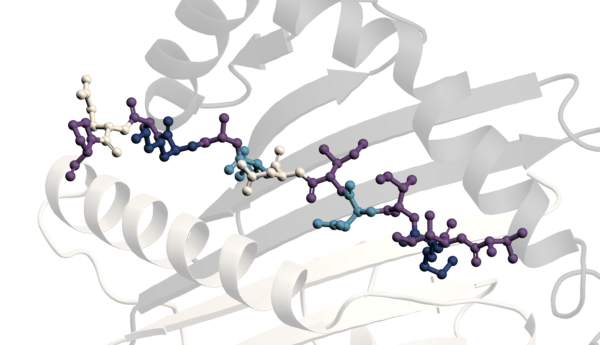
Using crystallography, NMR or cryo-EM structures, our CADD teams apply methods such as mixed-solvent molecular dynamics and water mapping to reveal adjacent pockets and prioritize high-affinity growth opportunities. We control molecular properties using efficiency metrics such as LE and LLE. Fast, high-confidence structural feedback, including PanDDA analysis where appropriate, guides iterative AI supported design. Structural links to Sygnature and commercial screening libraries enable accelerated “near-neighbor” SAR-by-catalogue.
When bespoke synthesis is needed, our poised fragments help select high-value vectors for elaboration. Our long-established high-throughput chemistry capability enables rapid exploration of those vectors, ensuring momentum through ongoing DMTA cycles.
We provide a complete, integrated platform for fragment-based drug discovery, designed to move you from hit identification to lead optimization with speed and rigor. You gain a purpose-built fragment library and a cross-discipline team that united structural biology, biophysics, CAD, and chemistry together with full traceability and fast feedback.
Our end-to-end support spans protein production and structural biology, including X-ray crystallography and NMR, biophysical fragment screening using SPR, MST and DSF, crystallographic screening, computational chemistry with AI-enabled design, and medicinal chemistry supported by high-throughput SAR generation. Whether you need a full FBDD campaign or targeted support at a key stage, we tailor the approach to your target and objectives.
Resources


We bring together a dynamic blend of new talent and experienced pharmaceutical industry experts from a round the world, delivering excellence across every stage of discovery.

Integrated hit identification using HTS, fragment screening, and advanced automation delivering high-quality starting points for successful drug discovery.
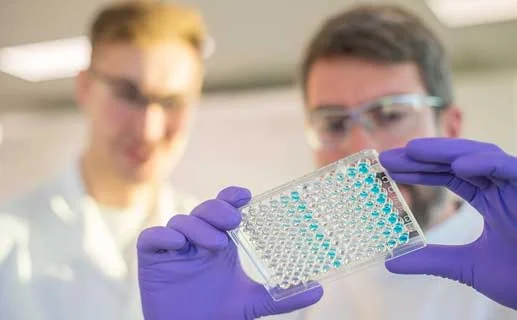
Delivering validated, high-quality hits through integrated technologies, strategic insight, and expert collaboration to advance your program with confidence.

Application-ready proteins through tailored design, expert purification, and collaborative support ensuring confident progress from construct to final product.

High-throughput biophysical solutions for binding, kinetics, and target engagement combining advanced technologies with deep expertise to guide drug discovery.

Our Computer Aided Drug Design (CADD) capabilities combine deep scientific expertise with advanced AI, machine learning, and informatics infrastructure to support smarter, faster decision-making across the drug discovery pipeline.

Gain structural insights that guide smarter drug design through cryo-EM, NMR, and X-ray crystallography supported by expert analysis and collaboration.
Peak Proteins, NuChem Sciences, and SB Drug Discovery have now fully integrated with Sygnature Discovery.

