


Featured Resources
-
STORM Therapeutics: From Lead to Pre-Candidate Nomination in 18 Months

STORM Therapeutics: From Lead to Pre-Candidate Nomination in 18 Months
Case study
📣From lead to pre-candidate nomination in 18 months. Explore the STORM Therapeutics case study




July 30, 2015

Inobrodib, an exciting, first-in-class oral anti-cancer drug in clinical development by CellCentric, was collaboratively designed, synthesised and supported on its pre-clinical journey by an integrated project team at Sygnature Discovery. Inobrodib is now showing promising results in Phase I and II trials for multiple myeloma and other cancer types.

At Sygnature Discovery, we deliver world-leading drug discovery solutions to accelerate your compound from idea to clinic.

Our leadership team brings diverse experience and insight, driving collaboration and innovation across drug discovery.

Explore careers at Sygnature Discovery and join a global team committed to science, collaboration, and integrity.
Inobrodib, an exciting, first-in-class oral anti-cancer drug in clinical development by CellCentric, was collaboratively designed, synthesised and supported on its pre-clinical journey by an integrated project team at Sygnature Discovery. Inobrodib is now showing promising results in Phase I and II trials for multiple myeloma and other cancer types.
At Sygnature Discovery, we deliver world-leading drug discovery solutions to accelerate your compound from idea to clinic.
Our leadership team brings diverse experience and insight, driving collaboration and innovation across drug discovery.
Explore careers at Sygnature Discovery and join a global team committed to science, collaboration, and integrity.
scientific solutions | DMPK
At Sygnature Discovery, we provide advanced tissue binding assays that reveal how drugs behave in the body. By focusing on unbound drug, the fraction that truly drives therapeutic effect, we deliver insights that improve pharmacokinetic predictions, guide dosing strategies, and accelerate candidate optimization.

SUPPORTING YOUR RESEARCH
Differences in protein and lipid composition between plasma and tissue influence binding under physiological conditions. These interactions determine the volume of distribution (Vd), a key parameter for understanding drug disposition and systemic exposure.
Our assays quantify free drug concentrations across plasma, blood, and tissue compartments, giving you the clarity needed for smarter decisions. Our assays quantify free drug concentrations across plasma, blood, and tissue compartments, giving you the clarity needed for smarter decisions.

Our Tissue Binding Expertise
Plasma proteins such as albumin and alpha 1 acid glycoprotein act as high-capacity carriers for drugs. Binding is typically reversible and non saturable at therapeutic concentrations. Acidic drugs often show strong plasma protein binding due to ionic inter actions with albumin. Understanding these dynamics is essential for predicting free drug concentration and pharmacokinetic behavior.
The blood-to-plasma partitioning (BPP) assay measures compound distribution between whole blood and plasma, reflecting affinity for cellular components like red blood cells (RBCs). Significant RBC binding can lower unbound plasma concentration, impacting pharmacokinetics and pharmacodynamics. For compounds that favor RBC partitioning, whole blood assays ensure accurate exposure assessment.
Tissue distribution and binding shape drug exposure and efficacy by modulating unbound drug available for target engagement. Basic compounds often exhibit high tissue affinity due to ionic interactions with negatively charged phospholipid head groups. For CNS targeted drugs, measuring fu, brain and calculating Kp, uu, the unbound brain-to-plasma ratio, are essential for assessing CNS penetration and pharmacodynamic relevance.
Non-specific binding during in vitro incubations can significantly reduce free drug concentration, confounding clearance (CLint) and potency data. Correcting for the fraction unbound in incubation (fu,inc) enables accurate comparisons across chemical series, supporting meaningful structure-activity relationship (SAR) decisions and
improving translational relevance.
Resources

We bring together a dynamic blend of new talent and experienced pharmaceutical industry experts from a round the world, delivering excellence across every stage of discovery.

Integrated solid form and formulation strategies reduce risk, improve stability and solubility, and accelerate progression from candidate selection to clinic.
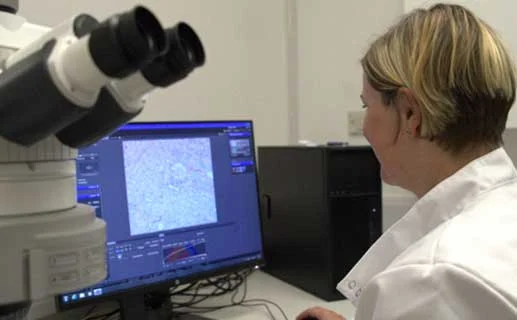
Validated in vivo models deliver clinically relevant data across therapeutic areas, accelerating confident decisions and reducing risk in drug development.
Peak Proteins, NuChem Sciences, and SB Drug Discovery have now fully integrated with Sygnature Discovery.
