


Featured Resources
-
STORM Therapeutics: From Lead to Pre-Candidate Nomination in 18 Months

STORM Therapeutics: From Lead to Pre-Candidate Nomination in 18 Months
Case study
📣From lead to pre-candidate nomination in 18 months. Explore the STORM Therapeutics case study




July 30, 2015

Inobrodib, an exciting, first-in-class oral anti-cancer drug in clinical development by CellCentric, was collaboratively designed, synthesised and supported on its pre-clinical journey by an integrated project team at Sygnature Discovery. Inobrodib is now showing promising results in Phase I and II trials for multiple myeloma and other cancer types.

At Sygnature Discovery, we deliver world-leading drug discovery solutions to accelerate your compound from idea to clinic.

Our leadership team brings diverse experience and insight, driving collaboration and innovation across drug discovery.

Explore careers at Sygnature Discovery and join a global team committed to science, collaboration, and integrity.
Inobrodib, an exciting, first-in-class oral anti-cancer drug in clinical development by CellCentric, was collaboratively designed, synthesised and supported on its pre-clinical journey by an integrated project team at Sygnature Discovery. Inobrodib is now showing promising results in Phase I and II trials for multiple myeloma and other cancer types.
At Sygnature Discovery, we deliver world-leading drug discovery solutions to accelerate your compound from idea to clinic.
Our leadership team brings diverse experience and insight, driving collaboration and innovation across drug discovery.
Explore careers at Sygnature Discovery and join a global team committed to science, collaboration, and integrity.
scientific solutions | DMPK
At Sygnature Discovery, we help you understand how your compound will behave in the body by assessing chemical and metabolic stability early in development. Our expertise accelerates optimization, improves pharmacokinetic predictions, and strengthens translational accuracy.

SUPPORTING YOUR RESEARCH
At Sygnature Discovery, we provide comprehensive in vitro chemical and metabolic stability assessments to support compound optimization and predict in vivo pharmacokinetics. Our assays evaluate parent depletion kinetics and intrinsic clearance (CLint) across species, enabling accurate IVIVE and guiding structure refinement. Importantly, our CLint data show strong correlation with in vivo CLint of marketed compounds, supporting successful scaling and enhancing translational confidence.
We offer targeted evaluations of:

Chemical & Metabolic Stability Expertise
Our data-driven approach supports translational relevance and informs strategic decisions across discovery programs.
• Evaluates compound integrity in buffers and biorelevant media.
• Identifies pH-dependent degradation
risk.
• Distinguishes chemical instability from true metabolic clearance.
• Detects instability that can shorten half-life and reduce efficacy.
• Prevents confounding pharmacokinetic
data caused by ex vivo degradation.
• Informs structural optimization for better performance.
• Assesses hydrolytic liability and enzymatic
effects from plasma and red blood cells.
• Addresses risks from esterases and
amidases that influence degradation kinetics.
• Ensures reliable pharmacokinetic
measurements.
• Measures intrinsic clearance and metabolic stability using liver microsomes.
• Identifies metabolic pathways and potential metabolites.
• Evaluates drug–drug interaction potential.
• Enables cross-species comparisons for translational relevance.
• Captures Phase I and Phase II metabolism in intact liver cells.
• Provides species-specific data for accurate predictions.
• Supports modeling of systemic exposure, half-life, and dosing strategies.
• Quantifies transporter-mediated clearance to resolve IVIVE disconnects.
• Improves prediction accuracy for compounds with active transport components.
• Validated in human and rat hepatocytes for translational confidence.
Resources


We bring together a dynamic blend of new talent and experienced pharmaceutical industry experts from a round the world, delivering excellence across every stage of discovery.

Integrated solid form and formulation strategies reduce risk, improve stability and solubility, and accelerate progression from candidate selection to clinic.
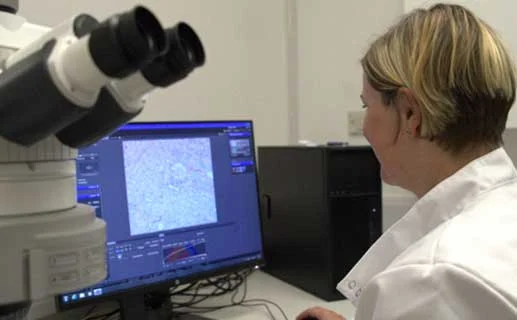
Validated in vivo models deliver clinically relevant data across therapeutic areas, accelerating confident decisions and reducing risk in drug development.
Peak Proteins, NuChem Sciences, and SB Drug Discovery have now fully integrated with Sygnature Discovery.
