


Featured Resources
-
STORM Therapeutics: From Lead to Pre-Candidate Nomination in 18 Months

STORM Therapeutics: From Lead to Pre-Candidate Nomination in 18 Months
Case study
📣From lead to pre-candidate nomination in 18 months. Explore the STORM Therapeutics case study




July 30, 2015

Inobrodib, an exciting, first-in-class oral anti-cancer drug in clinical development by CellCentric, was collaboratively designed, synthesised and supported on its pre-clinical journey by an integrated project team at Sygnature Discovery. Inobrodib is now showing promising results in Phase I and II trials for multiple myeloma and other cancer types.

At Sygnature Discovery, we deliver world-leading drug discovery solutions to accelerate your compound from idea to clinic.

Our leadership team brings diverse experience and insight, driving collaboration and innovation across drug discovery.

Explore careers at Sygnature Discovery and join a global team committed to science, collaboration, and integrity.
Inobrodib, an exciting, first-in-class oral anti-cancer drug in clinical development by CellCentric, was collaboratively designed, synthesised and supported on its pre-clinical journey by an integrated project team at Sygnature Discovery. Inobrodib is now showing promising results in Phase I and II trials for multiple myeloma and other cancer types.
At Sygnature Discovery, we deliver world-leading drug discovery solutions to accelerate your compound from idea to clinic.
Our leadership team brings diverse experience and insight, driving collaboration and innovation across drug discovery.
Explore careers at Sygnature Discovery and join a global team committed to science, collaboration, and integrity.
Proximity based therapeutics have emerged as powerful tools in drug discovery and come in a wide range of different formats, including molecular glues and PROTACs (Proteolysis Targeting Chimeras). In all cases a molecule is used to bring together two cellular proteins: for PROTACs and molecular glue degraders this is the target protein and an E3 ubiquitin ligase. These ligases are part of the protein degradation pathway and bringing them in close proximity to another protein triggers targeted protein degradation (TPD), selectively reducing the level of the target protein within the cell. We have already described production of one popular E3 ligase – Cereblon/ DDB1. Here we describe the Production of Active VHL and Analysis by SPR. VHL is another popular E3 ligase that is being utilised by degrader programs.
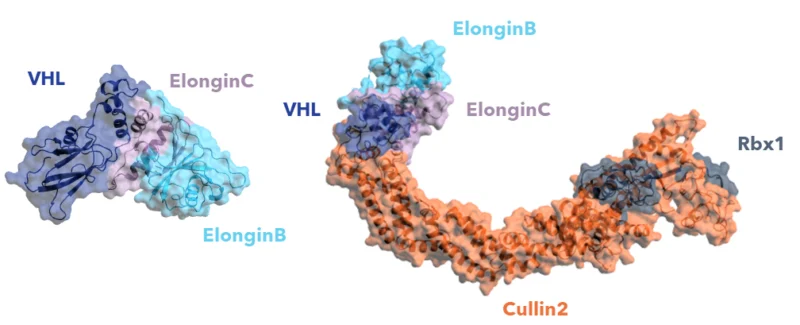
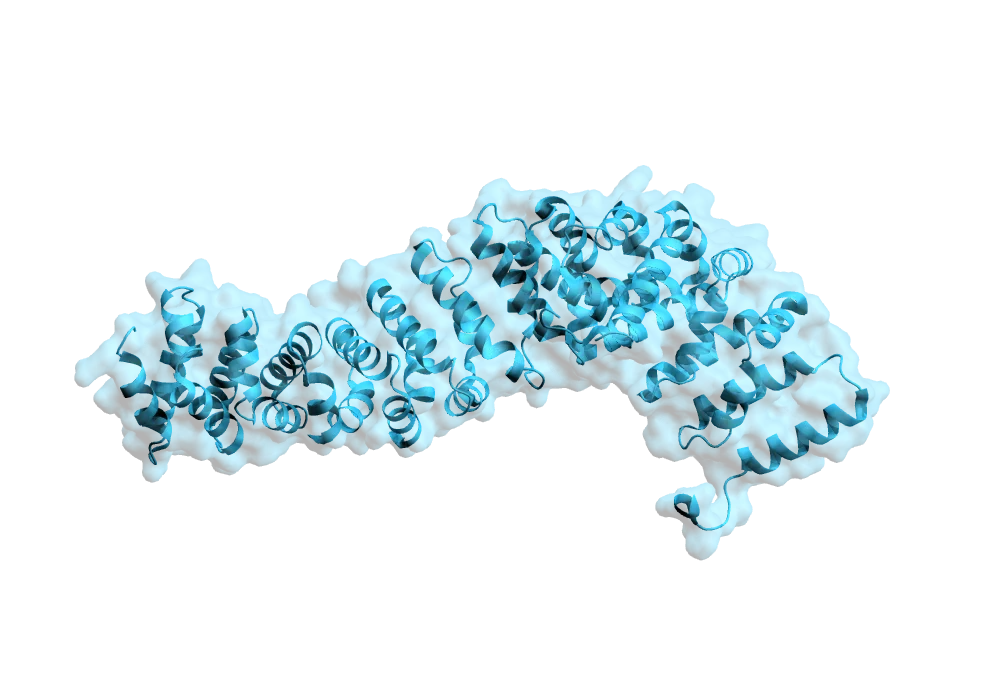
Von Hippel-Lindau (VHL) Cullin RING E3 ligase is an essential enzyme in the ubiquitin system which recruits substrates such as the hypoxia inducible factor (HIF) for ubiquitination and subsequent proteasomal degradation. VHL associates with Elongin B (EloB), Elongin C (EloC), scaffold subunit Cullin2 (Cul2), and the RING-containing protein Rbx1 (Figure. 1). VHL provides substrate recognition and EloB/C act as adaptor proteins to Cullin-2/Rbx1. Purified VCB complex (VHL, EloC, EloB) is a valuable tool in TPD development, for example by allowing assessment of compound affinity, ternary complex formation and assessment of cooperativity.
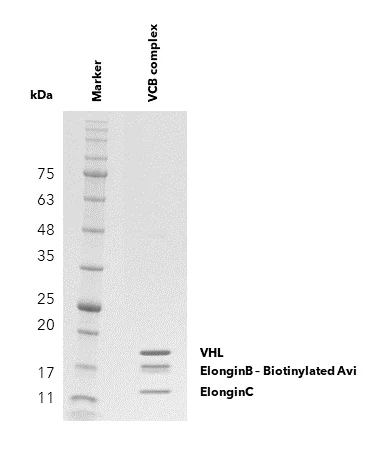
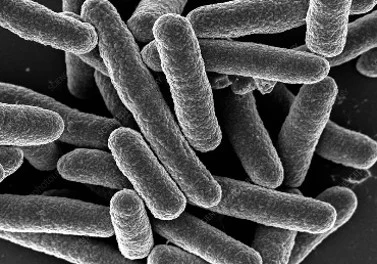
At Sygnature Discovery, we pride ourselves in producing high quality protein for drug development and VHL is no exception. We expressed Elongin C, Elongin B, and VHL together in E. coli and developed a purification strategy resulting in highly pure, homogeneous protein. Biotinylation was performed intracellularly and confirmed by peptide mapping and protein identification (LCMSMS).
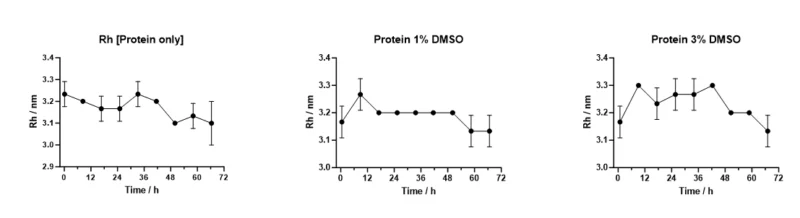
Our Fida platform (Flow-Induced Dispersion Analysis) was used to determine the integrity and stability of the complex. The measured protein size is consistent with that calculated from a PBD structure (computed Rh of PDB ID 8BDI = 3.1 nm). Stability was then measured over time and in the presence of DMSO. No significant change in protein size, stability, or aggregation over the course of the time course, and DMSO had no significant effect on the protein stability. This indicates that the VCB complex would be suitable for compound screening.
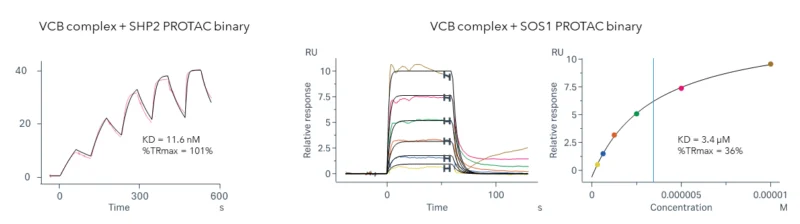
Our biophysics team used this batch of VCB in a series of SPR experiments to demonstrate the formation of binary complexes using either a SHP2 or SOS1 PROTAC. Using the SHP2 degrader our VCB was demonstrated to be highly active (~100%). This indicates that the immobilized VCB on the SPR chip surface is well-folded and accessible for PROTAC binding.
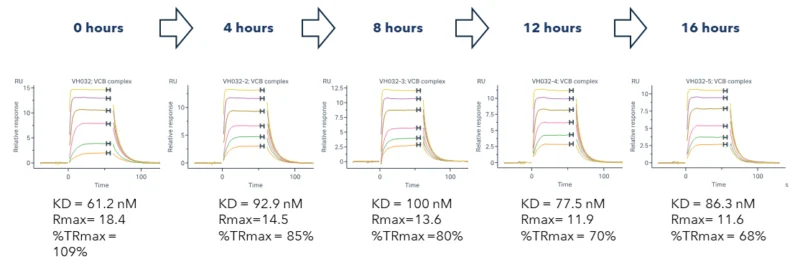
To assess if the assay was compatible with library screening by SPR, surface stability was assessed over time. We found that the VCB surface retained high capacity to form a binary complex with the VH032 ligand after 16 h, indicating that the assay is compatible with library screening over this period.
We have demonstrated we can deliver highly active, purified VCB for your drug development needs. We have experience producing other degrader E3-ligases too, including Cereblon/DDB1 and multiple DCAF protein complexes. Degrader studies also often require high-quality target protein, and our highly qualified and experienced team are well placed to produce your protein of interest. At Sygnature we can offer the full drug discovery package with close integration with our biophysics team to find lead compounds, study degrader interactions and the potential of the CHARMED platform to deliver rapid synthesis, screening and characterisation of bifunctional lead compounds from existing binders.
Peak Proteins, NuChem Sciences, and SB Drug Discovery have now fully integrated with Sygnature Discovery.
