



Featured Resources
-
STORM Therapeutics: From Lead to Pre-Candidate Nomination in 18 Months

STORM Therapeutics: From Lead to Pre-Candidate Nomination in 18 Months
Case study
📣From lead to pre-candidate nomination in 18 months. Explore the STORM Therapeutics case study




July 30, 2015

Inobrodib, an exciting, first-in-class oral anti-cancer drug in clinical development by CellCentric, was collaboratively designed, synthesised and supported on its pre-clinical journey by an integrated project team at Sygnature Discovery. Inobrodib is now showing promising results in Phase I and II trials for multiple myeloma and other cancer types.

At Sygnature Discovery, we deliver world-leading drug discovery solutions to accelerate your compound from idea to clinic.

Our leadership team brings diverse experience and insight, driving collaboration and innovation across drug discovery.

Explore careers at Sygnature Discovery and join a global team committed to science, collaboration, and integrity.
Inobrodib, an exciting, first-in-class oral anti-cancer drug in clinical development by CellCentric, was collaboratively designed, synthesised and supported on its pre-clinical journey by an integrated project team at Sygnature Discovery. Inobrodib is now showing promising results in Phase I and II trials for multiple myeloma and other cancer types.
At Sygnature Discovery, we deliver world-leading drug discovery solutions to accelerate your compound from idea to clinic.
Our leadership team brings diverse experience and insight, driving collaboration and innovation across drug discovery.
Explore careers at Sygnature Discovery and join a global team committed to science, collaboration, and integrity.
Hit finding is about creating the knowledge to deliver a successful drug discovery project. Bringing together multiple technologies and disciplines provides a well-structured and integrated strategy to identify quick wins.
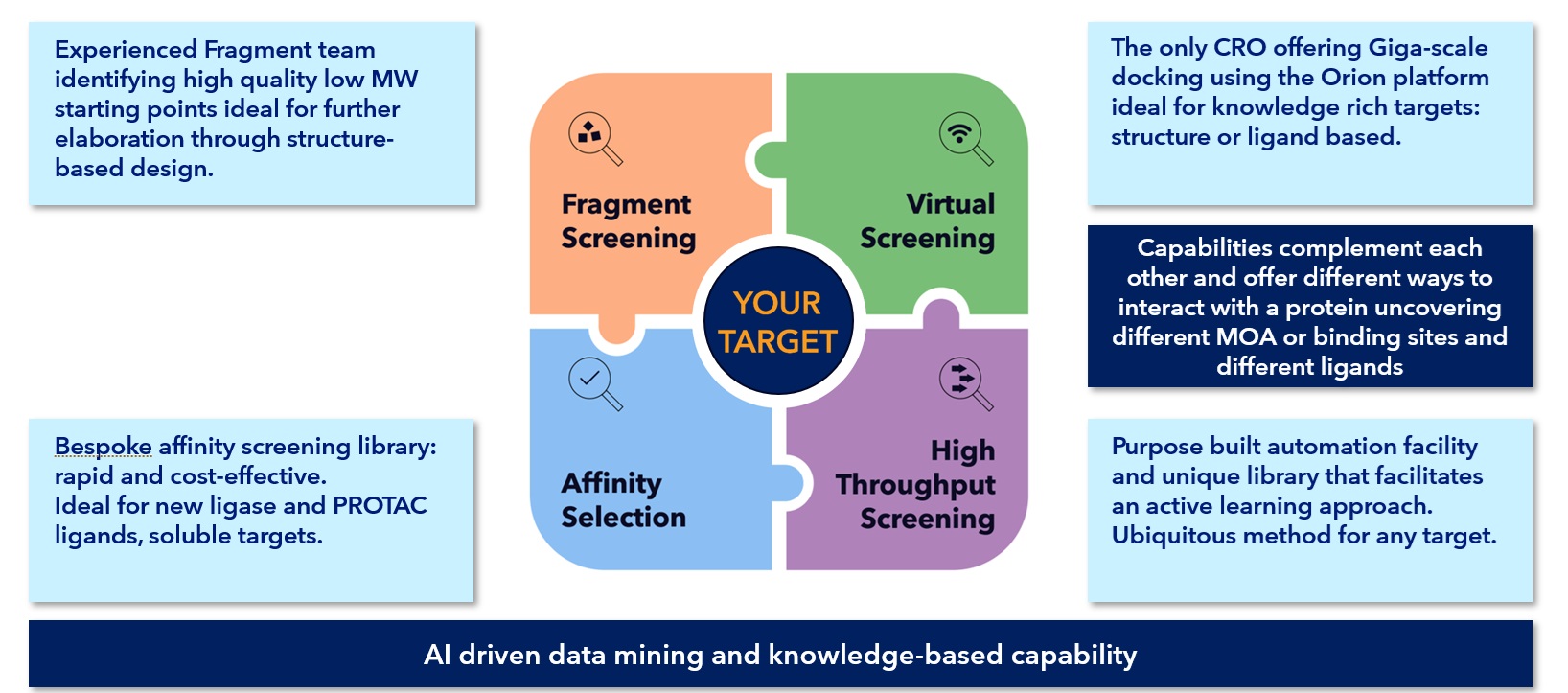
In this case study, knowledge-based design, virtual screening (VS) and high throughput screening (HTS) were used successfully to rapidly progress a project to the lead optimisation stage.
Here we focus on the High Throughput Screening (HTS) stream of the project. HTS is a well-established ubiquitous method in the drug discovery industry used to rapidly identify novel chemical starting points. HTS involves the seamless integration of medicinal chemistry, biology, informatics and advanced automation technology. The complexity of HTS means many factors in addition to assay biology influence the quality and outcome of the process.
A key factor for a successful HTS campaign is screening a high-quality lead-like diverse compound library with compound properties covering low MW starting points with developable lead-like properties, desirable physical chemistry properties and no undesirable substructures.
Delivering a successful HTS campaign is not limited to just using the right primary screen, but also a well-planned and considered post HTS assay cascade to validate and progress new chemical starting points through triaging. This hit evaluation cascade should minimally include a counter screen (to identify and remove compounds that, for example, interfere with assay end point wavelength), orthogonal assays (use of an alternate assay technology to confirm compound activity, e.g. biophysical assays for binding events), target selectivity assay(s) (determine selectivity against a related, but undesirable target) and Medicinal chemistry assessment as part of this process. In this case, the project had a number of orthogonal assays including a functional assay and importantly, was structurally enabled. Compounds of interest were repurchased, repurified and then tested through the hit validation triaging assays. To expedite the validation process, while awaiting delivery of repurchased compounds, which can take a number of weeks, we were also able to follow up HTS hits directly by soaking compounds from HTS DMSO stock solutions into apo protein crystals to obtain structural information.
Highly pure and active protein was produced in-house for all aspects of the screening cascade, including HTS and X-ray crystallography.
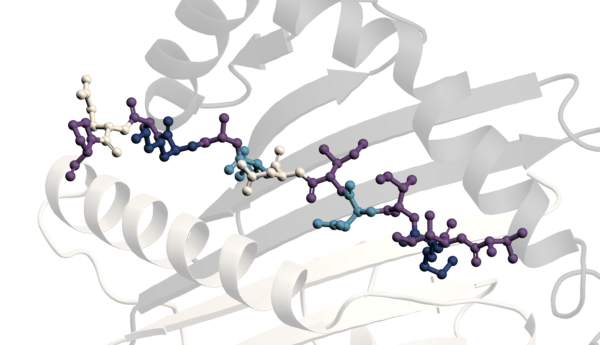
Using a combination of published methods and broad screening of crystallisation conditions, initial crystal hits were optimised to develop a robust apo crystal system suitable for compound soaking. A pipeline for the target protein was developed including overnight compound soaking, data collection and processing. This reproducibly yielded crystal structures with bound compounds. With the crystallography data generated, we were able to identify an allosteric binding pocket in the target protein and feed invaluable structural information into the compound screening cascade, with a very high success rate of protein-ligand complex structures delivered. The crystal system was even successful in confirming binding of VS hits to the allosteric pocket, directly from liquid DMSO stocks despite concentrations ten times lower than ideal.
In the above scenario, X-ray crystallography was considered an attractive method in this project for fast triaging of hits directly from the HTS output. To minimise delay, liquid HTS DMSO stocks were used directly for crystallography soaks after the hits had been validated in a functional orthogonal assay. The established process of soaking compounds into apo protein crystals overnight and data processing was adapted to test these compounds in batches, successfully confirming binding to the allosteric pocket for 6 hits out of 42 different HTS compounds screened by crystallography. Project resource limitations did not allow for exhaustive analysis of all the X-ray diffraction data collected in this case. This, together with the use of compound liquid stocks at relatively low concentration, is likely to have resulted in structural information on weaker binders, or those binding to other unknown pockets in the target protein, being missed in this process. Nonetheless, the crystal system, compound soaking and X-ray data analysis process developed for the target protein proved a suitable tool for early validation of HTS hits and fast prioritisation for follow up in subsequent stages of the project.
These results allowed HTS hit data to feed directly and rapidly into the project, providing novel design ideas for the lead molecules identified in the VS and Knowledge based streams of the project, enabling hybridisation of these molecules with HTS hit series. This hit ID project is a great example of the value generated by different disciplines working rapidly and in parallel within our HIT SYNERGY platform.
Denise Swift is Senior Principal Scientist, HTS Group Leader at Sygnature Discovery.
Raquel Faba Rodriguez is Lead Scientist, Protein Science at Sygnature Discovery.
Find out more about Sygnature Discovery’s powerful hit ID platform, HIT SYNERGY, which integrates multiple advanced screening technologies to rapidly generate high-quality, structurally diverse hits, tailored to today’s most challenging new target classes. Well-characterized hits provide a strong foundation for our experienced drug discovery teams to rapidly advance your compound to the candidate stage.

Peak Proteins, NuChem Sciences, and SB Drug Discovery have now fully integrated with Sygnature Discovery.