


Featured Resources
-
STORM Therapeutics: From Lead to Pre-Candidate Nomination in 18 Months

STORM Therapeutics: From Lead to Pre-Candidate Nomination in 18 Months
Case study




July 30, 2015

Inobrodib, an exciting, first-in-class oral anti-cancer drug in clinical development by CellCentric, was collaboratively designed, synthesised and supported on its pre-clinical journey by an integrated project team at Sygnature Discovery. Inobrodib is now showing promising results in Phase I and II trials for multiple myeloma and other cancer types.

At Sygnature Discovery, we deliver world-leading drug discovery solutions to accelerate your compound from idea to clinic.

Our leadership team brings diverse experience and insight, driving collaboration and innovation across drug discovery.

Explore careers at Sygnature Discovery and join a global team committed to science, collaboration, and integrity.
Inobrodib, an exciting, first-in-class oral anti-cancer drug in clinical development by CellCentric, was collaboratively designed, synthesised and supported on its pre-clinical journey by an integrated project team at Sygnature Discovery. Inobrodib is now showing promising results in Phase I and II trials for multiple myeloma and other cancer types.
At Sygnature Discovery, we deliver world-leading drug discovery solutions to accelerate your compound from idea to clinic.
Our leadership team brings diverse experience and insight, driving collaboration and innovation across drug discovery.
Explore careers at Sygnature Discovery and join a global team committed to science, collaboration, and integrity.
Corcept Therapeutics, Menlo Park, CA: Leading cortisol regulation research, targeting Cushing’s syndrome & cancers.
Relacorilant, an oral therapy, is a selective glucocorticoid receptor (GR) antagonist that modulates cortisol activity. It was synthesized and tested at Sygnature during a long-term integrated drug discovery collaboration with Corcept.
Corcept is now developing relacorilant in ovarian cancer and a variety of other serious disorders, including endogenous hypercortisolism and prostate cancer. It has been designated an orphan drug by the FDA and the European Commission (EC) for the treatment of hypercortisolism and by the EC for the treatment of ovarian cancer. The FDA has assigned a Prescription Drug User Fee Act (PDUFA) for relacorilant as a treatment for patients with hypercortisolism, and a PDUFA for relacorilant as a treatment for patients with platinum-resistant ovarian cancer.
Corcept Therapeutics, located in Menlo Park, CA, is a leader in the discovery and development of drugs that regulate the effects of cortisol. Corcept’s scientific expertise surrounding the regulation of cortisol has led to the discovery of an extensive library of novel compounds that may ultimately address life-threatening diseases such as Cushing’s syndrome, caused by excessive activity of cortisol, and cancer, including prostate and pancreatic cancers.
The client was looking to prepare novel, selective glucocorticoid receptor antagonists (GR antagonists) with the potential to treat CNS disorders, cancers and/or metabolic diseases. Compounds needed to show selectivity for the glucocorticoid receptor versus other Nuclear Hormone receptors. The integrated project team was tasked with medicinal chemistry design and synthesis, including overcoming challenges related to hERG inhibition, PK and potency. The team were also required to establish a comprehensive, tailored screening cascade as well as looking at biomarker identification and validation.
Sygnature’s strong track record and ability to provide an integrated medicinal chemistry, in vitro biology and ex vivo biomarker platform set the stage for a successful collaboration. Key factors included Sygnature’s innovative scientists, able to design and deliver candidate molecules for clinical development while working effectively and efficiently with other external partners (e.g., in vivo PK/PD profiling).
Our long-term integrated drug discovery collaboration with Corcept began at the lead optimisation phase. Our scientists delivered innovative medicinal chemistry alongside a comprehensive, diverse screening cascade of in vitro assays, including potency, selectivity, mode-of-action and ex vivo biomarker.
Lead compounds were further profiled in collaboration with our expert alliance partners, Saretius and Renasci (now part of Sygnature Discovery), to obtain pivotal in vivo PK and PD data prior to advancing drug candidates into man.
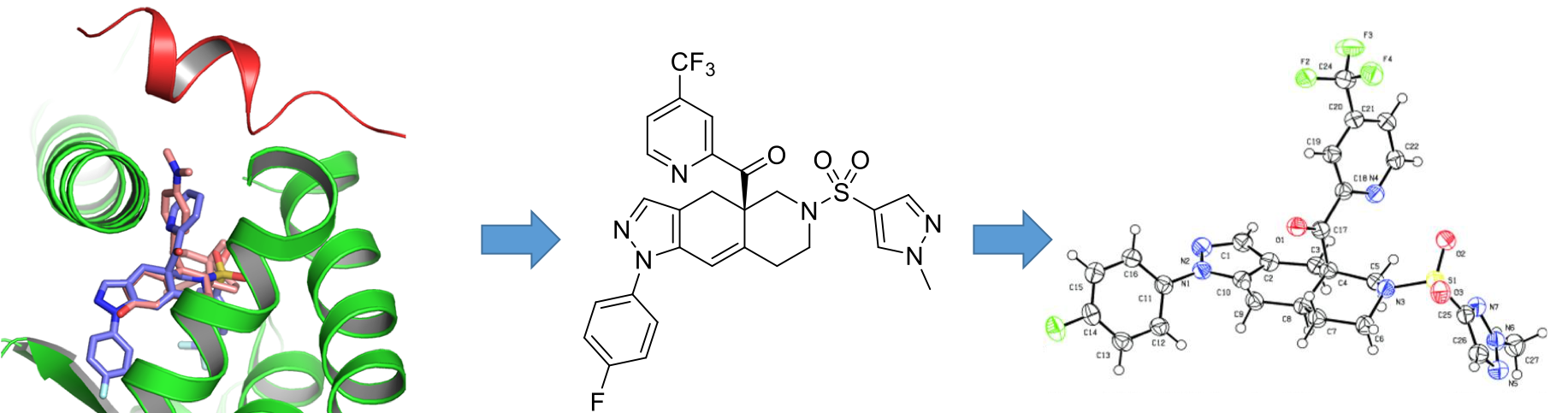
Sygnature has to date delivered two clinical development candidates to Corcept:
In addition, Sygnature has also developed a novel patented biomarker assay of cortisol activation (WO 2016187347). This assay provided a method for assessing a clinical response to a glucocorticoid receptor antagonist (GRA) in a human subject and for diagnosing Cushing’s syndrome.
Sygnature’s former Director of Chemistry, Dr Iain Walters, presented the discovery and first disclosure of CORT125134 at the prestigious 19th Royal Society of Chemistry / Society of Chemical Industry Medicinal Chemistry Symposium (10th-13th September 2017, Cambridge, UK)
Throughout the project, the Sygnature and Corcept teams worked in close partnership with each other and third-party contributors. Each team adapted quickly to emerging data through frequent project meetings. A shared alignment on goals, combined with Sygnature’s integrated service model, allowed Corcept to maintain momentum and deliver in a timely manner.
During a productive collaboration that has spanned several years, Sygnature Discovery has carried out first class medicinal and synthetic chemistry and in vitro biology work. The commitment, flexibility and communication skills of the Sygnature scientists allowed us to quickly identify promising lead candidates, of which CORT125134 is the most advanced. We are looking forward to its further development
VP, Research
The collaboration between Sygnature Discovery and Corcept Therapeutics represents a compelling example of successful integrated drug discovery. With Relacorilant now the subject of multiple regulatory submissions, including two NDAs and an MAA, and Exicorilant progressing through early-stage oncology development, Corcept’s programme continues to advance toward key clinical and regulatory milestones. These developments highlight the impact of the discovery effort and set the stage for the next phase of progression and both commercial and clinical success.
Hunt, Hazel J.; Belanoff, Joseph K.; Walters, Iain; Gourdet, Benoit; Thomas, Jennifer; Barton, Naomi; Unitt, John; Phillips, Timothy; Swift, Denise; Eaton, Emily. The Identification of the Clinical Candidate (R)-(1-(4-fluorophenyl)-6-((1-methyl-1H-pyrazol-4-yl)sulfonyl)-4,4a,5,6,7,8-hexahydro-1Hpyrazolo[3,4-g]isoquinolin-4a-yl)(4-(trifluoromethyl)pyridin-2-yl)methanone (CORT125134):– A Selective Glucocorticoid Receptor (GR) Antagonist. Journal of Medicinal Chemistry (2017), 60(8), 3405-3421
Bali, U., Phillips, T., Hunt, H., and Unitt, J. FKBP5 mRNA Expression Is a Biomarker for GR Antagonism. Journal of Clinical Endocrinology & Metabolism (2016), 101(11), 4305-4312017), 60(8), 3405-3421.
Belanoff, Joseph K.; Hunt, Hazel; Unitt, John Francis; Moraitis, Andreas G. From PCT Int. Appl. (2016), WO 2016187347 A1 20161124.
Hunt, Hazel J.; Belanoff, Joseph K.; Golding, Emily; Gourdet, Benoit; Phillips, Timothy; Swift, Denise; Thomas, Jennifer; Unitt, John F.; Walters, Iain. 1H-Pyrazolo[3,4-g]hexahydro-isoquinolines as potent GR antagonists with reduced hERG inhibition and an improved pharmacokinetic profile. Bioorganic & Medicinal Chemistry Letters (2015), 25(24), 5720-5725.
Belanoff, J.K.; Hunt, H.; Unitt, J.F.; Moraitis, A.G. (2016). Methods for assessing a clinical response to a glucocorticoid receptor antagonist (GRA) in a human subject and for diagnosing Cushing’s syndrome. WO 2016187347 A1.
Hunt, Hazel; Walters, Iain; Ray, Nicholas. From PCT Int. Appl. (2015), WO 2015077537 A1 20150528.
Hunt, Hazel; Walters, Iain; Gourdet, Benoit. From PCT Int. Appl. (2015), WO 2015077530
Hunt, Hazel; Johnson, Tony; Ray, Nicholas; Walters, Iain. From PCT Int. Appl. (2013), WO 2013177559

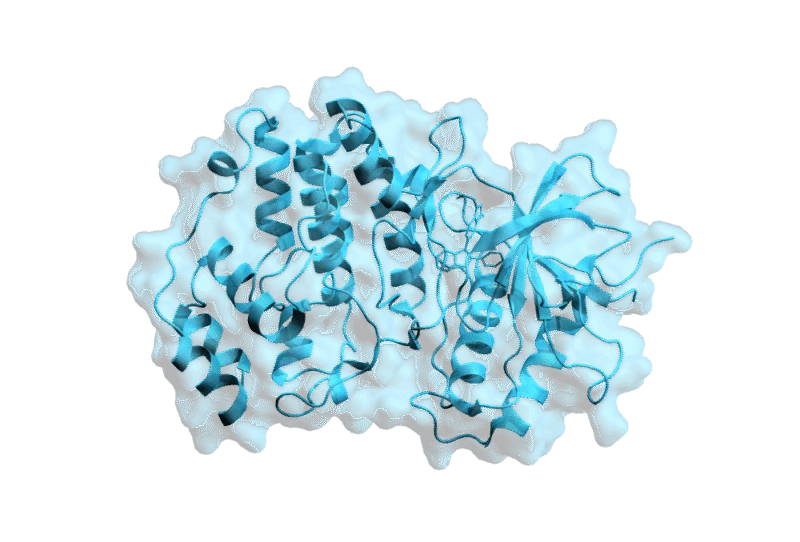

Peak Proteins has now fully integrated with Sygnature Discovery.
