


Featured Resources
-
STORM Therapeutics: From Lead to Pre-Candidate Nomination in 18 Months

STORM Therapeutics: From Lead to Pre-Candidate Nomination in 18 Months
Case study


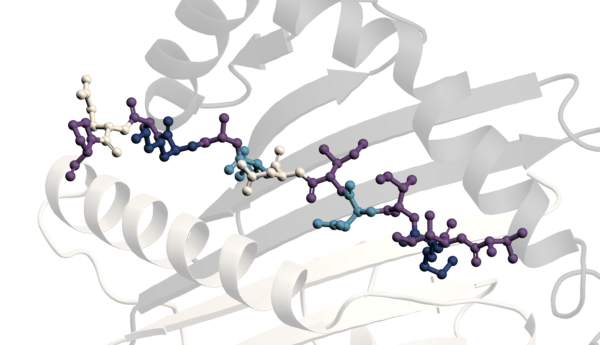


Discover precise insights into brain neurochemistry with Sygnature Discovery's in vivo microdialysis and cOFM services. With over 20 years of expertise, we design bespoke studies that reveal how compounds modulate neurotransmitter systems in health and disease. Using UHPLC/HPLC with electrochemical detection or mass spectrometry, we deliver robust PK/PD data to support confident CNS decision making.


July 30, 2015

Inobrodib, an exciting, first-in-class oral anti-cancer drug in clinical development by CellCentric, was collaboratively designed, synthesised and supported on its pre-clinical journey by an integrated project team at Sygnature Discovery. Inobrodib is now showing promising results in Phase I and II trials for multiple myeloma and other cancer types.

In drug discovery, generating targets is no longer the challenge. The real question is how to identify the few worth investing months of research and significant resources to pursue. Hear expert perspectives on how AI, pathway analysis and scientific expertise are shaping modern target identification.
July 7, 2026
Stay up to date with the latest company updates, milestones, and announcements.
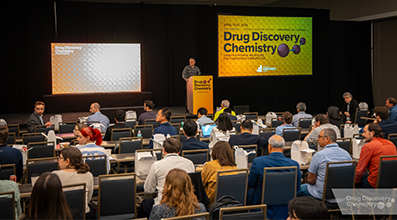
Explore upcoming conferences and scientific meetings where you can connect with our team.

At Sygnature Discovery, we deliver world-leading drug discovery solutions to accelerate your compound from idea to clinic.

Our leadership team brings diverse experience and insight, driving collaboration and innovation across drug discovery.

Explore careers at Sygnature Discovery and join a global team committed to science, collaboration, and integrity.
Inobrodib, an exciting, first-in-class oral anti-cancer drug in clinical development by CellCentric, was collaboratively designed, synthesised and supported on its pre-clinical journey by an integrated project team at Sygnature Discovery. Inobrodib is now showing promising results in Phase I and II trials for multiple myeloma and other cancer types.
At Sygnature Discovery, we deliver world-leading drug discovery solutions to accelerate your compound from idea to clinic.
Our leadership team brings diverse experience and insight, driving collaboration and innovation across drug discovery.
Explore careers at Sygnature Discovery and join a global team committed to science, collaboration, and integrity.
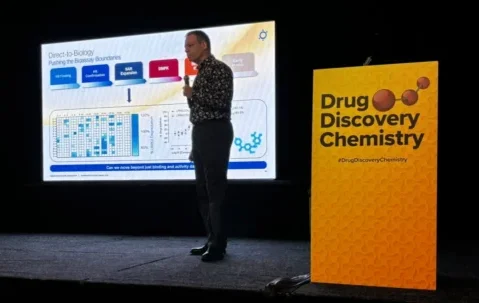
This article is adapted from a talk delivered by Allan Jordan at the Drug Discovery Chemistry (DDC) conference on April 14th 2026.
Watch the presentation here or download the presentation slides here
In drug discovery, progress is often framed around experiments: the design–make–test cycle, assay throughput, or the latest platform technology. While these are undeniably important, they’re not usually where projects stall.
More often, delays arise after the data are generated.
What ultimately determines whether a project moves quickly, stalls, or fails is decision‑making: when decisions are made, how confidently they’re made, and whether teams are aligned on what the data actually means.
This perspective has become increasingly clear across the industry, particularly as timelines and costs continue to come under pressure.
Across drug discovery organizations, there’s growing recognition that speed isn’t just experimental. It’s strategic.
Recent analyses suggest that the average time from project inception to clinical candidate nomination is approximately four years, with best‑in‑class programs closer to three. Many organizations now view two years as an aspirational target.
The challenge is clear: How do teams compress timelines without sacrificing scientific quality or increasing risk?
A recurring theme in successful programs is not simply faster experiments, but faster transitions from data to action.
Much of the hidden delay in drug discovery sits in what can be thought of as white space: the gap between data generation and decision‑making.
One increasingly common best practice is to pre‑plan decisions before results exist:
When decisions are defined in advance, data can immediately drive action rather than trigger prolonged debate.
Organizations aiming to minimise white space often focus on:
A particularly important mindset shift is pushing compounds until the data clearly say stop. This doesn’t mean assuming every compound will succeed, but ensuring that each one is evaluated rigorously enough to support a confident decision, positive or negative.
Not every successful compound excels in one metric.
Many of the most promising candidates are “Goldilocks” molecules: not exceptional in isolation, but well‑balanced across exposure, free drug levels, functional activity, and developability. These compounds often emerge only when teams look holistically rather than optimising one parameter at a time.
Finding these molecules earlier requires faster, more meaningful translation from chemistry into biology.
Direct‑to‑Biology approaches are now widely adopted, particularly for early binding assessment using techniques such as SPR. While powerful, affinity alone does not always predict functional or cellular activity.
A more challenging question is:
Can compounds be assessed directly from crude reaction mixtures using functional biological assays?
This requires careful assay design. Many biochemical and cellular systems are sensitive to residual solvents, catalysts, or by‑products. Where assays are engineered to tolerate these components, strong concordance can be achieved between:
The ability to assess binding, function, cellular relevance, and early DMPK without purification can significantly accelerate decision‑making, provided teams clearly understand when this approach is appropriate, and when it is not.
Direct‑to‑Crystallography
In robust crystallography systems, crude reaction mixtures can be soaked directly to obtain bound structures, even from reactions with modest yields. Crucially, effort is focused only on datasets that provide new biological insight.
Pushing this upstream further, using screening stocks directly for structural hit validation, can remove months of resynthesis and reconfirmation, shortening hit‑to‑lead timelines by several months.
Direct‑to‑Discovery
When combined with high‑throughput chemistry platforms and AI‑guided design, these approaches create a workflow where thousands of compounds can be explored rapidly, informatively, and more sustainably without generating unnecessary waste or low‑value data.
In a recently published collaboration with Storm Therapeutics, the goal was ambitious:
to deliver a preclinical candidate against a helicase target within two years.
By combining parallelised screening, Direct‑to‑Biology assays, direct‑to‑crystal SAR, early biomarker strategy, and proactive developability assessment, a best‑in‑class molecule was delivered in under 18 months, demonstrating complete and durable tumor regression in vivo.
This represented:
Faster discovery is not about sacrificing rigour.
Fast data are valuable.
Slow data can still be useful.
Poor data is useless.
When teams trust their data and align on decisions early, programs move with confidence instead of hesitation. While Direct‑to‑Discovery approaches won’t suit every target or biology, the underlying principle applies universally:
Better decisions, made earlier, are one of the most powerful levers for accelerating drug discovery.
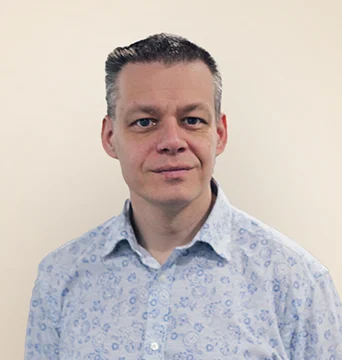
Allan Jordan, PhD
Vice President, Oncology Drug Discovery
Allan joined Sygnature Discovery in February 2019 and serves as Vice President of Oncology Drug Discovery.
With more than 25 years of experience in medicinal chemistry and drug discovery, Allan has an outstanding track record of advancing compounds into clinical trials across multiple therapeutic areas. Before joining Sygnature, he spent nine years as Head of Chemistry at the Cancer Research UK Manchester Institute Drug Discovery Unit.
During his time at CRUK, Allan led internal research programs as well as national and international collaborations to deliver innovative oncology therapeutics. His responsibilities spanned synthetic and medicinal chemistry, computational chemistry, informatics, and structural biology. Beyond his scientific leadership, Allan remains deeply committed to science communication and public engagement—personally interacting with more than 20,000 CRUK supporters through events and media appearances during his time with the charity. In recognition of these efforts, he received CRUK’s prestigious “Flame of Hope” award in 2016, the charity’s highest honor for voluntary service. He remains a frequent speaker at global drug discovery conferences.
Allan holds a BSc (Hons) in Chemistry and a PhD in Synthetic Organic Chemistry from UMIST/the University of Manchester, followed by postdoctoral research at the University of Reading.
Watch the talk on our YouTube Channel
Download the presentation slides
Peak Proteins, NuChem Sciences, and SB Drug Discovery have now fully integrated with Sygnature Discovery.