


Featured Resources
-
STORM Therapeutics: From Lead to Pre-Candidate Nomination in 18 Months

STORM Therapeutics: From Lead to Pre-Candidate Nomination in 18 Months
Case study




July 30, 2015

Inobrodib, an exciting, first-in-class oral anti-cancer drug in clinical development by CellCentric, was collaboratively designed, synthesised and supported on its pre-clinical journey by an integrated project team at Sygnature Discovery. Inobrodib is now showing promising results in Phase I and II trials for multiple myeloma and other cancer types.

At Sygnature Discovery, we deliver world-leading drug discovery solutions to accelerate your compound from idea to clinic.

Our leadership team brings diverse experience and insight, driving collaboration and innovation across drug discovery.

Explore careers at Sygnature Discovery and join a global team committed to science, collaboration, and integrity.
Inobrodib, an exciting, first-in-class oral anti-cancer drug in clinical development by CellCentric, was collaboratively designed, synthesised and supported on its pre-clinical journey by an integrated project team at Sygnature Discovery. Inobrodib is now showing promising results in Phase I and II trials for multiple myeloma and other cancer types.
At Sygnature Discovery, we deliver world-leading drug discovery solutions to accelerate your compound from idea to clinic.
Our leadership team brings diverse experience and insight, driving collaboration and innovation across drug discovery.
Explore careers at Sygnature Discovery and join a global team committed to science, collaboration, and integrity.
scientific solutions | computer aided drug design
Offers Relative Binding-Free Energy Calculation using Non-Equilibrium Switching (NES) powered by OpenEye’s Orion® platform. Delivering precise binding affinity predictions that help you rank compounds with confidence to prioritize synthesis decisions for the most promising candidates early in the discovery process; aiming to reduce design cycles costs.

supporting your research
We bring extensive expertise in applying binding free energy calculations across diverse protein targets and chemical matter. Our combination of technical excellence, computational power, and strategic integration into DMTA cycles makes Sygnature a trusted partner in accelerating early drug discovery. This proven approach delivers high-confidence binding affinity predictions that improve compound ranking, accelerate synthesis decisions, and reduce costly DMTA cycles, especially when working with challenging or novel targets.

Binding free energy quantifies how strongly a ligand interacts with a protein target. Accurate prediction of these energies is critical for ranking compounds and prioritizing synthesis in early drug discovery. One of the principal goals of any drug discovery project is to maximize affinity and selectivity against the desired target. Accurate prediction of protein-ligand binding free energies therefore plays a significant role in computational chemistry and computer-aided drug design.
With recent advances in force fields, sampling algorithms, and cloud-based GPU computing (GPU’s and cloud infrastructure), physics-based methods such as alchemical or relative binding free energy calculations have shown promise and have become powerful too ls for ranking and identifying the best compounds early in discovery.
Relative alchemical binding free energy calculations involve simulations that interpolate interaction and internal energies between pairs of molecules. Data collected during these simulations estimate the difference in binding free energy between the two molecules. Among the most accurate and reliable predictions are Free Energy Perturbation (FEP) and NES.
We use OpenEye’s NES platform for predicting relative binding free energies of protein-ligand complexes with high accuracy and efficiency. Hosted on Orion’s scalable cloud infrastructure, NES leverages hundreds of CPUs and GPUs to deliver results faster than traditional techniques, significantly speeding up decision-making of compounds. OpenEye’s Orion also provides flexible edge-mapping algorithms such as OELOMAP, Starmap, Binary Starmap, and Multi Starmap tailored to your data and compound set. Together, these methodologies help you prioritize the most promising compounds to synthesize.
Our team of computational and medicinal chemists bring extensive experience in understanding free energy calculations, including NES. We have proven successes in integrating these computational insights into real-world synthesis decisions.
We offer a fast, accurate way to predict ligand binding affinity so compounds for synthesis can be prioritized, saving significant costs and time.
We’ve successfully applied NES to structurally enabled projects. In one lead optimization project against a kinase target, NES achieved strong correlation with experimental data (r2 = 0.76) and rank correlation of 0.71, validating its predictive power. Prospective studies confirmed NES as a reliable tool for filtering out low-potential compounds, saving time and cost.
Over the following year, NES was applied prospectively to more than 70 compounds across 13 NES runs representing 5 diverse chemical series. NES achieved a rank correlation of 0.62. When classifying compounds using a ΔG threshold of ≤ –10 kcal/mol, NES reac hed an accuracy of 0.75 and a Cohen’s kappa of 0.51. Except for one case, all high-affinity compounds, and many low-affinity compounds were correctly identified. These results demonstrate that NES can effectively filter out poor candidates with reasonable confidence, reducing both cost and experimental effort.
Across multiple target studies, we compared the performance of FEP+ vs NES and found both the tools to perform with comparable accuracy.

Resource hub
No posts found.
We help you design smarter compounds and make faster decisions by combining AI- powered modeling, extensive scientific expertise, and secure, collaborative data access to solve complex challenges and accelerate your drug discovery journey.
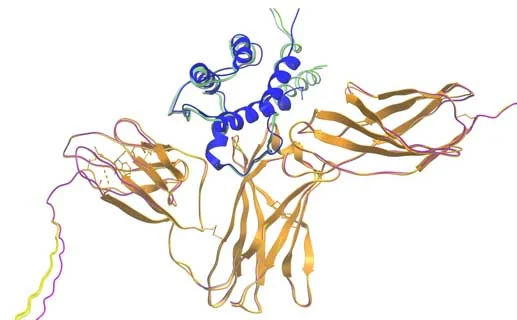
Using advanced AI and proven modelling techniques to predict protein structures with confidence, accelerating structure-based drug design and discovering novel therapeutic
possibilities.

Helping you design and optimize ternary complexes with precision, combining advanced modeling and collaborative expertise, making previously “undruggable” targets tractable.

Utilizing cutting-edge technologies and proprietary software to uncover hidden interactions, predict ligand stability, and make confident design choices that accelerate your drug discovery program.

Combining AI-driven design, bespoke ML models and LLM-powered bioinformatics with hands-on collaboration to help you discover Optimized drug candidates faster.

Identifying high-quality hits fast through giga-scale virtual screening, curated libraries, and expert triaging to accelerate drug discovery programs.

From binding sites to druggability, our computational chemistry and protein science teams help you find the right starting points faster, combining structural insight with cutting-edge tools to design compounds that move your project forward with confidence.

Leveraging the properties of known active molecules to rapidly generate and optimize new compounds through ligand-driven insights, AI-powered tools, and collaborative expertise to uncover new chemical space and accelerate discovery.

Helping you design better compounds with greater confidence. Utilizing quantum-level insights and dynamic simulations we predict affinity, guide optimization, and help you prioritize the right candidates faster.
NES is best suited for predicting binding affinities of small molecules.
We provide a fully automated workflow for relative binding free energy predictions. This involves several modelling steps starting from ligands and protein preparation, docking of ligands to protein active site, Edge mapper calculation followed by NES calculations. The automated workflow is fully customizable depending upon the target and chemical series.
We share docked pose files of protein-ligand complexes, edge mapper results, MD simulation trajectories, and predicted binding free energy values of ligands.
Peak Proteins has now fully integrated with Sygnature Discovery.


