



Featured Resources
-
STORM Therapeutics: From Lead to Pre-Candidate Nomination in 18 Months

STORM Therapeutics: From Lead to Pre-Candidate Nomination in 18 Months
Case study
📣From lead to pre-candidate nomination in 18 months. Explore the STORM Therapeutics case study




July 30, 2015

Inobrodib, an exciting, first-in-class oral anti-cancer drug in clinical development by CellCentric, was collaboratively designed, synthesised and supported on its pre-clinical journey by an integrated project team at Sygnature Discovery. Inobrodib is now showing promising results in Phase I and II trials for multiple myeloma and other cancer types.

At Sygnature Discovery, we deliver world-leading drug discovery solutions to accelerate your compound from idea to clinic.

Our leadership team brings diverse experience and insight, driving collaboration and innovation across drug discovery.

Explore careers at Sygnature Discovery and join a global team committed to science, collaboration, and integrity.
Inobrodib, an exciting, first-in-class oral anti-cancer drug in clinical development by CellCentric, was collaboratively designed, synthesised and supported on its pre-clinical journey by an integrated project team at Sygnature Discovery. Inobrodib is now showing promising results in Phase I and II trials for multiple myeloma and other cancer types.
At Sygnature Discovery, we deliver world-leading drug discovery solutions to accelerate your compound from idea to clinic.
Our leadership team brings diverse experience and insight, driving collaboration and innovation across drug discovery.
Explore careers at Sygnature Discovery and join a global team committed to science, collaboration, and integrity.

|
Original MedChem Synthesis
|
Optimized Process
|
|---|---|
|
4 steps |
3 steps, all telescoped |
|
27% overall yield (72% avg. yield per step) |
73% overall yield (90% avg. yield per step) |
|
Expensive starting material |
Cheap & easily available starting material |
|
A regioselectivity severe issue |
Excellent control strategy |
|
One cryogenic step |
Final purification by crystallizationv |
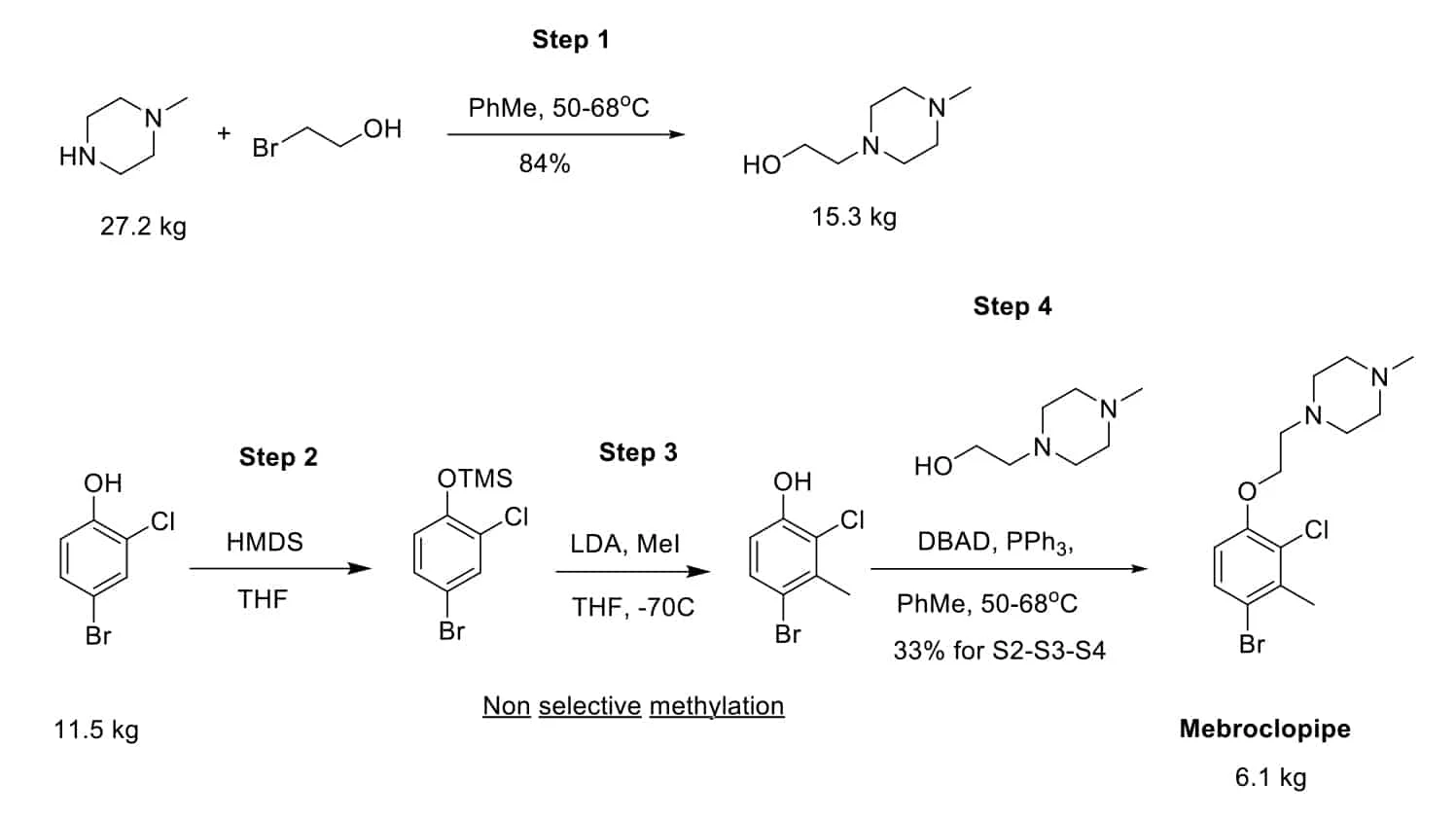
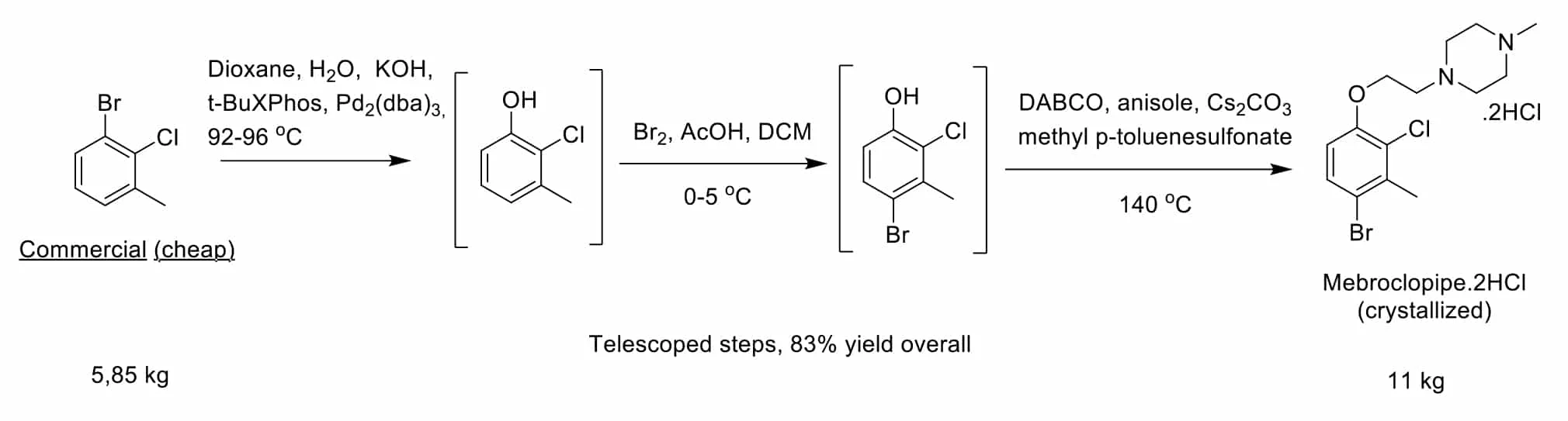
Sygnature Discovery conducted process optimization for the synthesis of 1-[2-(4-bromo-2-chloro-3-methylphenoxy)ethyl]-4-methylpiperazine dihydrochloride, a pivotal intermediate referenced in WO 2020/078875 A1. Efficient access to this molecule was essential to ensure reliable supply for further preclinical and clinical studies.
The initial synthetic route was characterized by significant inefficiencies, comprising four steps with an overall yield of only 27% (72% average yield per step). Key drawbacks included the use of expensive starting materials, challenging regioselectivity issues, a problematic Mitsunobu reaction, and the necessity of a cryogenic step, which collectively hindered scalability and practical GMP manufacturing.
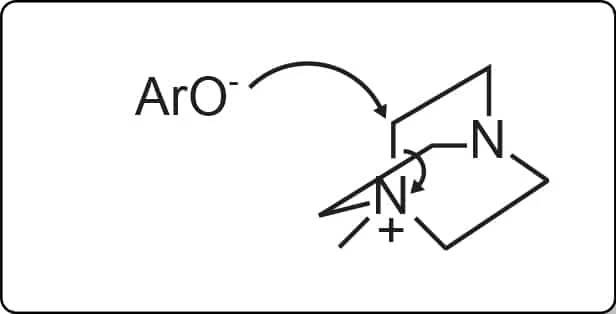
By harnessing our deep expertise in synthetic route optimization, Sygnature Discovery dramatically improved the process, developing a concise and robust three-step telescoped synthesis. This optimized route features an innovative palladium-catalyzed hydroxylation and an elegant, highly efficient DABCO ring-opening reaction for the introduction of the piperazine chain, effectively replacing the problematic Mitsunobu step.
The enhanced process demonstrated a substantial increase in yield, achieving an impressive 73% overall yield (90% average yield per step). It also employed readily available, cost-effective starting materials and featured an excellent impurity control strategy, enabling final purification through straightforward crystallization of the hydrochloride salt, further enhancing scalability, safety, and GMP compliance.
This successful optimization clearly exemplifies Sygnature Discovery’s capability to innovate synthetic methodologies, providing streamlined, scalable solutions tailored for seamless technology transfer and robust progression from preclinical to clinical phases.




Peak Proteins, NuChem Sciences, and SB Drug Discovery have now fully integrated with Sygnature Discovery.
