


Featured Resources
-
STORM Therapeutics: From Lead to Pre-Candidate Nomination in 18 Months

STORM Therapeutics: From Lead to Pre-Candidate Nomination in 18 Months
Case study
📣From lead to pre-candidate nomination in 18 months. Explore the STORM Therapeutics case study




July 30, 2015

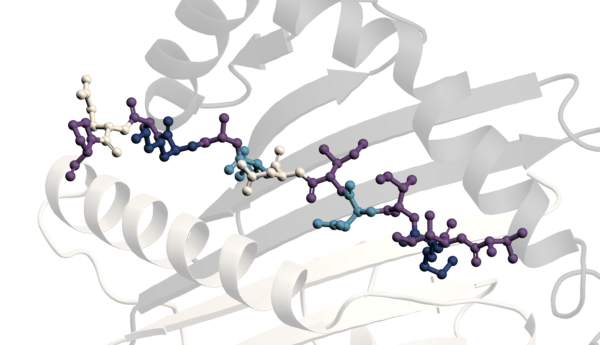
Inobrodib, an exciting, first-in-class oral anti-cancer drug in clinical development by CellCentric, was collaboratively designed, synthesised and supported on its pre-clinical journey by an integrated project team at Sygnature Discovery. Inobrodib is now showing promising results in Phase I and II trials for multiple myeloma and other cancer types.

At Sygnature Discovery, we deliver world-leading drug discovery solutions to accelerate your compound from idea to clinic.

Our leadership team brings diverse experience and insight, driving collaboration and innovation across drug discovery.

Explore careers at Sygnature Discovery and join a global team committed to science, collaboration, and integrity.
Inobrodib, an exciting, first-in-class oral anti-cancer drug in clinical development by CellCentric, was collaboratively designed, synthesised and supported on its pre-clinical journey by an integrated project team at Sygnature Discovery. Inobrodib is now showing promising results in Phase I and II trials for multiple myeloma and other cancer types.
At Sygnature Discovery, we deliver world-leading drug discovery solutions to accelerate your compound from idea to clinic.
Our leadership team brings diverse experience and insight, driving collaboration and innovation across drug discovery.
Explore careers at Sygnature Discovery and join a global team committed to science, collaboration, and integrity.
Scientific Solutions | bioscience
Custom-built assays, designed around your biology, delivering reliable data that drives faster, smarter decisions, helping you move confidently towards your next candidate.

SUPPORTING YOUR RESEARCH
Our assay development methods are scalable to meet changing project demands, using industry-leading automated instruments and miniaturization techniques to reduce costs without compromising quality.
We offer a broad portfolio of biophysical, biochemical, and cell-based assays, all customizable to your needs when assessing compound profiles. These platforms allow you to identify hits and assess potency, binding kinetics, mechanism of action, selectivity, species cross-reactivity, and efficacy of your molecules in the most physiologically relevant context possible.
If you already have an assay in place, we can transfer it in-house and further optimize it to ensure it’s fit for purpose and aligned with your project requirements.

Our bioscientists bring deep expertise across therapeutic areas to develop novel assay solutions for even the most complex challenges. With extensive experience supporting projects throughout the drug discovery pipeline, we ensure your custom assay is robust, fit for purpose, and seamlessly integrated into your screening cascade.
When commercial solutions aren’t available, we can build validated assays from scratch, collaborate with suppliers, or transfer assays from your lab. We also offer reagents and materials from our Protein Sciences and Cellular Pharmacology teams.
Our scientists carefully evaluate parameters that affect assay quality and make targeted adjustments to ensure consistent performance. Whether for hit finding or DMTA cycles, we measure signal and reagent stability, assess robustness across plates, and use automation and robotic scheduling where appropriate to enhance reliability.
We begin every custom assay development project with shared principles agreed upfront. This alignment ensures experiments are focused, efficient, and deliver decision-ready data, addressing two of drug discovery’s biggest challenges: time and cost.
These principles guide how each assay is planned and built to meet your unique goals:
By following this structured approach, we reduce experimental rework and accelerate go/no-go decisions saving time and resources while maximizing data reliability.
Robust data analysis and continuous quality control ensure every dataset supports confident decision making:
Resource hub


We bring together a dynamic blend of new talent and experienced pharmaceutical industry experts from a round the world, delivering excellence across every stage of discovery.

High-throughput biophysical solutions for binding, kinetics, and target engagement combining advanced technologies with deep expertise to guide drug discovery.
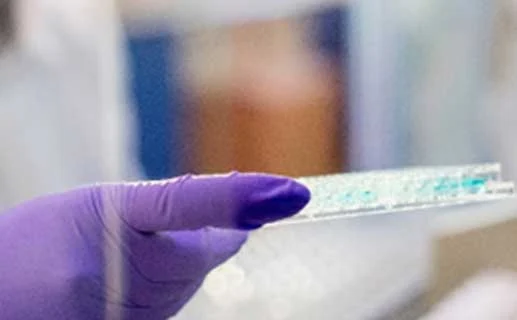
Custom biochemical assays built around your target biology providing robust, high-quality data to guide hit identification and mechanism-of-action studies.

Custom stable cell lines with robust expression and assay reproducibility, streamlined design and validation for confident drug discovery workflows.
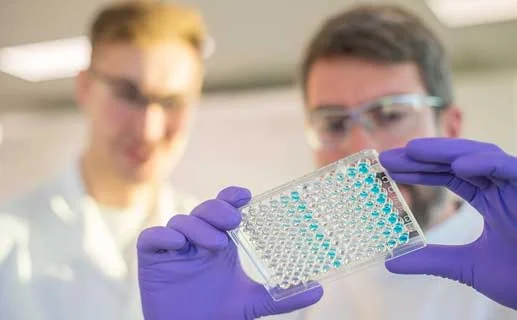
Delivering validated, high-quality hits through integrated technologies, strategic insight, and expert collaboration to advance your program with confidence.

Tailored cell-based assays for target validation, compound profiling, and mechanism studies delivering robust, physiologically relevant data to guide discovery.

Application-ready proteins through tailored design, expert purification, and collaborative support ensuring confident progress from construct to final product.
Absolutely. We can support your requests with bespoke reagent production as well as sourcing individual commercially available components for your assay, to design a suitable endpoint.
For an assay transfer, key parameters such as substrate Kms and enzyme linearity etc will be confirmed internally, alongside the running of tool compounds to ensure the response is as expected. We will ensure that the assay is robust and fit for whatever purpose is required for the requested work. We will also inspect conditions, such as assay buffer or assay volume, and give advice as appropriate where we can see cause for improvements. For full assay development, we will need to optimise all conditions from scratch, but will ultimately in both cases, deliver a robust screening assay.
When assay is already established, we are happy to transfer from your lab, the assay should be robust and achieve a Z’ value of >0.5. We will aim to reproduce your assay data regarding reference compound pharmacology if available.
At Sygnature, our experienced scientists will research to understand any specific liabilities for your target (e.g., inhibition by certain metal ions which could be present as ultra low level contaminants in compound) alongside common issues, such as aggregation or non-specific binding. These can be impacting positively by inclusion of carrier proteins or detergents. These are examples where small optimisations can have a big impact on the output of compound screening data.
We can design assays to explore compound Mechanism-of-Action. Key to minimising the risk of positives through non-specific mechanisms is developing a suitable cascade of counter and orthogonal assays in addition to developing a robust primary assay.
Peak Proteins, NuChem Sciences, and SB Drug Discovery have now fully integrated with Sygnature Discovery.

