


Featured Resources
-
STORM Therapeutics: From Lead to Pre-Candidate Nomination in 18 Months

STORM Therapeutics: From Lead to Pre-Candidate Nomination in 18 Months
Case study




Discover precise insights into brain neurochemistry with Sygnature Discovery's in vivo microdialysis and cOFM services. With over 20 years of expertise, we design bespoke studies that reveal how compounds modulate neurotransmitter systems in health and disease. Using UHPLC/HPLC with electrochemical detection or mass spectrometry, we deliver robust PK/PD data to support confident CNS decision making.


July 30, 2015

Inobrodib, an exciting, first-in-class oral anti-cancer drug in clinical development by CellCentric, was collaboratively designed, synthesized and supported on its pre-clinical journey by an integrated project team at Sygnature Discovery. Inobrodib is now showing promising results in Phase I and II trials for multiple myeloma and other cancer types.

In drug discovery, generating targets is no longer the challenge. The real question is how to identify the few worth investing months of research and significant resources to pursue. Hear expert perspectives on how AI, pathway analysis and scientific expertise are shaping modern target identification.
July 7, 2026

Stay up to date with the latest company updates, milestones, and announcements.
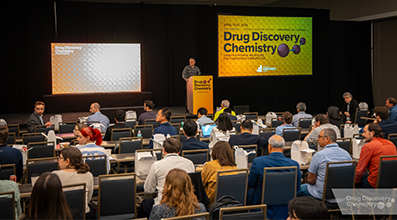
Explore upcoming conferences and scientific meetings where you can connect with our team.

At Sygnature Discovery, we deliver world-leading drug discovery solutions to accelerate your compound from idea to clinic.

Our leadership team brings diverse experience and insight, driving collaboration and innovation across drug discovery.

Explore careers at Sygnature Discovery and join a global team committed to science, collaboration, and integrity.
Inobrodib, an exciting, first-in-class oral anti-cancer drug in clinical development by CellCentric, was collaboratively designed, synthesized and supported on its pre-clinical journey by an integrated project team at Sygnature Discovery. Inobrodib is now showing promising results in Phase I and II trials for multiple myeloma and other cancer types.
At Sygnature Discovery, we deliver world-leading drug discovery solutions to accelerate your compound from idea to clinic.
Our leadership team brings diverse experience and insight, driving collaboration and innovation across drug discovery.
Explore careers at Sygnature Discovery and join a global team committed to science, collaboration, and integrity.
scientific solutions | Protein Science & Structural Biology
At Sygnature Discovery, we help you gain the structural insights that drive smarter drug design. Our scientists combine advanced techniques with deep expertise to reveal how proteins and nucleic acids behave at the molecular level, turning complex data into actionable strategies for your program.

supporting your research
This could include confirming compound binding, guiding structure-based drug design, mapping epitopes, running fragment screens, or supporting other applications.
Our solutions go beyond delivering a set of coordinates. We provide comprehensive 3D structural analysis, share insights gained during the process, and deliver conclusions that shape project direction and inform drug design strategies.

Protein quality matters. The
success of any structural biology
study depends on the quality of
the protein. We dedicate time to
careful planning and apply our
expertise to ensure the protein is
of the highest standard,
significantly increasing the
likelihood of a success.
Structural biology projects are
often best tackled with an iterative
approach. We follow a milestone-
based process where data is
reviewed at key points and next
steps agreed collaboratively. This
keeps us guided by the data,
reduces risk, and ensures the
most efficient path forward.


Our Capabilities
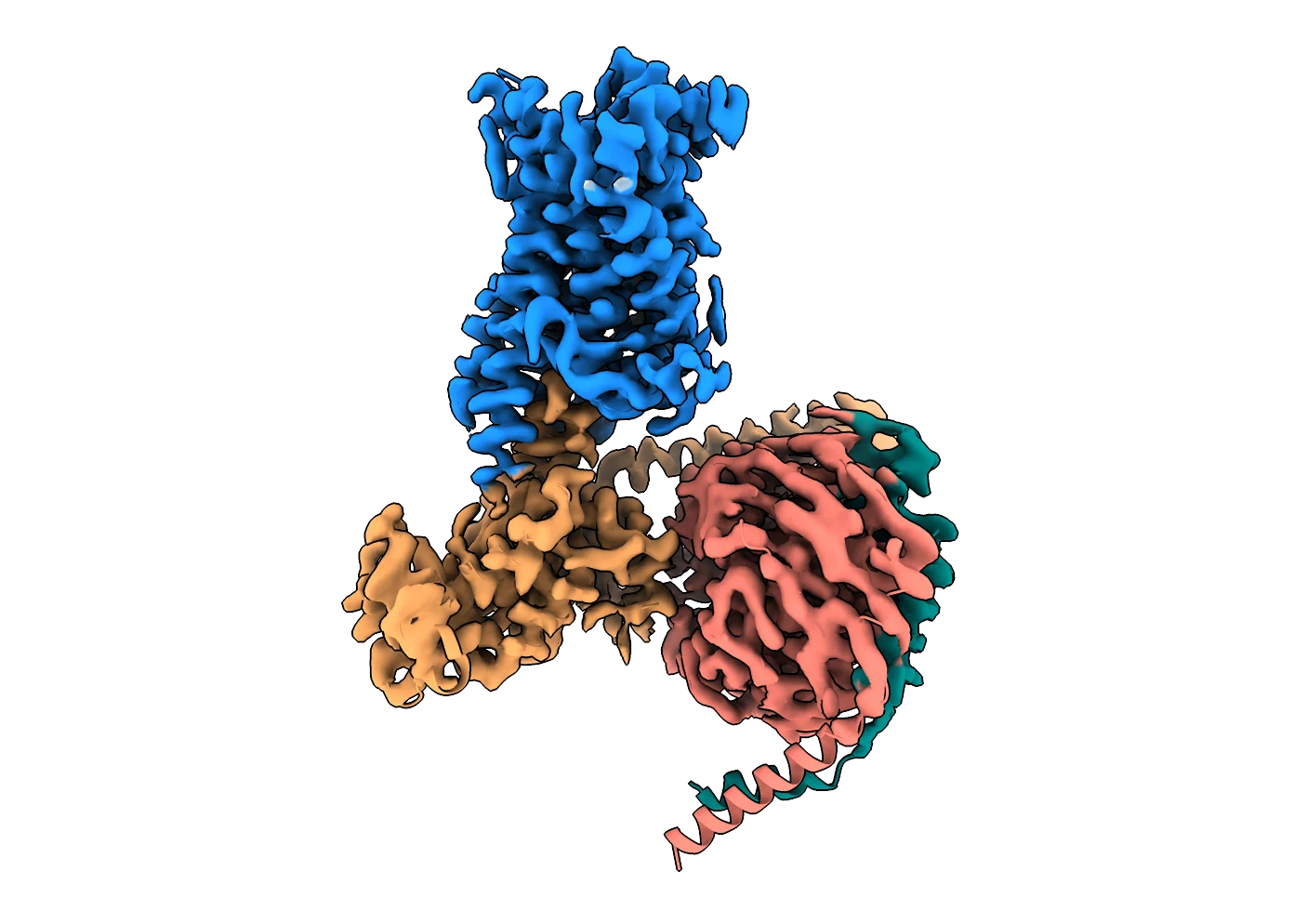
Choosing the right technique depends on your target and project objectives. We’ll advise you on the most suitable option. Below is a summary of the advantages and disadvantages of each method. For an in-depth description and comparison of the techniques we offer read more in our blog here.
|
Advantages
|
Disadvantages
|
|---|---|
|
Well established techniques |
Requires sample to crystallize |
|
Can achieve atomic resolution of macromolecular structure in crystalline state |
Crystals need to be well ordered to achieve a high resolution diffraction |
|
High throughput once crystal system established |
Snapshot of conformation |
|
No size limitation of macromolecule |
Radiation damage – this can be mitigated to some degree |
|
Data collection, processing, and analysis is relatively quick |
Crystal packing can influence conformation |
|
|
Requirement to solve phase of diffraction data to calculate electron density |
|
|
X-ray source (in-house or synchrotron) required with appropriate goniometer, detector, etc needed for data collection |
|
Advantages
|
Disadvantages
|
|---|---|
|
Non-destructive technique |
Proteins in the range of 5-25 kDa require uniform labeling with 15N and 13C isotopes. Sometimes, partial deuteration is needed |
|
Macromolecular structure can be determined in solution, under wide range of ionic strength, pH ( |
Isotopes required for protein labeling are expensive and the cost increases as follow per L of media: 15N(£)<13C(£x8) |
|
Peptides with a maximal range of 3-4 kDa do not require isotope enrichment |
High concentrations of sample is required (~1mM). Unable to assign N and C atoms |
|
NMR in solution can explore a wide range of macromolecular properties and not restricted to structure determination:
|
De-novo protein synthesis is the only available method to incorporate isotopes into proteins and this is predominantly restricted to either E.coli or cell-free expression systems |
|
|
High protein concentration is required, and it needs to be stable in solution for a period of minutes to hours. |
|
|
Oligomeric and/or heterogenic samples are challenging |
|
|
Data acquisition, processing and analysis is relatively slow |
|
|
An NMR spectrometer (above 500MHz), equipped with a cryoprobe is required for data collection |
|
Advantages
|
Disadvantages
|
|---|---|
|
Amenable to large macromolecular complexes |
Viewing smaller proteins ( |
|
Can achieve near atomic resolution of proteins in their native (frozen hydrated) state |
Data acquisition, processing, and analysis is relatively slow |
|
Multiple states of a macromolecule can be purified in silico from a single data set |
Computationally expensive (data storage and GPU) |
|
Macromolecules viewed in real space, no phase problem |
Radiation damage – this can be mitigated to some degree |
|
|
200kV or 300kV electron microscope required for data collection |
Resources


We bring together a dynamic blend of new talent and experienced pharmaceutical industry experts from a round the world, delivering excellence across every stage of discovery.
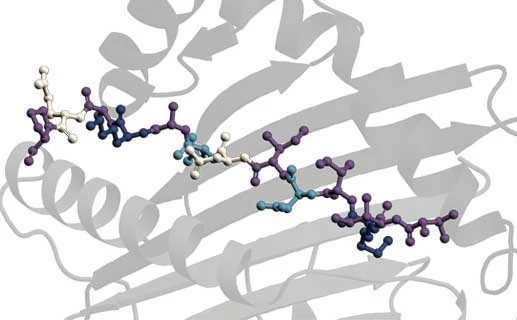
Main home page for the Protein Science and Structural Biology Department. We take time to understand your target and the ultimate aims of the project and tailor our approach accordingly.

Helping you design better compounds with greater confidence. Utilizing quantum-level insights and dynamic simulations we predict affinity, guide optimization, and help you prioritize the right candidates faster.
Peak Proteins, NuChem Sciences, and SB Drug Discovery have now fully integrated with Sygnature Discovery.